
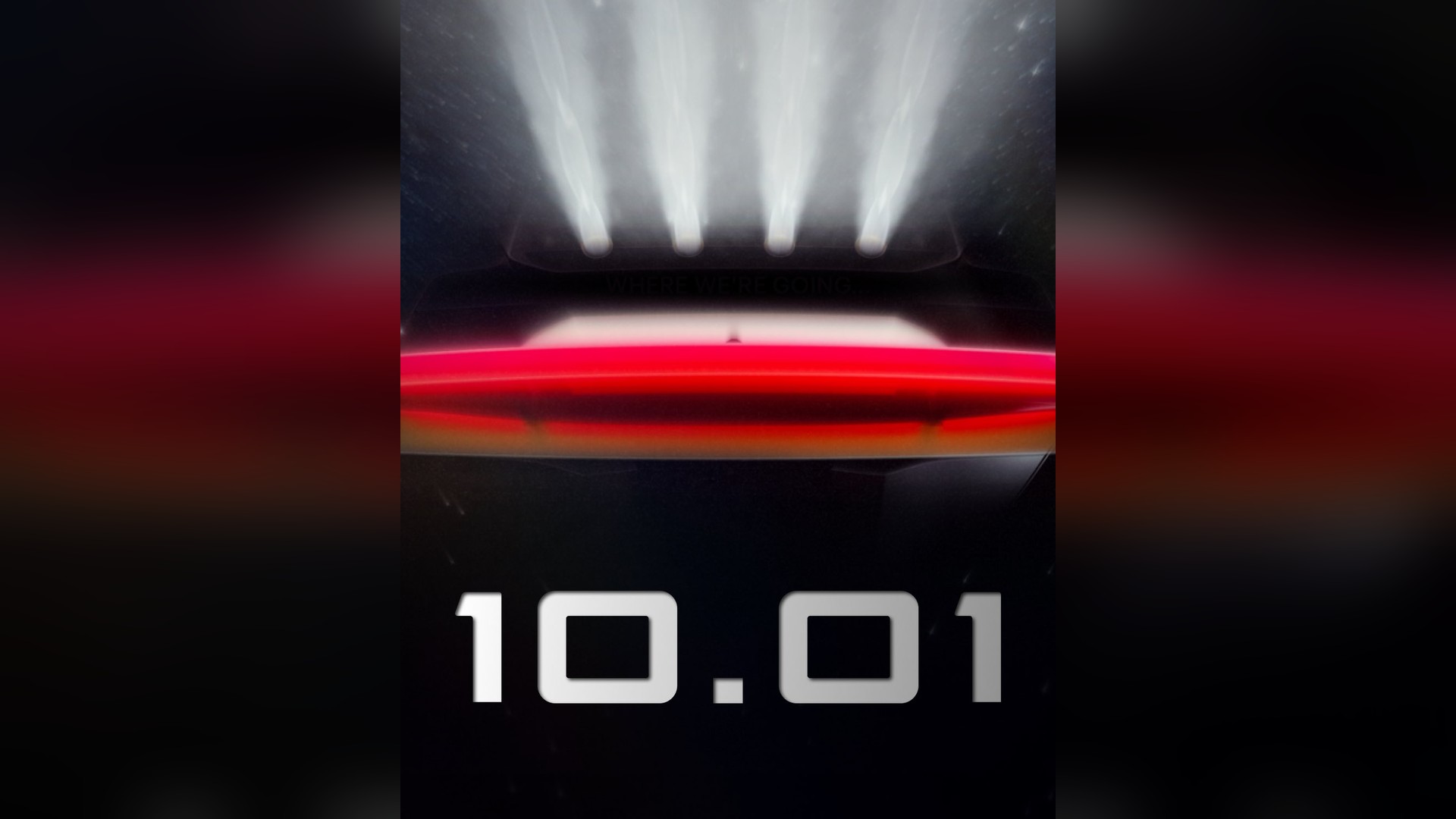
The Tesla Roadster is the car that made Tesla, and on October 15 the company plans to show the one that’s meant to follow it. Tesla moved the event from October 1, saying it “can only be held outdoors,” and Musk pointed to high winds. That’s almost nine years after Tesla first showed a second-generation Roadster and promised it for 2020. Before the new car takes the stage, it’s worth looking back at the little electric sports car that started everything, the space trip nobody saw coming, and the long road to this reveal.
Where the Roadster came from
The Roadster started with someone else’s car. In 2004, Tesla licensed electric propulsion designs from AC Propulsion, the small California company behind the tzero electric sports car. Musk has given that car full credit: “Without that, Tesla wouldn’t exist or would have started much later.”
Then came the plan. In 2006, when electric cars meant golf carts and compliance cars, Tesla laid out its first master plan in a company blog post: build a sports car, use that money to build a more affordable car, then use that money to build an even more affordable one. The Roadster was step one, and it had to prove an electric car could be something people actually wanted.
To get there fast, Tesla partnered with Lotus. The Roadster’s body and chassis were built at Lotus’s plant in Hethel, England, with Tesla staff working alongside. Tesla called that rolling chassis without a powertrain the “glider.” Gliders for US cars were shipped to Tesla’s shop in Menlo Park, California, where Tesla installed its battery, motor and electronics. Tesla committed to buy at least 1,700 of them over three years. The car wore carbon fiber body panels and was a true two-seat convertible.
The plan to simply electrify an Elise didn’t survive contact with reality. Musk later said only about 5% of the Elise’s parts made it into the finished car, which tells you how much of the Roadster Tesla really engineered itself.
The engineering that mattered
The battery was the breakthrough. Tesla’s 2010 IPO filing describes a pack of 6,831 lithium-ion cells, each similar to the cells in a laptop battery, grouped into 11 modules with about 53 kWh of usable energy. Getting thousands of small cells to work safely in a car meant building what Tesla called “sophisticated battery cooling, power, safety and management systems,” plus engineering the pack to survive vibration and the weather. Tesla designed it to last more than 100,000 miles.
The motor was Tesla’s own design too, a three-phase AC induction motor that could spin to 13,000 rpm in normal use with over 200 lb-ft of instant torque. That broad torque band let the Roadster use a single-speed gearbox. Tesla said the Roadster Sport’s inverter could deliver about 900 amps in milliseconds. The result was 0 to 60 mph in 3.9 seconds, 3.7 in the Sport, a top speed around 120 mph, and an EPA range of 245 miles.
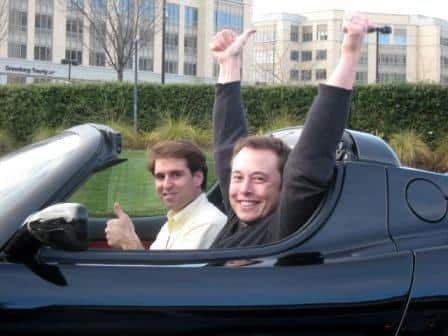
Tesla delivered the first Roadster on February 1, 2008. The company says it was the first to commercially produce a federally compliant electric vehicle, and the car kept getting better. In July 2009, Tesla released an updated Roadster 2.0 with a better powertrain and interior and lower production costs, alongside the quicker Roadster Sport. Right-hand-drive cars followed in January 2010 for markets including the UK, Japan, Hong Kong and Australia. Then, in July 2010, Roadster 2.5 brought a new front fascia and chin spoiler, a redesigned rear diffuser, upgraded electronics with a double-DIN display, and a quieter cabin.
Milestones that proved the point
The Roadster quickly started proving people wrong. Tesla’s IPO filing notes that a Roadster reportedly set a world distance record for a production electric car, 313 miles, in a rally across Australia during the 2009 Global Green Challenge. By the end of 2010, Tesla had delivered more than 1,500 Roadsters in 31 countries, and owners had driven them an estimated 9 million miles.
The production run ended in January 2012. Tesla says it delivered about 2,450 Roadsters in more than 30 countries. That’s a tiny number by today’s standards, but it was enough to change the industry’s mind. Daimler bought Tesla battery packs and chargers for its Smart fortwo electric drive and A-Class electric cars, and Toyota signed on for a Tesla-built electric powertrain for its RAV4 EV and bought Tesla stock in 2010. Panasonic, which supplied cells, invested too. A two-seat sports car built in small batches had turned a startup into a supplier to the world’s biggest automakers.
Tesla didn’t forget its first car after production ended. In December 2014 it announced Roadster 3.0, an upgrade with a new cell holding 31% more energy, a pack of roughly 70 kWh in the same space, a retrofit aero kit that cut drag from 0.36 to 0.31, and lower-resistance tires. Tesla predicted 40 to 50% more range, and more than 400 miles at the right speeds.
The Roadster’s legacy
The Roadster’s biggest product is the Model S. Tesla said in its 2013 annual report that the Model S “inherited many of the electric powertrain innovations” introduced on the Roadster, and from there came everything else. We covered how that next chapter ended this year in our Model S and Model X tribute.
The Roadster also set a habit of openness. In 2014, Tesla irrevocably pledged not to sue anyone acting in good faith for using its patents in electric vehicle work, to help build “a common, rapidly-evolving platform for electric vehicles.” In 2023, it went further and open-sourced the original Roadster’s full design and engineering. “Whatever we have, you now have,” Musk wrote. Tesla summed it up in 2025: “Without Roadster, Tesla wouldn’t be here today.”
A Roadster in space
The most famous Roadster never drove on a road again. On February 6, 2018, SpaceX launched Falcon Heavy for the first time from Launch Complex 39A at Kennedy Space Center, with Musk’s own midnight cherry Roadster as the payload. A spacesuited mannequin called Starman sat in the driver’s seat, and David Bowie’s “Space Oddity” was playing.
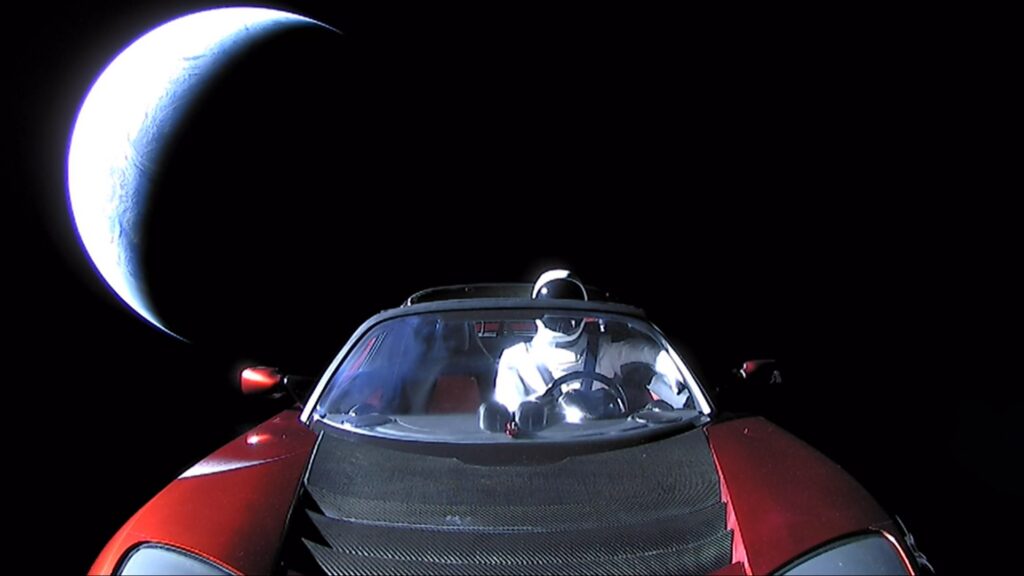
SpaceX said Falcon Heavy would be the most powerful operational rocket in the world by a factor of two, and the flight delivered. Its two side boosters came back and landed at SpaceX’s Landing Zones 1 and 2, while SpaceX streamed live views of Starman cruising above Earth.
It worked. SpaceX calls it its first launch to a Mars-distance orbit. Starman made its first close approach to Mars on October 7, 2020, passing within 5 million miles of the planet, and its orbit around the Sun brought it back past Earth in early 2025. Somewhere out there, Tesla’s first car is still on the longest road trip ever.
Roadster 2: the night it rolled out of a Semi
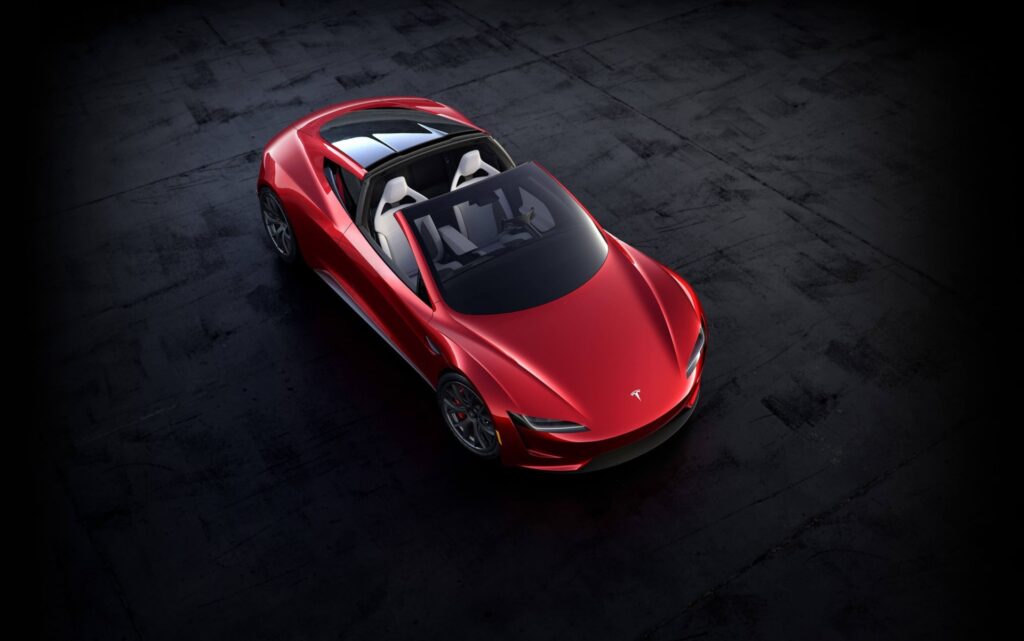
Tesla’s November 16, 2017 event was supposed to be about the Semi. Then one of the trucks opened up and a red Roadster rolled out of the trailer. Musk called it the base model and read off numbers that sounded made up: 0 to 60 mph in 1.9 seconds, 0 to 100 mph in 4.2, a top speed above 250 mph, and 620 miles of range from a 200 kWh pack, enough, he said, to drive from Los Angeles to San Francisco and back at highway speed without recharging. “The point of doing this is to just give a hardcore smackdown to gasoline cars,” he said, adding that driving a gas sports car would feel like “a steam engine with a side of quiche.”
It had three motors, all-wheel drive, 10,000 Nm of wheel torque, a removable glass roof that stores in the trunk, and four seats in a 2+2 layout. Musk said it would be available in 2020. Tesla’s Roadster page set the base price at $200,000 with a $50,000 reservation, and the first 1,000 cars were a Founders Series at $250,000, paid in full up front.
Two days later, Musk said those were base-model numbers and that a “special option package” would take it further. In June 2018 he described a SpaceX package with about 10 small rocket thrusters that would “dramatically improve acceleration, top speed, braking & cornering. Maybe they will even allow a Tesla to fly.”
Roadster by the numbers
| Original Roadster (2008-2012) | Second-gen Roadster (2017 base claims) | |
|---|---|---|
| 0-60 mph | 3.9 sec (Sport: 3.7 sec) | 1.9 sec |
| 0-100 mph | Not published | 4.2 sec |
| Top speed | About 120 mph | Over 250 mph |
| Range | 245 miles (EPA) | 620 miles |
| Battery | About 53 kWh usable, 6,831 cells | 200 kWh (Musk on stage) |
| Motors | One AC induction motor | Three, all-wheel drive |
| Seats | 2 | 4 (2+2) |
| Roof | Convertible | Removable glass roof |
| Price | $101,500 base after the $7,500 US tax credit (Tesla, 2010) | $200,000 base, $250,000 Founders Series |
| Built | About 2,450 delivered | Not yet in production |
Roadster timeline
The original
- 2004: Tesla licenses AC Propulsion’s electric propulsion designs.
- 2006: Tesla’s first master plan puts a sports car first.
- Feb 2008: Tesla delivers the first Roadster.
- Jul 2009: Roadster 2.0 and the Roadster Sport arrive.
- Jan 2010: The first right-hand-drive Roadster is delivered.
- Jul 2010: Roadster 2.5 brings new styling and electronics.
- Jan 2012: Production ends after about 2,450 cars.
- Dec 2014: Tesla announces the Roadster 3.0 upgrade.
- Feb 2018: Musk’s Roadster launches on Falcon Heavy.
- Nov 2023: Tesla open-sources the original Roadster’s design.
The sequel
- Nov 2017: Revealed as a prototype, “available in 2020.”
- Jun 2018: Musk describes the SpaceX thruster package.
- Jan 2021: Musk on X: “Finishing engineering this year, production starts next year.”
- Sep 2021: Musk cites supply chain shortages and says the new Roadster “should ship in 2023”.
- Feb 2024: Musk says Tesla “radically increased the design goals,” targets an unveil by year-end with shipping the year after, and claims 0 to 60 mph in under 1 second.
- Jun 2024: Musk on X: “The new Tesla Roadster can fly.”
- Nov 2025: At Tesla’s shareholder meeting, Musk sets a demo for April 1, 2026, with production about 12 to 18 months later.
- Jan 2026: Tesla’s Q4 update lists preparations in North America for production of the next-gen Roadster.
- Mar 2026: Musk says the unveil is “probably in late April”.
- Apr 2026: On the Q1 earnings call, Musk says Tesla “may be able to debut that in a month or so.”
- Sep 12, 2026: Tesla posts a “Go for launch” teaser dated 10.01.
- Sep 28, 2026: Tesla moves the event to October 15, and Musk says high winds are the reason.
Why the Roadster still matters
Tesla doesn’t need a $200,000 sports car to make money. It delivered 486,532 vehicles last quarter, and much of its attention is on autonomy and projects like the Cybercab. The Roadster matters for a different reason. It’s the car that taught Tesla how to build batteries, motors and software, and the one that made people want an EV in the first place. Bringing it back is Tesla telling its own origin story with today’s technology.
The 2017 numbers also set a moving target. A 1.9-second base car was shocking then, and Musk himself said in 2024 that it would be “ridiculous” for the Roadster to only match the Model S’s 0 to 60 time. That’s why the pitch grew from fastest car to thrusters and talk of flying. The first Roadster showed what an electric car could be. The new one gets to show how far Tesla has come since.
What to watch on October 15
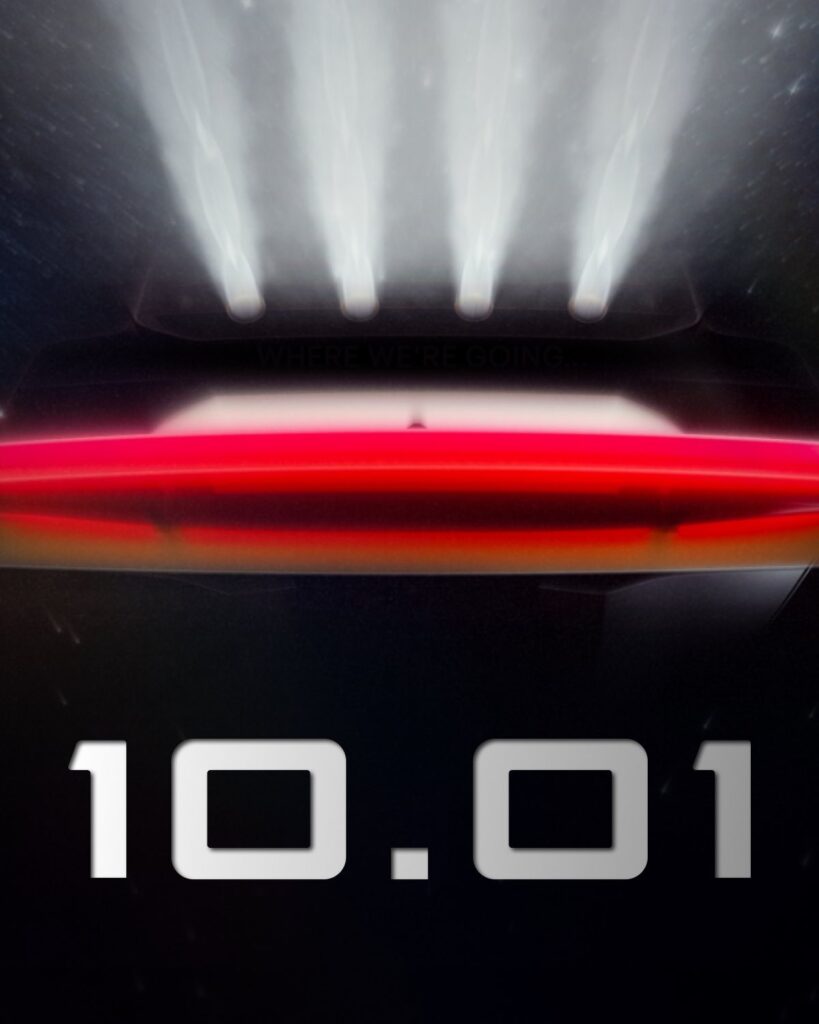
Tesla’s teaser says a lot without saying much. It shows a glowing red light bar beneath four bright plumes, the kind you’d expect from thrusters, with the faint words “Where we’re going…” that Back to the Future fans can finish for themselves. Tesla has also said the event has to happen outdoors. Here’s what we’ll be watching for.
- The thrusters: Musk has talked about SpaceX hardware since 2018 and has claimed the new Roadster “can fly.” Will Tesla show it working, and will it be part of a car customers can buy?
- Speed: The 2017 base car promised 1.9 seconds. Musk’s 2024 target was under 1 second. Which number makes it to the spec sheet?
- Range: Does the production car keep the 620-mile claim, nearly two and a half times the original Roadster’s 245 miles?
- Price: Tesla’s Roadster page no longer lists the $200,000 base price, only the $50,000 reservation. Will the price change?
- Production timing: Musk has pointed to production 12 to 18 months after the demo. Will Tesla name a factory, a year and a first delivery quarter?
- Reservation holders: Founders Series buyers paid $250,000 in full in 2017, and many others put down $50,000. They’ll want to hear what comes next for them most of all.
Tesla hasn’t announced a start time or venue yet. We’ll cover the reveal as it happens.
FAQ
When is the new Tesla Roadster reveal?
Tesla says the event is on Thursday, October 15, 2026, moved from October 1 because of the weather. It hasn’t announced a time yet.
How many original Tesla Roadsters were made?
Tesla says it delivered about 2,450 Roadsters in more than 30 countries between 2008 and the end of production in January 2012.
Was the original Roadster just an electric Lotus Elise?
No. Lotus built the body and chassis in England, but Tesla designed the battery, motor, electronics and software, and Musk has said only about 5% of the Elise’s parts ended up in the car.
What specs did Tesla promise for the second-generation Roadster?
In 2017 Tesla quoted 0 to 60 mph in 1.9 seconds, a top speed above 250 mph and 620 miles of range for the base model, with a 200 kWh battery according to Musk. Musk claimed in 2024 the new design would hit 0 to 60 in under 1 second.
How much does the new Tesla Roadster cost?
Tesla listed a $200,000 base price and a $250,000 Founders Series in 2017. Its Roadster page now shows only a $50,000 reservation, so the final price should come at the reveal.
Why did SpaceX launch a Tesla Roadster?
It was the payload for Falcon Heavy’s first test flight in February 2018, with a spacesuited Starman in the driver’s seat.
Is the Roadster SpaceX launched still in space?
Yes. It’s in an orbit around the Sun that reaches about the distance of Mars. SpaceX says it passed within 5 million miles of Mars in October 2020 and came back past Earth in early 2025.