
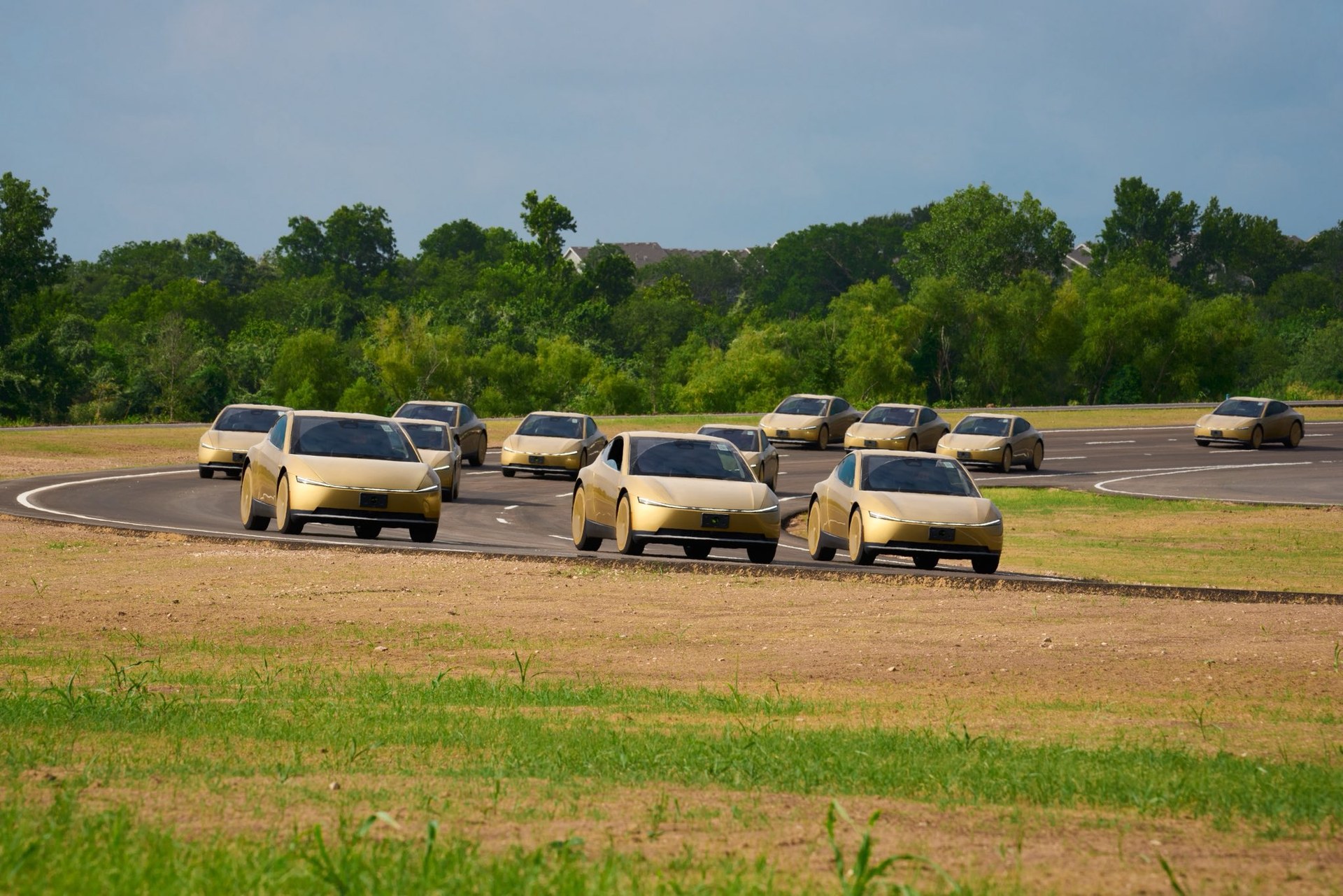
The Tesla Cybercab has been carrying paying riders in Austin for a month, and it’s the first time Tesla has put a car on the road that can’t be driven by a person at all. Tesla opened Cybercab rides to anyone with the Robotaxi app on Sept. 4, and the fleet has grown quickly since. Tesla’s Robotaxi account counted 69 Cybercabs alongside 420 Model Ys on Sept. 24, and CNBC reported 169 Cybercabs authorized for commercial use in Texas as of Oct. 2, citing state records. Robotaxi service in Austin now runs until 11 p.m.
What’s running today
Production started at Giga Texas in April. Tesla’s second-quarter update lists more than 125,000 Cybercabs a year of installed capacity, with Tesla’s own reminder that installed capacity isn’t the current production rate. Tesla hasn’t published how many it has actually built.
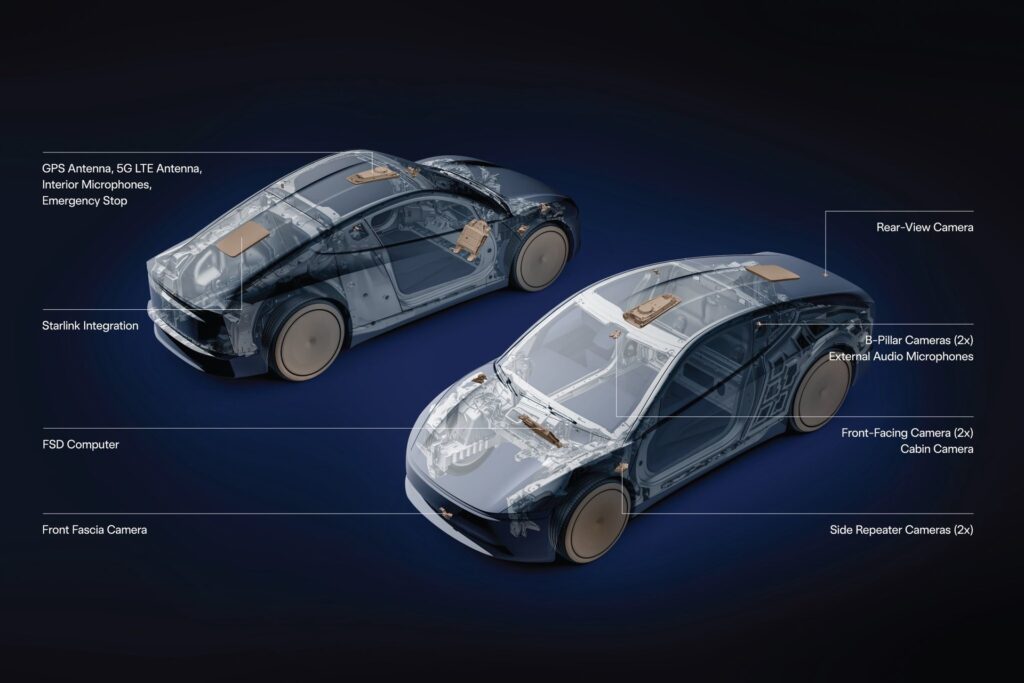
The car itself is small and simple on paper. Tesla’s EPA certification filing lists a single 163 kW (219 hp) motor driving the front wheels, a curb weight of 3,113 pounds, and a battery of about 48 kWh. It seats two, has no steering wheel, pedals, or mirrors, and carries Starlink for connectivity. Tesla says the seats sit at standard wheelchair height for easier entry. Austin is the only city with Cybercab rides so far. Tesla also lists unsupervised Model Y robotaxi service in Dallas, Houston, Miami, Orlando and Tampa.
Why a purpose-built robotaxi changes the math
A Model Y robotaxi is a family car doing a cab’s job. It carries a steering column, pedals, five seats, and a battery sized for road trips, and a driverless fleet pays for all of it on every mile. The Cybercab drops what a robotaxi doesn’t need. Two seats cover a lot of ride-hail trips, and a lighter car needs less battery to do the job.
The battery is where it pays off most. Tesla’s Q2 update calls battery pack capacity “the main limiting factor” on building more vehicles. A pack around 48 kWh stretches that supply across more cars than a long-range Model Y pack would, and a smaller pack costs less to build and less to charge. The cost of a robotaxi mile comes down mostly to what the car costs, how many miles it covers, and the electricity it uses. A cheaper, lighter car helps on the first and last, and a car with no driver can keep working most of the day. Musk put it bluntly in September: “The degree to which Cybercab is optimized for lowest possible cost per mile (fully loaded) is understood by very few.” At the 2024 reveal, he targeted about 20 cents a mile to operate over time. That’s still a target, not a measured number.
The factory side follows the same idea. Tesla’s “unboxed” process builds sections of the car in parallel and joins them at the end, which Tesla says cuts the line size in half.
The hard part is the rulebook
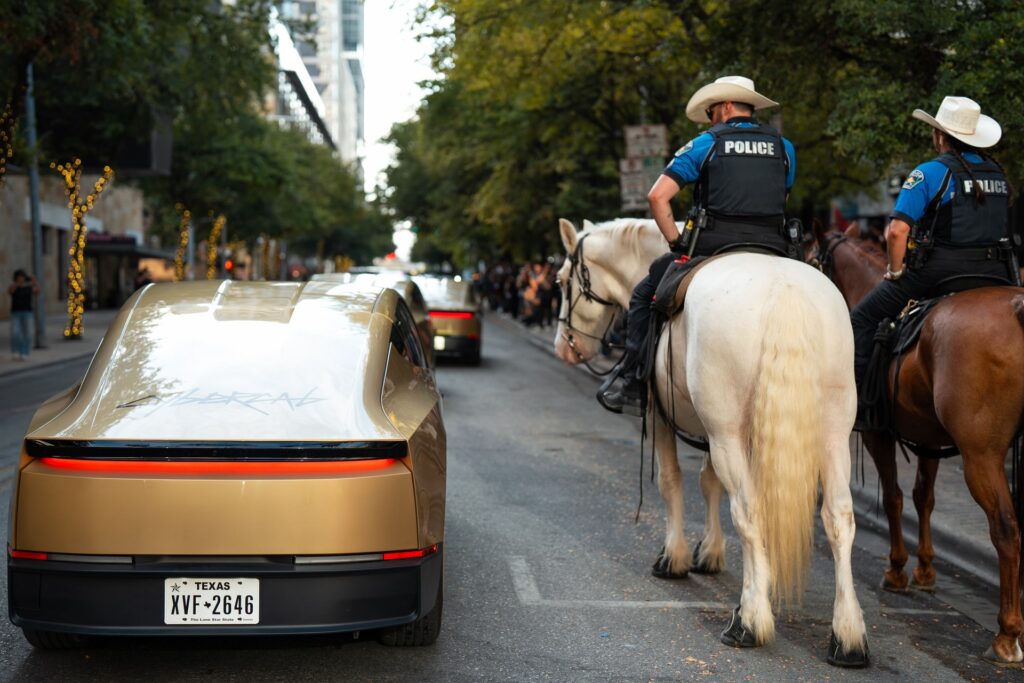
Federal safety standards were written for cars with drivers. One says the service brakes “shall be activated by means of a foot control.” Tesla certified the Cybercab as compliant with every standard that applies, and NHTSA opened an audit of that certification on Sept. 3, the day commercial service started. A Special Order followed on Sept. 10 with 21 requests, including how a car with no brake pedal meets that brake rule, and how Tesla used temporarily installed controls during testing. NHTSA has given Tesla more time, and its sworn answers are reportedly due Oct. 30. The audit is not a finding, and rides continue.
NHTSA is also rewriting the rules. In June it proposed dropping the brake pedal requirement for vehicles designed never to be driven by a person, but that’s still a proposal. The other route, the exemption Zoox took, comes with a cap of 2,500 vehicles a year, which doesn’t fit a line rated for more than 125,000.
Software sets the pace too. On the July earnings call, Musk said Tesla first has to gather Cybercab-specific driving data with units retrofitted with steering wheels and pedals. Tesla’s head of AI software, Ashok Elluswamy, said manufacturing targets are aligned “to roughly match the projected growth rate of the unsupervised miles.”
What to watch next
Tesla reports third-quarter results on Oct. 21, the first earnings call since Cybercab rides opened. The NHTSA answers are due nine days later. And in February, Musk answered “Yes” when asked whether Tesla would sell a Cybercab to a customer for $30,000 or less before 2027. Tesla hasn’t opened orders or published a price, and there are about 12 weeks left.
Tesla’s third-quarter deliveries don’t break out the Cybercab, and Tesla’s 2025 Impact Report was already pitching it as the efficiency play. The car works and the factory is built. Now the rulebook and the software decide how many Cybercabs reach the street.
FAQ
How much does the Tesla Cybercab cost?
Tesla hasn’t published a price, and you can’t order one. Musk said in February that Tesla would sell one to a customer for $30,000 or less before 2027.
Where can I ride in a Cybercab?
Only in Austin, Texas, through Tesla’s Robotaxi app. Service there runs until 11 p.m.
Does the Cybercab have a steering wheel or pedals?
No. It has no steering wheel, pedals, or mirrors. Tesla has fitted some test units with temporary controls to gather driving data.
Is the Cybercab legal on public roads?
Tesla certified it as meeting federal safety standards. NHTSA is auditing that certification, but it hasn’t made a finding, and rides continue in Austin.
What’s the Cybercab’s battery and range?
Tesla’s EPA filing points to a battery of about 48 kWh and a 163 kW front motor. Tesla hasn’t published an official range rating.