
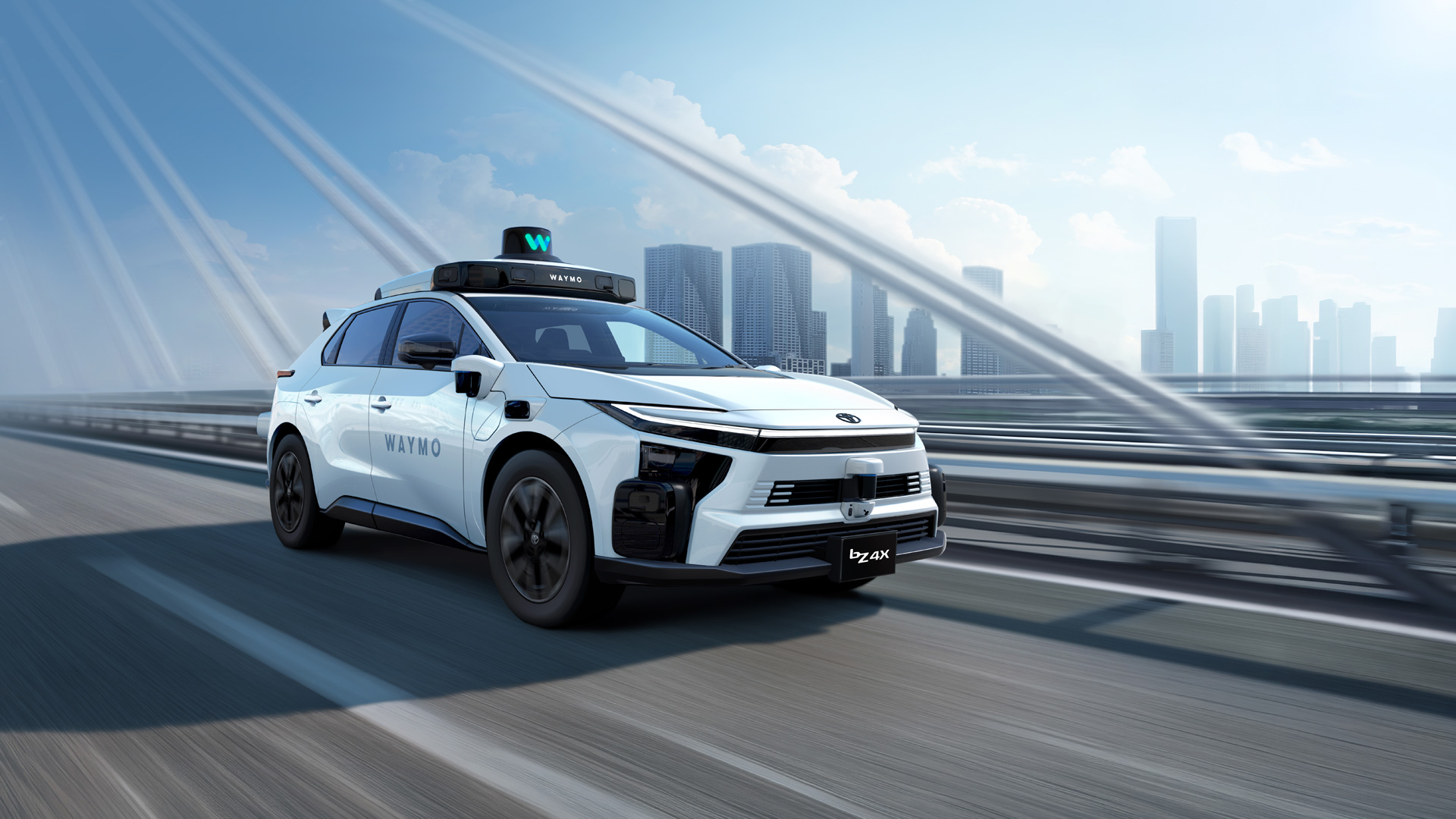
Waymo’s next robotaxi will come off a Toyota assembly line with its self-driving hardware already installed. Toyota and Waymo said on October 30 that Toyota will build autonomous versions of the bZ4X electric SUV at its Takaoka plant in Toyota City, Japan, with a test and validation fleet starting in Japan in 2027. The UK and other Waymo markets are planned for the years after that, according to the joint release from Toyota and Waymo.
The badge matters less than the build process. Every Waymo on the road today started as a finished car that was later fitted with sensors and computers. This one is designed to leave the factory ready to drive itself.
What Toyota and Waymo announced
The deal builds on a preliminary agreement the two companies signed in April 2025. The new phase has three parts.
Toyota will build the vehicles from start to finish at Takaoka. The release says the entire process happens under one roof, from assembling the base bZ4X to integrating Waymo’s autonomous driving hardware.
The fleet will start in Japan. Initial operations in 2027 are for testing and validation, not a public launch, and neither company has given a date for paid rides in the bZ4X. The release describes the vehicles as Level 4 autonomous, meaning no human driver is expected to take over inside the operating area. Deployment to the UK and other markets Waymo serves comes later.
The two will keep exploring autonomy for personally owned Toyota vehicles, and Woven by Toyota will look at how Waymo’s real-world driving data could improve safety for other road users. There’s no product or timeline attached to either.
The robotaxi version gets rider-focused changes: generous rear legroom, automatic doors, a power liftgate and ambient lighting. Toyota frames those as accessibility features. In a vehicle with no driver to help, automatic doors and a powered liftgate replace the person who would otherwise open and close them for a rider.
Waymo co-CEO Dmitri Dolgov said in the release that Waymo has been “up to 20x safer than human drivers when it comes to serious crash injuries” in the areas it operates. That is Waymo’s own figure.
Why building the sensors in at the factory matters
Waymo has done things the hard way until now. As The Verge described it, the company buys a finished vehicle, ships it to a separate facility, and retrofits it with sensors, computers and extra wiring. Waymo runs that work at its driver integration plant in Mesa, Arizona, where it is currently ramping a new silver version of the Ojai.
Retrofitting costs money in ways that don’t show up on a spec sheet. Each vehicle gets built twice, once by the automaker and once by Waymo. Sensor mounts need custom brackets, and wiring has to be routed through a body that wasn’t designed for it. Every car also makes an extra trip between plants.
Doing it on Toyota’s line removes most of that. The brackets and harnesses can be designed into the vehicle, installed by the same workers and robots that build the rest of the car, and checked by the same quality process. That is how automakers already handle airbags, radar and every other part that has to work every time.
Scale is the reason it matters now. When Waymo introduced its sixth-generation Driver in February, it said the hardware was built for “tens of thousands of units a year,” and cut the camera count from 29 to 16 by moving to 17-megapixel cameras, according to The Verge. Neither company has said whether the bZ4X uses that sixth-generation hardware, but fewer, cheaper sensors and a car designed to take them point in the same direction, a lower cost per robotaxi.
Where the bZ4X fits in Waymo’s fleet
Waymo’s fleet has been built mostly on the Jaguar I-Pace, which runs its fifth-generation hardware. Jaguar stopped building the I-Pace at the end of 2024, so Waymo needed new vehicles regardless. The Zeekr-built Ojai minivan was the first to get the sixth-generation Driver, and a Hyundai Ioniq 5 version is set to follow.
The bZ4X makes four vehicle types from four automakers: Jaguar, Zeekr, Hyundai and Toyota. That supports Waymo’s long-running argument that it supplies the driver, not the car. In February, Waymo said it planned to add about 2,000 vehicles in 2026 for a fleet of roughly 3,500, with tens of thousands as the long-term goal. A second high-volume supplier with factory integration helps with that.
Why Japan first, then the UK
Japan and the UK both drive on the left. A bZ4X built in Toyota City for the Japanese market is right-hand drive from the start, which is the layout both of those markets need. Engadget reported that the companies are aiming the bZ4X at right-hand-drive markets after Japan.
Waymo already has a head start in Tokyo. It began testing there with I-Pace vehicles in 2025, with drivers from Tokyo taxi company Nihon Kotsu operating the cars while Waymo mapped the city and trained its software, Engadget reported. The bZ4X is the vehicle meant to scale that work, built in Japan by a Japanese automaker for a market where Toyota has deep relationships with regulators and fleet operators.
A different approach from Tesla’s Cybercab
The Toyota-Waymo approach is the opposite of what Tesla is doing. Tesla’s Cybercab is a purpose-built two-seater with no steering wheel or pedals, built on its own line designed around the vehicle, which we covered in our look inside the Cybercab line and why a robotaxi without a steering wheel changes the math.
Toyota and Waymo are starting from a mass-production crossover and adapting it. That trades some of the cost and packaging gains of a clean-sheet robotaxi for a vehicle that already has crash certification, a supply chain and a factory turning it out. Toyota hasn’t said whether the robotaxi bZ4X keeps its steering wheel and pedals, and that detail will matter for how quickly it can be approved in each market.
What it means if you’re shopping for a Toyota EV in the US
Nothing changes yet. Toyota and Waymo haven’t announced US deployment for the bZ4X robotaxi, and the 2027 testing is in Japan. The bZ you can buy at a US dealer today has Toyota’s driver-assist features, not Waymo hardware.
The line about personally owned vehicles is the part to watch, but it comes with no product, price or date. Until one exists, the retail bZ is judged on range, price and charging like any other EV. Our Toyota bZ buyer guide covers every trim; the $37,980 XLE FWD Plus has the longest EPA range in the lineup at 314 miles.
For Waymo, the deal means a big automaker will build its robotaxis with the hardware already installed. Retrofitting doesn’t scale well, so that could matter more to Waymo’s growth than any new city it adds next year.