
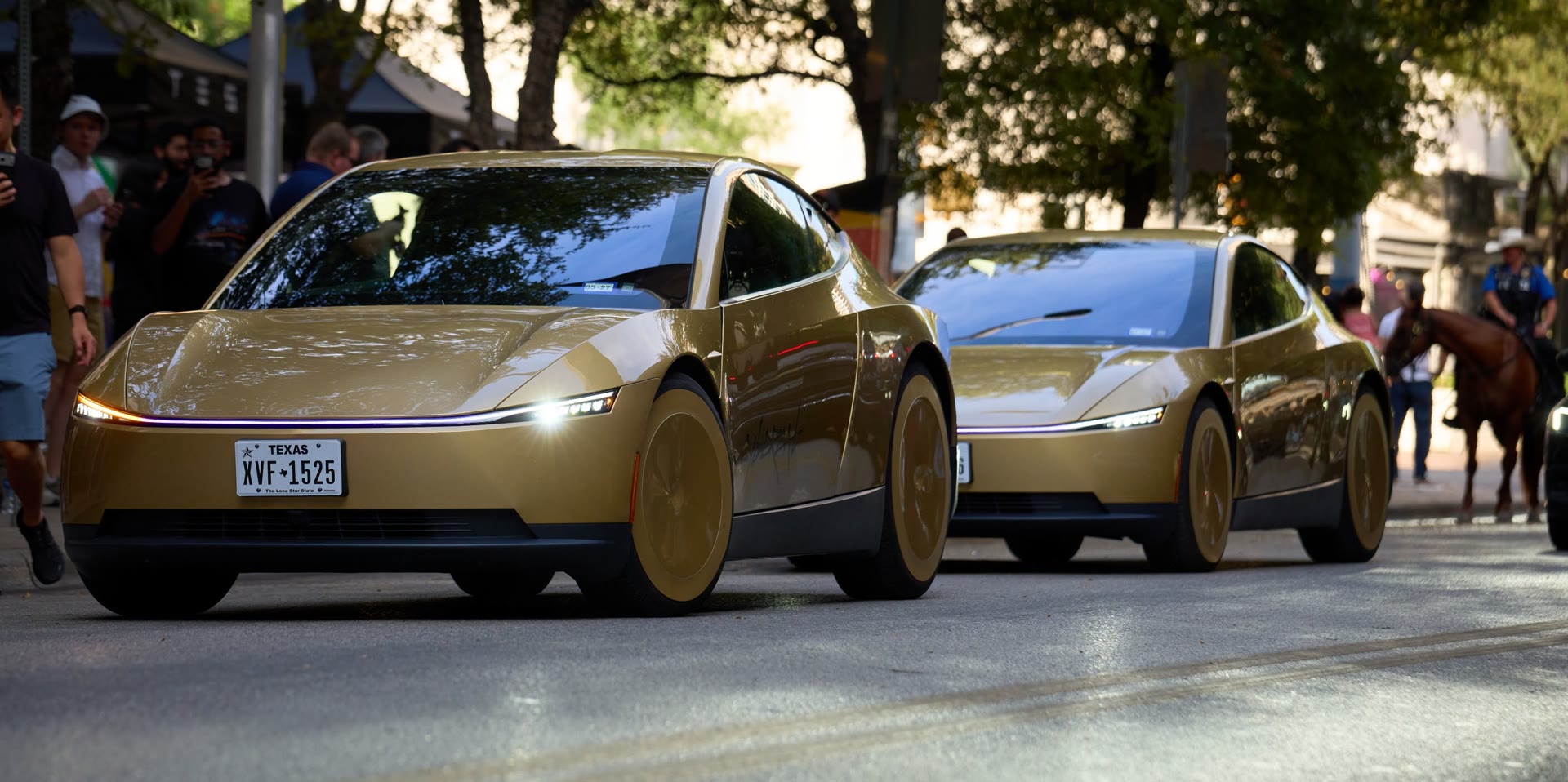
Can you buy a Tesla Cybercab? Not yet, and Tesla says most of them will never be sold. On its October 21 webcast, Lars Moravy, Tesla’s vice president of vehicle engineering, said Tesla is trying to get the first Cybercabs to customers by the end of 2026. Elon Musk followed by saying the vast majority will stay Tesla-owned and be sold as rides, not cars.
There’s no order page, price or delivery date yet, so anyone picturing a two-seat robotaxi in their own driveway should keep waiting. Here’s what Tesla actually said, where you can ride one right now and what makes more sense if you want a Tesla that drives itself.
What Tesla said
The question came from shareholders: when will the Cybercab be available for customer purchase or ownership? Moravy took it first. “In short, we’re trying to get Cybercabs to customers by the end of this year, 2026,” he said. Every Cybercab coming off the line in Texas still goes to Tesla’s own Robotaxi fleet, he added, and Tesla plans to start small and learn how delivery, ownership and fleet management work once autonomous cars are in customer hands.
Musk then set expectations. The Cybercab, he said, is “primarily going to be something that is offered as like transport as a service,” while the Model 3, Model Y and Roadster are “the cars that you’d want to own.” In his words, “the vast majority of the Cybercab stuff will be essentially Tesla-owned.”
Neither of them said who the first customers would be. They could be private buyers, but they could just as easily be companies or fleet operators. Tesla gave no price, no reservation process and no list of places where an owned Cybercab could be used. Until Tesla publishes an order page, treat the end of 2026 as a target for a small first batch, not a launch.
Where you can ride one now
Riding is the realistic way to try a Cybercab this year. Tesla’s Q3 2026 Update says Robotaxi rides in Cybercabs started in Austin on September 3, and that Austin service now runs from 6 a.m. to midnight.
Austin won’t be the only Cybercab city for long. Ashok Elluswamy, who leads Tesla’s Autopilot and AI software, said on the call that Tesla will launch the Cybercab in Dallas next month, and CFO Vaibhav Taneja said Tesla plans to bring it to “some other cities before the end of this year.” Elluswamy also said Tesla’s Robotaxi service already runs in six cities, so the Cybercab is mostly joining markets Tesla already serves. Every city Tesla has named so far is in the US, and it hasn’t given a date for a Cybercab market anywhere else.
| Item | What Tesla has said | Source |
|---|---|---|
| Cybercab rides | Austin since September 3, 6 a.m. to midnight | Q3 2026 Update |
| Next city | Dallas, next month (November) | Q3 webcast, Elluswamy |
| Customer deliveries | Aiming for end of 2026, starting small | Q3 webcast, Moravy |
| Ownership model | Mostly Tesla-owned, sold as rides | Q3 webcast, Musk |
| Price to buy | Not announced | Not announced |
Why Tesla wants to keep them
Tesla’s reasoning comes down to the number that decides whether a robotaxi business works: what each paid mile costs. Taneja said Tesla’s goal is 30 cents per paid Robotaxi mile. He was plain that Tesla isn’t there yet, but said the company sees a path to it as it scales and learns to manage pickups, drop-offs and cleaning across a fleet. Tesla didn’t share its current figure.
A purpose-built car is how Tesla plans to get there. The Cybercab is a small two-seater with no steering wheel or pedals, a single front motor and a pack of about 48 kWh, based on Tesla’s EPA filing (we covered those specs in our Cybercab one-month look). Moravy said it has 50% fewer parts than any vehicle Tesla has built. A car designed like that earns its keep by driving paid trips most of the day, and that is much easier to plan when Tesla owns it, cleans it, charges it and sends it where riders are.
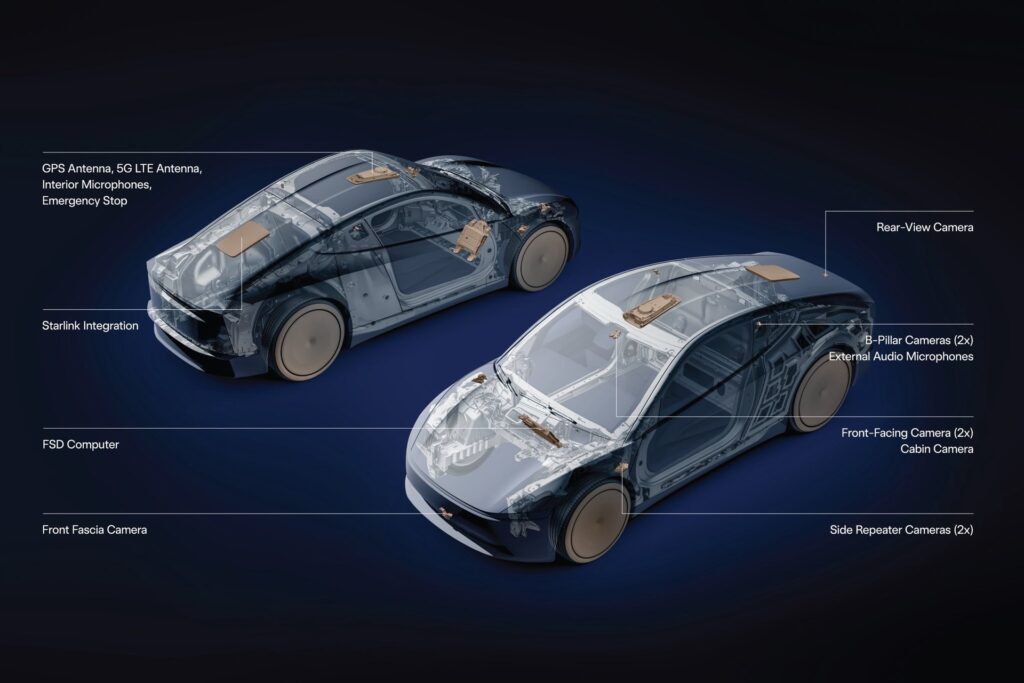
It also explains why Tesla is in no rush to sell them. Tesla’s Q3 Update lists more than 125,000 Cybercabs a year of installed capacity at Giga Texas. Moravy said the line can run faster than that, but Tesla is building only as many as its Robotaxi service needs right now. Every Cybercab sold to an owner is one less in Tesla’s own fleet while the service is still growing.
A privately owned Cybercab would also be an odd car to live with. With no steering wheel, it can only go where Tesla’s driverless software is allowed to drive, so an owner outside a supported area would have a car they can’t use. Regulators are still weighing in, too. In September, NHTSA opened an audit query into how Tesla certified the Cybercab as meeting federal safety standards without a steering wheel, pedals or mirrors. That review isn’t a recall or a finding against Tesla, but it’s one more reason to expect fleets before families.
What to do if you want a Tesla that drives itself
If what you want is a Tesla you own that can someday drive without you, the path Tesla described on the same call runs through its regular cars. Elluswamy said the FSD V15 update will bring the software that runs the Cybercab to customer cars, and Tesla is aiming to let the first owner vehicles join the Robotaxi network around the second quarter of 2027. Our FSD V15 explainer breaks down which cars qualify and what that target really means.
That plan has its own catches. It depends on hardware, on Tesla’s geofenced service areas and on regulators, and Tesla’s past self-driving dates have often slipped. FSD (Supervised) still needs an attentive driver today. If you’re weighing it against Rivian’s hands-free system, our Point to Point vs FSD comparison lays out who qualifies and what each costs.
A few practical takeaways:
- Don’t wait on a Cybercab if you need a car. There’s no price, order page or ownership date, and Tesla’s CEO calls its other models the cars to own.
- Ride one first. If you’re in or visiting Austin, the Robotaxi app is the way to try a Cybercab now, and Dallas is next.
- Watch for an order page, not a quote. A real ownership launch would come with a price, eligibility rules and a list of places you can use it. Until Tesla posts that, “customers by end of 2026” is a target.
- If self-driving is the goal, check the computer. Elluswamy used the Model Y as his example, and Musk has said HW3 cars can’t run unsupervised FSD, so a car with Tesla’s newer AI4 computer is the one to shop for.
The bottom line
Tesla does plan to put some Cybercabs in customer hands, and it wants the first ones out before 2027. But Musk was clear that the Cybercab is mainly a ride you pay for, not a car you buy, and most will stay in Tesla’s own fleet. For now, the way to get into one is the Robotaxi app in Austin, with Dallas coming in November.