

An EV that shows 0% is not always sitting on a completely empty pack. The number on the dash is the maker’s usable energy, the portion of the battery it designed you to see and spend. Some energy can still be left outside that scale. That reserve, often called the EV battery buffer, is held back so the cells are not run all the way down.
That difference showed up clearly in a highway test earlier this month. Out of Spec Testing ran a BMW iX5, a Lucid Gravity Grand Touring, a Rivian R1S and a Porsche Cayenne Turbo Electric at a steady 70 mph, and InsideEVs reported the results on November 16. The iX5 covered 410.8 miles, the most of the four, but only after it had already shown 0%, stopped, and then started again. BMW has not explained that last step. For anyone who drives an EV, the useful lesson is simpler than the test-day drama: plan on the gauge, and treat the first shutdown as the end of the road.
144 kWh
BMW’s net usable rating for the iX5 pack
0% for ~10 miles
Then the test iX5 shut down near 400 miles
About 4 kWh more
Released after a restart, per the test report
BMW rates the iX5 at 144 kWh of usable energy
When BMW talks about the iX5 battery, it does not quote a raw, or “gross,” pack size in its US launch materials. It quotes a usable figure. The company’s June 30 newsroom release on the new X5 and iX5 says the cell-to-pack design “supports 144 kWh of net usable energy.” It is the energy BMW says the pack is designed to deliver.
“Usable” is the point. Most EV lithium-ion packs are kept out of their very top and very bottom, because holding cells at either extreme for long periods is hard on them. Many automakers map the displayed 100% to 0% onto a window inside the pack’s full capacity, and they call that window the usable capacity. Whatever sits above 100% or below 0% is still in the battery. It is just not part of the gauge you drive with.
How large that hidden margin is varies by car, chemistry and software, and most makers do not publish a percentage. The honest way to read a spec sheet is to treat a stated usable figure, like BMW’s 144 kWh, as the energy the car is designed to deliver, not as a promise that nothing remains at 0%.
The chemistry can change the habit at the top of the gauge, even if it does not change the idea of a reserve at the bottom. Ford tells LFP customers they can make 100% their daily charge target, which we covered when the first Ford LFP cells shipped for Fathom prototypes. That is a charge-limit choice, not a reason to keep driving after the display is empty.
The iX5 kept going after it first showed 0%
In the 70 mph test, the iX5 first shut down near 400 miles. According to InsideEVs, it had been showing 0% for roughly 10 miles and had used almost exactly 144 kWh, the same figure BMW publishes as net usable energy. Restarting the SUV released about 4 kWh more, enough to keep it at highway speed out to 410.8 miles. The testers’ host suggested the car may hold back a small reserve that a restart unlocks. He stressed that it was a theory, not an explanation from BMW.
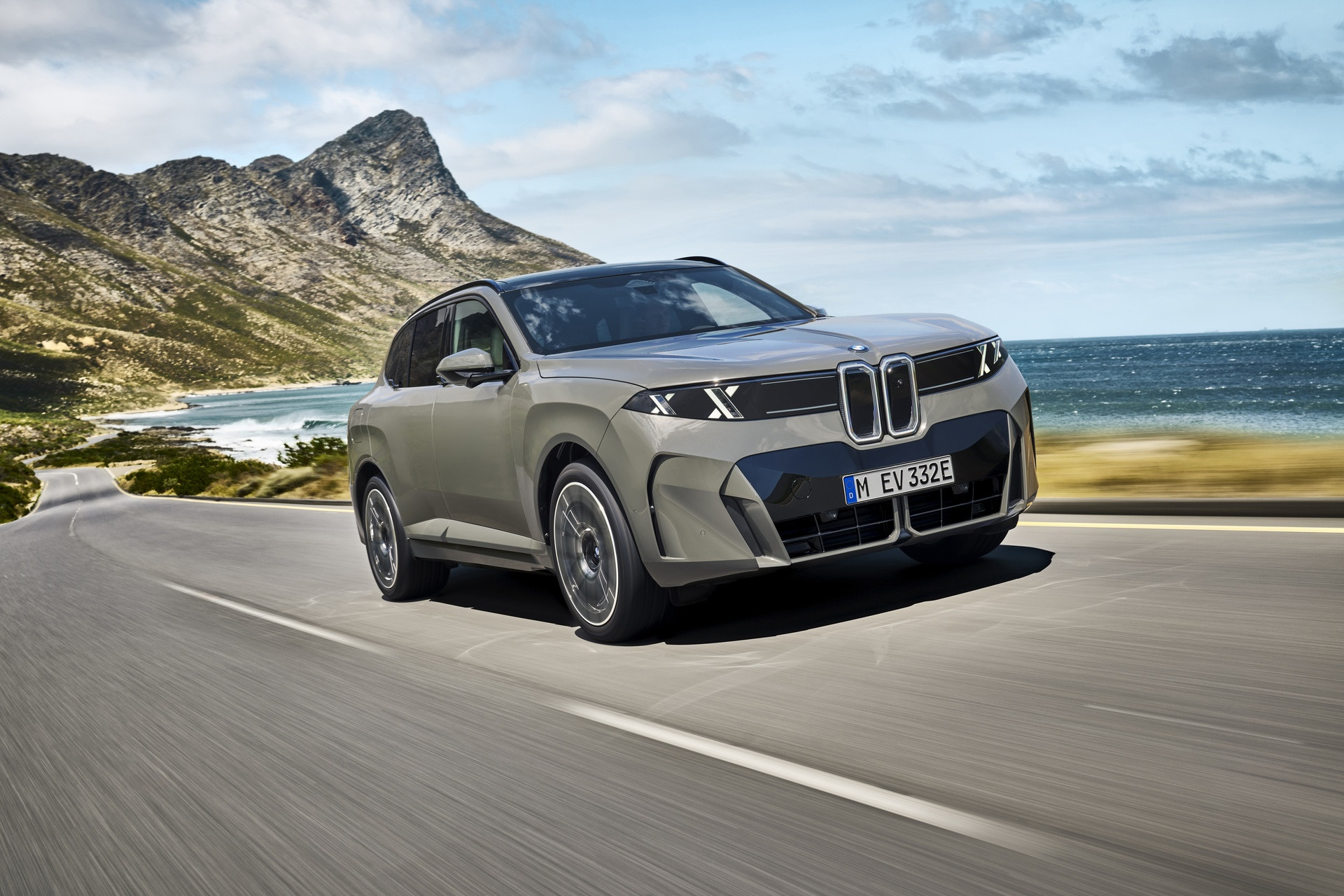
We walked through the full results, including efficiency and price per test mile, in our iX5 range story. The Gravity still used the least energy per mile in that group. The BMW simply had more usable kilowatt-hours to spend, which is why it went farther, restart and all.
An earlier Gravity test is worth mentioning only as a caution about reading too much into one 0% reading. In October 2025, InsideEVs reported that Lucid engineers reviewed State of Charge’s 70 mph run and said that car should not have read 0% because about 6 kWh still remained. They also flagged a possible rear drive-unit problem on that vehicle, and the tester said he did not think a low-end reserve that large was how the Gravity is normally set up. It is a useful reminder that a 0% display can hide energy, and a poor reason to assume your Gravity, or any other EV, has 6 kWh waiting below empty.
The EV battery buffer is a margin, not extra range
The reserve below 0%, when it exists, is there mainly to protect the cells, not to add a secret range figure you can plan on. Software, temperature, battery age and how hard you are driving can all change how suddenly the last indicated percent disappears, and whether anything is left after that.
If the car slows itself, drops into a reduced-power mode or shuts down, get off the road somewhere safe. That is the trip’s end, even if a later restart adds a few miles in a test. Do not budget a commute or a highway stretch on energy the gauge no longer shows. Charge before you get to single-digit percentages when you can, and use the car’s trip planner or a reliable charging map rather than the hope that 0% still means “a little left.”
Cold weather makes that advice more important, because it shrinks the energy you can actually use, including at the bottom of the pack. Preheating the battery while the car is still plugged in is the most reliable way to get some of that energy back, which we cover in our winter preconditioning guide.
The iX5 test is a good illustration and a bad template. It showed that “usable” and “empty” are not the same word. It also showed that the extra miles came only after the SUV had already stopped. For day-to-day driving, the percentage on the dash is the number that matters, and 0% means you are finished using the pack the way the automaker intended.
FAQ
If my EV shows 0%, can I keep driving?
Sometimes, for a short distance, and you should not count on it. In the recent iX5 highway test, the BMW showed 0% for about 10 miles, then shut down, and only continued after a restart. BMW has not said that owners can repeat that. Treat 0%, or the first shutdown, as the point to stop and charge.
What does “usable” battery capacity mean?
It is the portion of the pack the automaker maps to the 100% to 0% gauge, and usually the battery figure on the spec sheet. BMW, for example, rates the iX5 at 144 kWh of net usable energy. Some additional energy can sit outside that window to protect the cells. Makers rarely publish how much.
Should I plan a trip using energy below 0%?
No. Any reserve under the displayed empty point is there as a margin, not as a second tank. Temperature, age and driving load can change what, if anything, is left. Arrive at the charger with a visible percentage remaining.