
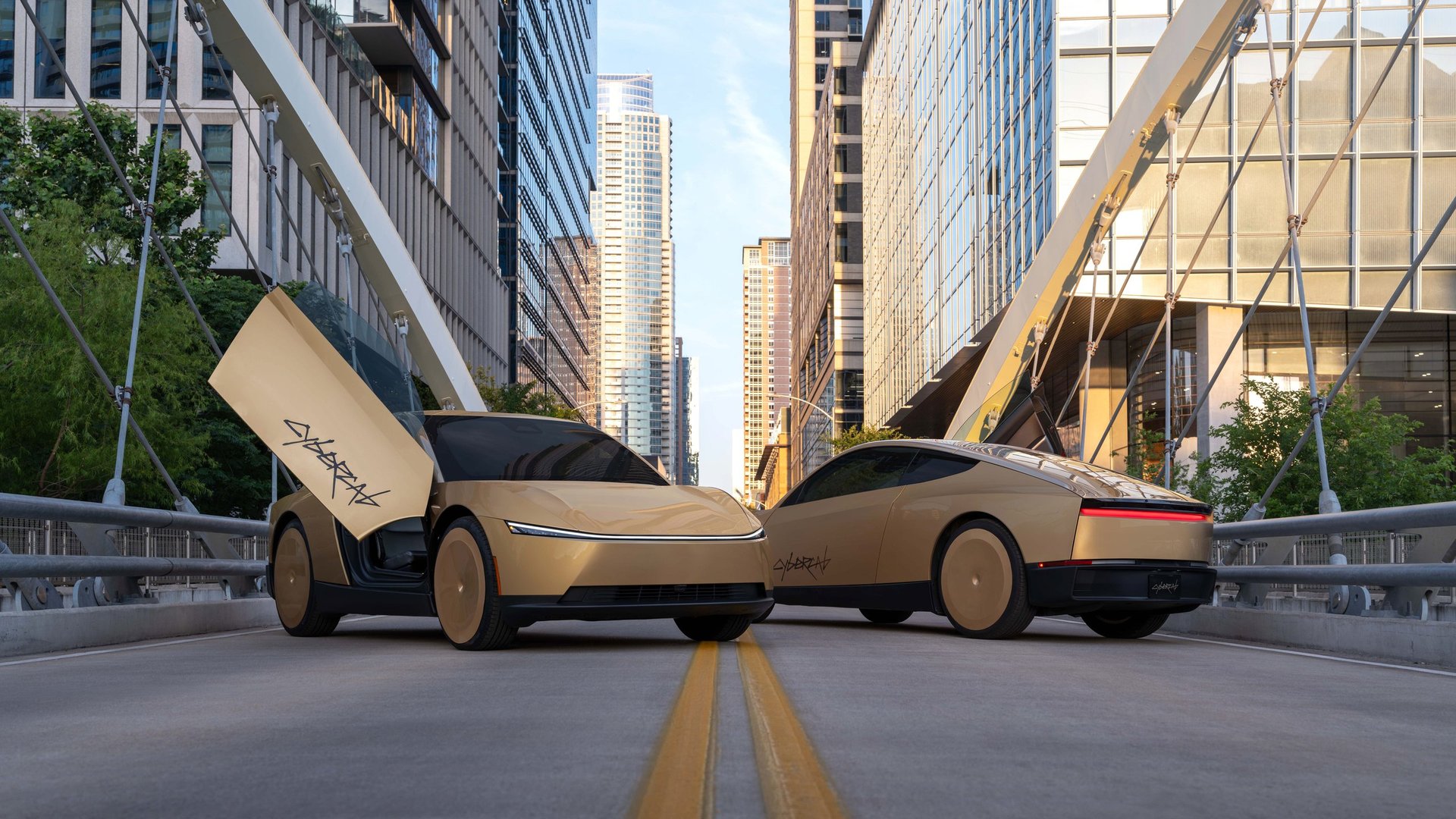
Cybercab efficiency is the best in the business on paper. Tesla says its two-seat robotaxi uses 165 watt-hours per mile, about 6 miles on every kilowatt-hour, and calls it the most efficient production EV ever built. That’s roughly 30% less energy per mile than the most efficient cars you can buy today. That would put it well ahead of the Lucid Air and Tesla’s own Model 3. That’s efficient enough to beat a standing-room-only CNG city bus on energy per rider with just one person aboard, and with two riders it uses about half. Below, we break the number down in every unit, compare it with today’s most efficient EVs, and explain what Tesla’s engineers did to get there.
Where the 165 Wh/mi figure comes from
Lars Moravy, Tesla’s vice president of vehicle engineering, gave the number on stage at Tesla’s Model S and Model X Signature delivery event in May. “That is the most efficient EV that has ever been certified and built,” he said. “It’s 165 Wh/mile, which is like half of what we started Model S with.” Tesla’s Robotaxi account repeated the claim in September: “Most efficient production EV ever. That efficiency is what will make Cybercab one of the lowest cost-per-mile modes of transport.”
What you won’t find is a Cybercab page on fueleconomy.gov. The EPA hasn’t published a window-sticker rating for it, because Tesla doesn’t sell it to the public. What does exist is Tesla’s EPA certification filing from May 21, which holds the raw lab results.
What the EPA filing actually shows
Tesla’s 165 Wh/mi comes from Lars Moravy, and the Cybercab doesn’t have an EPA window sticker yet, so here’s how the certification filing lines up with it.
Tesla ran the Cybercab through the EPA’s multi-cycle range test at its own lab in April. These are measured results, not targets, but they’re unadjusted lab numbers that haven’t yet been scaled down for real-world driving:
- Range, city and combined cycle (unadjusted): 418 miles
- Range, highway (unadjusted): 375 miles
- Energy to recharge from the wall after the test: 53.4 kWh
- Battery: 326 volts and 146 amp-hours, about 48 kWh
- Curb weight: 3,113 lb (1,412 kg)
- Motor: one 163 kW (219 hp) permanent-magnet motor driving the front wheels
The 418 miles in Tesla’s filing comes from a gentle lab test, with no heater or air conditioning running and no highway speeds. Real driving uses more energy, so the EPA trims lab results before putting them on a window sticker, usually to about 70% of the lab figure. If the same cut applies to the Cybercab, 418 lab miles works out to roughly 293 miles in everyday driving. That’s our own estimate, since the EPA hasn’t published a rating for the Cybercab yet.
It also explains the 165. Divide a 48 kWh battery by about 293 miles and you land on roughly 165 Wh per mile. That makes 165 a battery-side number. EPA ratings for cars you can buy are measured from the wall, so they include the energy lost while charging. Measured the same way, the filing’s 53.4 kWh over 418 miles, adjusted, works out to about 182 Wh per mile. That’s still far ahead of anything on sale. Just keep the two numbers straight when you compare.
Cybercab efficiency in every unit
Readers outside the US mostly think in kWh per 100 km, so here’s the same efficiency every way it’s usually written.
| Unit | Tesla’s figure (165 Wh/mi) | Our wall-to-wheels estimate from the EPA filing |
|---|---|---|
| Wh per mile | 165 | about 182 |
| Miles per kWh | 6.1 | 5.5 |
| kWh per 100 miles | 16.5 | 18.2 |
| Wh per km | 103 | 113 |
| kWh per 100 km | 10.3 | 11.3 |
| km per kWh | 9.8 | 8.8 |
| MPGe | not comparable (battery side) | about 185 |
MPGe only works for wall-based numbers, since the EPA builds charging losses into it. That’s why we don’t put an MPGe next to the 165.
How the Cybercab compares with the most efficient EVs
Every number below is an official EPA combined rating from fueleconomy.gov, measured from the wall. The Cybercab rows show Tesla’s figure and our wall-based estimate, since there is no EPA label for it.
| Vehicle | Wh/mi | kWh/100 km | mi/kWh | MPGe | EPA range | Extra energy per mile vs 165 |
|---|---|---|---|---|---|---|
| Tesla Cybercab (Tesla’s figure) | 165 | 10.3 | 6.1 | n/a | not rated | baseline |
| Tesla Cybercab (our estimate, wall) | ~182 | ~11.3 | ~5.5 | ~185 | ~293 mi est. | +10% |
| 2026 Lucid Air Pure RWD (19 in) | 231 | 14.4 | 4.3 | 146 | 420 mi | +40% |
| 2026 Tesla Model 3 Standard RWD | 243 | 15.1 | 4.1 | 139 | 321 mi | +47% |
| 2026 Tesla Model Y Standard RWD (18 in) | 243 | 15.1 | 4.1 | 138 | 321 mi | +47% |
| 2026 Tesla Model 3 Premium RWD | 246 | 15.3 | 4.1 | 137 | 363 mi | +49% |
| 2026 Tesla Model Y Long Range RWD | 252 | 15.7 | 4.0 | 134 | 357 mi | +53% |
| 2026 Toyota bZ FWD | 255 | 15.8 | 3.9 | 131 | 314 mi | +55% |
| 2025 Hyundai Ioniq 6 RWD (18 in) | 260 | 16.2 | 3.8 | 132 | 342 mi | +58% |
| 2026 Tesla Model S AWD | 271 | 16.8 | 3.7 | 124 | 410 mi | +64% |
Read the math the right way around. If you take Tesla’s 165 against the Lucid Air Pure’s 231, the Cybercab uses about 29% less energy per mile, and the Lucid uses about 40% more. Against our wall-based estimate, a Model 3 Standard still needs about a third more energy for every mile. Either way, the gap is real.
Why the Cybercab is so efficient
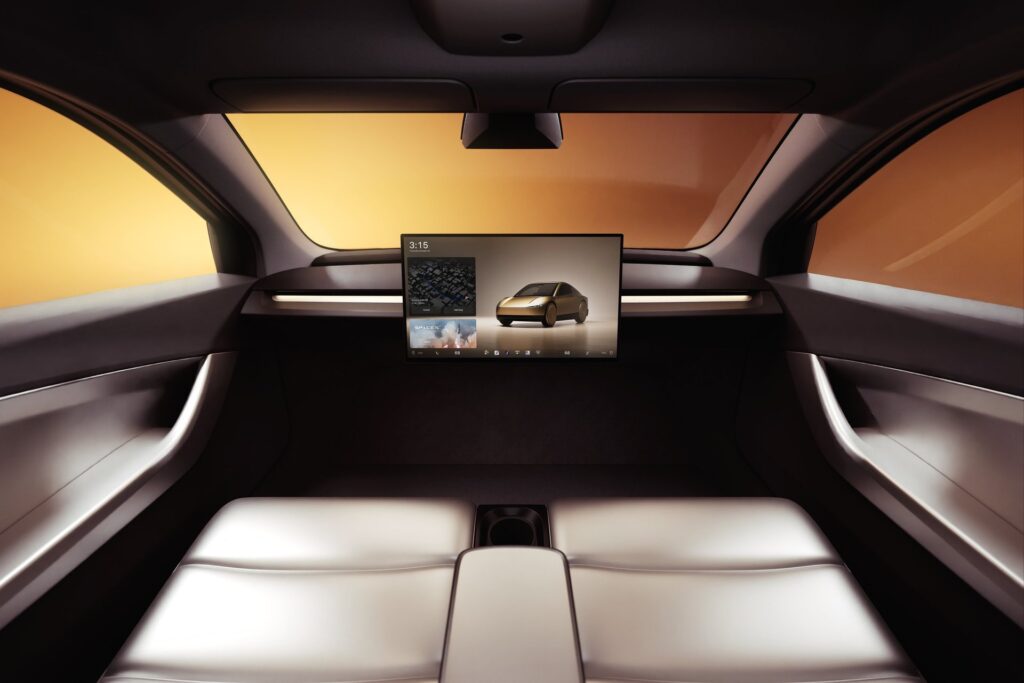
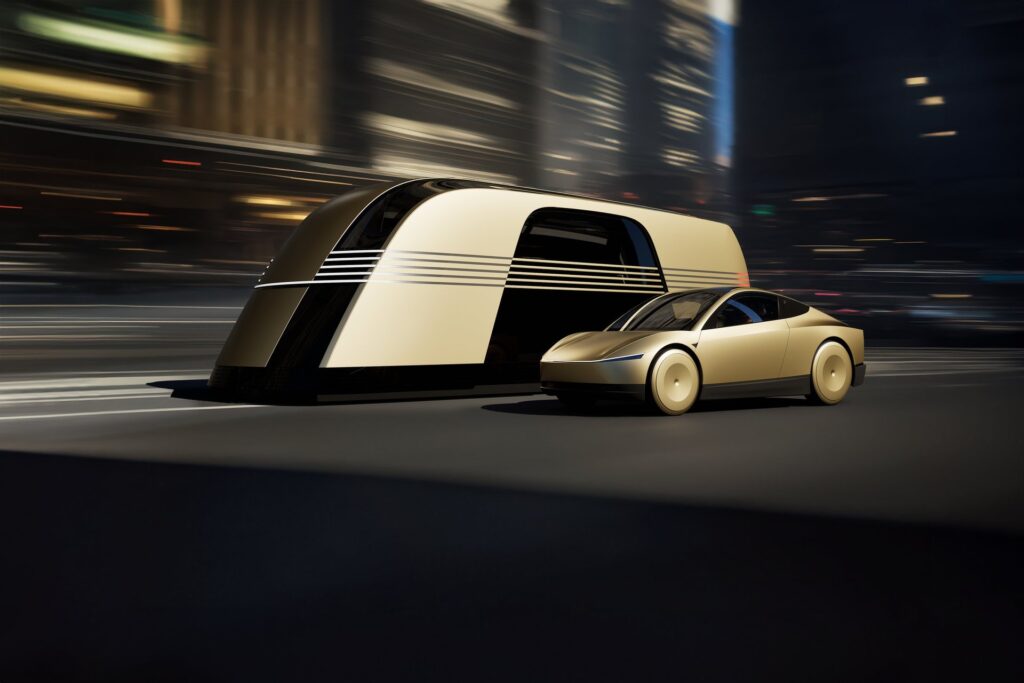
It’s built for one or two riders. Tesla designed the Cybercab with two seats because most ride-hail trips carry one or two people. Two seats let the body narrow toward the back in what Tesla’s designers call a teardrop shape, and a narrower car pushes less air. Tesla hasn’t published an official drag coefficient, so we’re leaving the often-quoted figure out until it does.

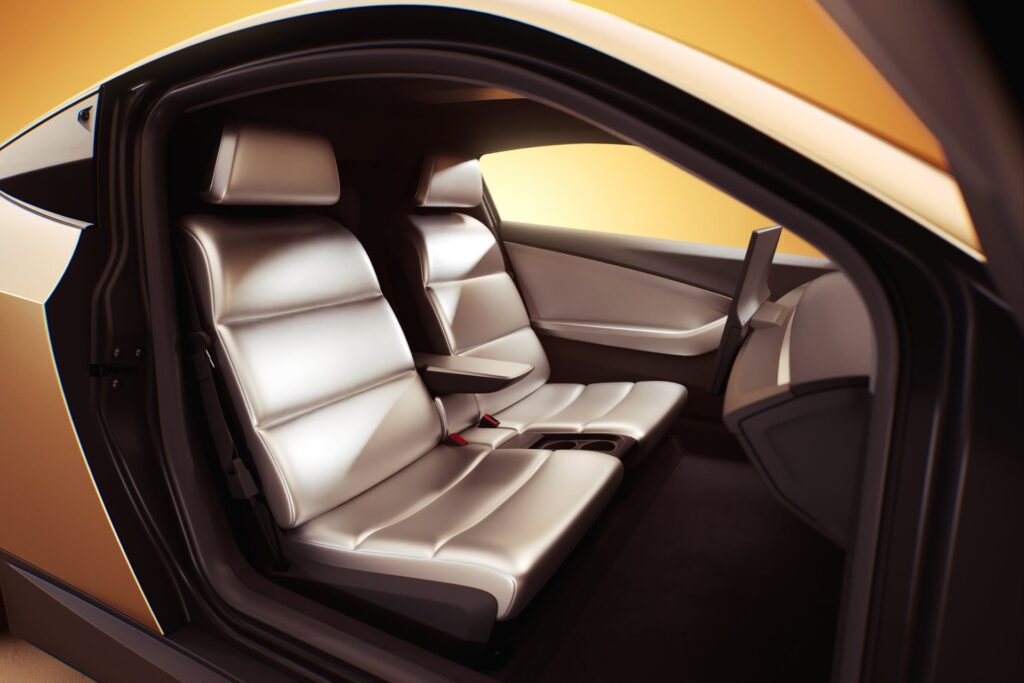
It’s light. At 3,113 lb (1,412 kg), it’s light for an EV. There’s no steering column, no pedal box, no mirrors and no back seat. Less weight means less energy to get moving and less rolling resistance, and that lets Tesla use a smaller battery, which saves weight again.
The battery is small on purpose. About 48 kWh is small for a Tesla. Tesla’s second-quarter update called battery pack capacity “the main limiting factor” on how many vehicles it can build, so a small pack stretches the supply across more cars as well as cutting weight.
The drive unit is new. The Cybercab is Tesla’s first front-wheel-drive car, with a single 163 kW motor on the front axle. Musk says the motor uses no rare earth metals “but maintains the same range,” which he called “extremely hard to achieve.”

What isn’t in the number. At its 2024 reveal, Tesla said the Cybercab charges wirelessly, and the FCC has since cleared Tesla’s system for lining a car up over a charging pad. Wireless charging usually loses a bit more energy than a cable, and Tesla hasn’t published an efficiency figure for it. The EPA test used a plug-in charge at 208 volts, so any wireless losses aren’t in any published number yet. Brake-by-wire has been widely reported too, but Tesla hasn’t detailed it or tied it to efficiency.
What it means for cost per mile
Electricity is one of the few robotaxi costs that’s easy to estimate. At 165 Wh per mile, the Cybercab covers about 6 miles per kWh, so the energy cost per mile is your electricity price divided by six. At $0.15 per kWh, that’s about 2.5 cents a mile. On our wall-based estimate, it’s closer to 2.7 cents. A Model 3 Standard at 243 Wh per mile costs about 3.6 cents at the same price. In metric terms, 10.3 kWh per 100 km means €3.10 per 100 km at €0.30 per kWh, wherever you are.
Energy is only part of it. Musk says the Cybercab is “optimized for lowest possible cost per mile (fully loaded),” meaning the cost of the car, insurance, cleaning and upkeep spread over every mile it drives. Tesla’s 2024 target was about 20 cents a mile to run over time, and that’s still a target, not a measured result. Tesla also projects that a fully autonomous Cybercab in ride-hailing will nearly halve emissions per mile compared with a Model 3 or Model Y, largely because one car keeps working all day instead of sitting parked.
Cybercab vs a natural gas city bus, per passenger
By Tesla’s 165 Wh/mi figure, a Cybercab with one rider beats a standing-room-only CNG bus on energy per person. With two, it isn’t close.
A bus is the obvious benchmark for moving people efficiently, so we compared the Cybercab with a typical 40-foot compressed natural gas (CNG) transit bus. All of the per-passenger numbers below are our estimates, built from federal data.
The bus side starts with fuel use. A National Renewable Energy Laboratory survey of 10 US transit agencies running more than 4,000 CNG buses found real-world fuel economy in 2009 and 2010 of 2.5 to 3.9 miles per diesel gallon equivalent, averaging 3.2. The Department of Energy’s Alternative Fuels Data Center puts a diesel gallon at 128,488 Btu, about 37.6 kWh. That works out to roughly 11.8 kWh of fuel energy per bus-mile, or about 7.3 kWh per km. For capacity, the federal Altoona bus test of the 2014 version of New Flyer’s XN40 CNG bus counted 39 seats including the driver (38 for passengers) and room for 32 standing riders, 70 passengers in all. For a typical load, the Federal Transit Administration’s National Transit Database shows US buses carried about 6.7 passengers on average for every revenue mile in 2025.
| Scenario | Wh per passenger-mile | Wh per passenger-km |
|---|---|---|
| Cybercab, 2 riders (Tesla’s 165 Wh/mi) | 83 | 51 |
| Cybercab, 2 riders (our ~182 Wh/mi wall estimate) | 91 | 57 |
| CNG bus, 70 riders (every seat and standing spot full) | 168 | 105 |
| Cybercab, 1 rider (Tesla’s 165 Wh/mi) | 165 | 103 |
| Cybercab, 1 rider (our ~182 Wh/mi wall estimate) | 182 | 113 |
| CNG bus, 38 riders (every seat full) | 310 | 193 |
| CNG bus, US average load (about 6.7 riders) | about 1,770 | about 1,100 |
A completely packed bus, standing room included, uses slightly more energy per rider than a Cybercab carrying one person, by Tesla’s figure. With two riders aboard, the Cybercab uses about half as much energy per passenger as that packed bus. At the load a US bus actually carries on average, the bus needs roughly ten times the energy per passenger-mile of a single-rider Cybercab.
That doesn’t make buses a bad idea, and a few caveats matter:
- Different measuring points. The bus figure is the fuel burned on board, while the Cybercab figures are battery or wall energy. Upstream losses don’t match either. A power plant burning fuel loses a large share of its energy as heat before the electricity reaches a charger, while natural gas loses less getting from the well to a bus. That narrows the gap, depending on how clean and efficient the local grid is.
- The bus is heavy, and the data is older. A 40-foot bus weighs more than 32,000 lb empty in Altoona’s test, and a battery-electric bus would do much better than a CNG one. In Altoona’s lab test, with the air conditioning off, the same XN40 averaged 0.71 miles per lb of CNG, about 8.3 kWh per mile, so real routes are harder on fuel than the lab. Both bus sources are several years old, and newer CNG engines may do somewhat better.
- Empty miles count on both sides. The bus average is per revenue mile, so trips back to the depot would make it worse. A Cybercab also drives empty between rides, and Tesla hasn’t published how many of its miles carry nobody.
- Buses carry crowds at rush hour. At peak times on a busy route, a bus moves dozens of people on one lane of road, which a two-seat car can’t match on space.
The fair takeaway is that, on energy per rider, a Cybercab with one or two people aboard holds its own against even a full bus, and does far better than a lightly loaded one. Full buses still win on road space, and these figures come from US data, so local bus loads will differ.
Where the Cybercab stands today
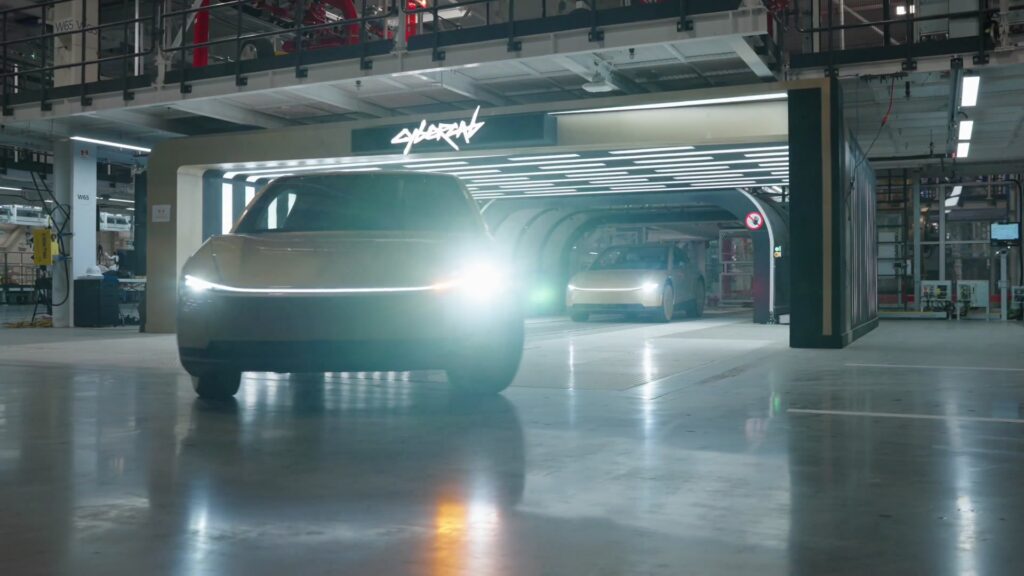
Cybercab production started at Giga Texas in April, and public rides began in Austin on Sept. 4. Tesla’s Robotaxi account counted 69 Cybercabs in the Austin fleet on Sept. 24. Tesla hasn’t published a production count or measured energy use from the fleet. Its third-quarter results on Oct. 21 are the next chance for real-world numbers. For the bigger picture on service, regulation and the steering-wheel question, see our Cybercab one-month review. Tesla’s 2025 Impact Report was already pitching the car as its efficiency play, and its Q3 deliveries don’t break the Cybercab out yet.
A two-seat car with no controls was always going to be efficient. What’s impressive is how far Tesla got: close to a Model 3 Standard’s range from a battery of about 48 kWh.
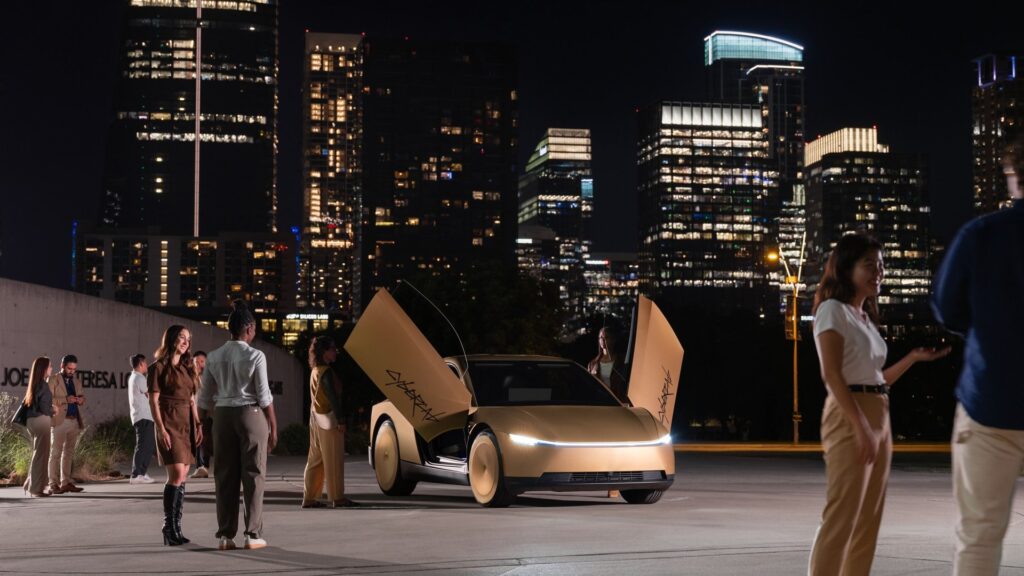
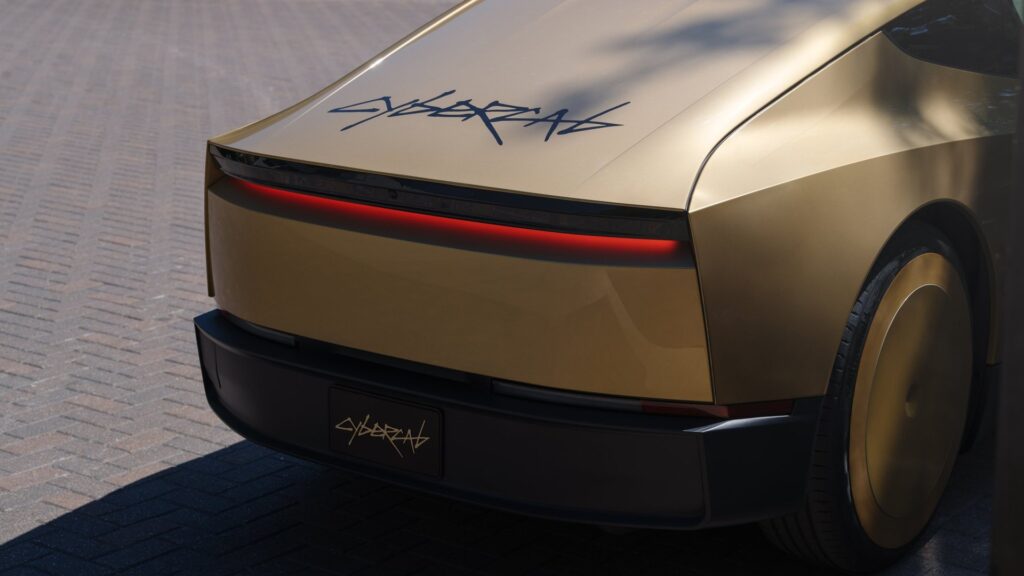
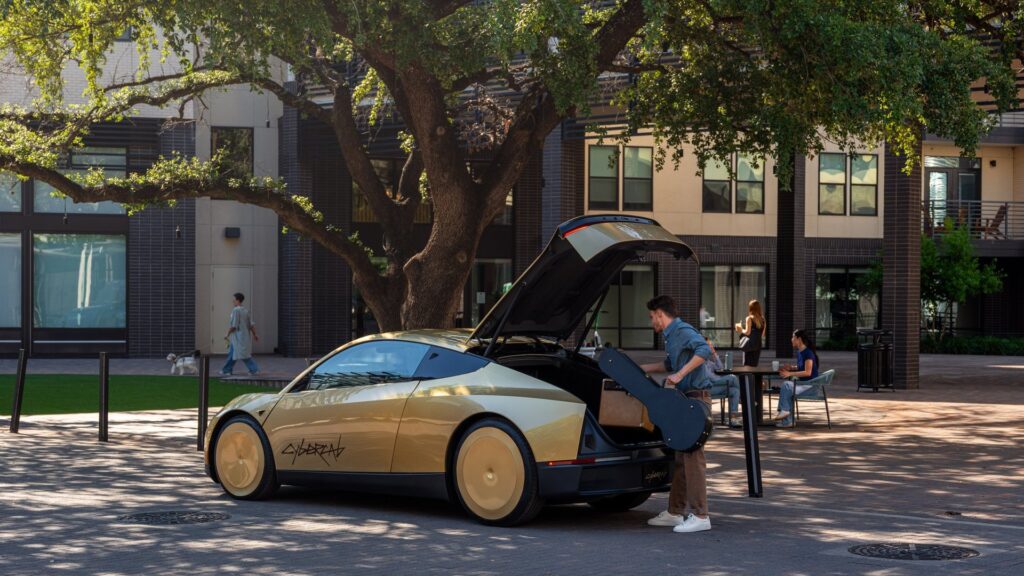
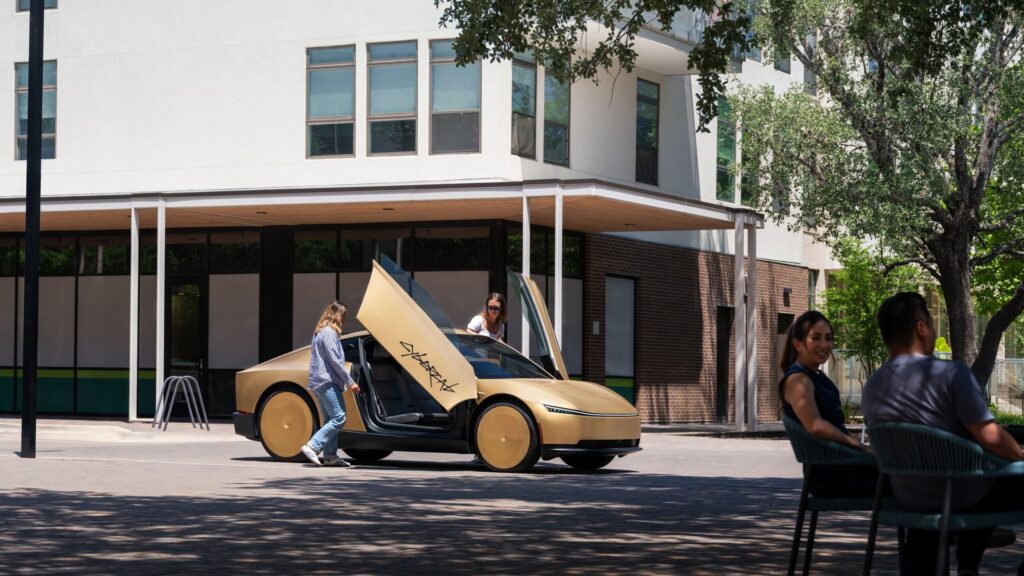
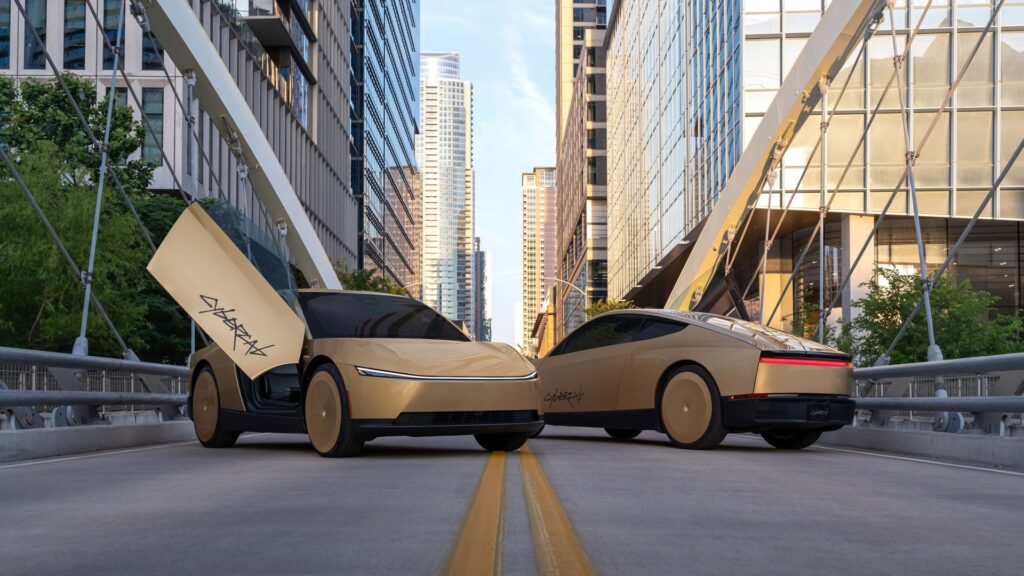
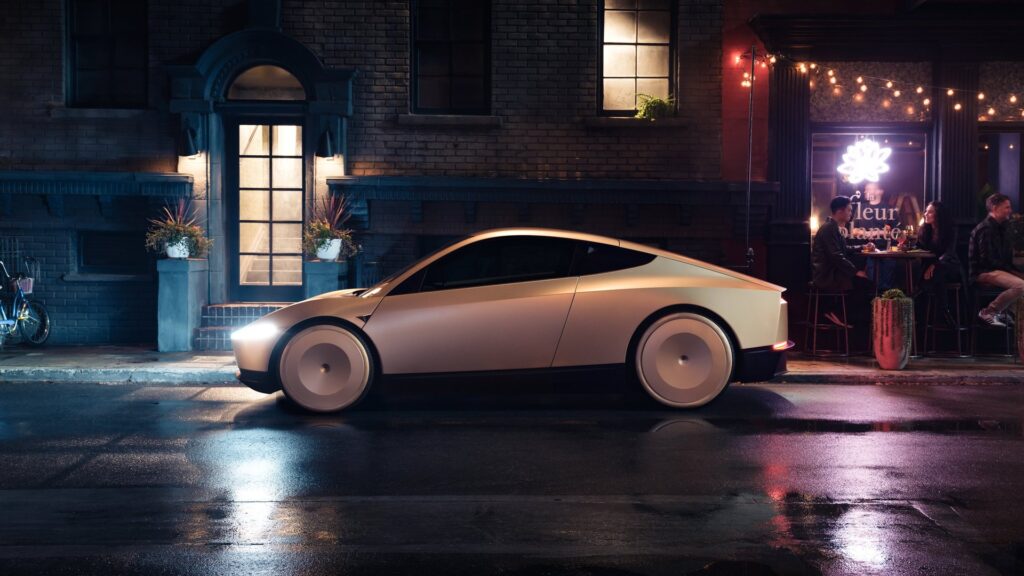
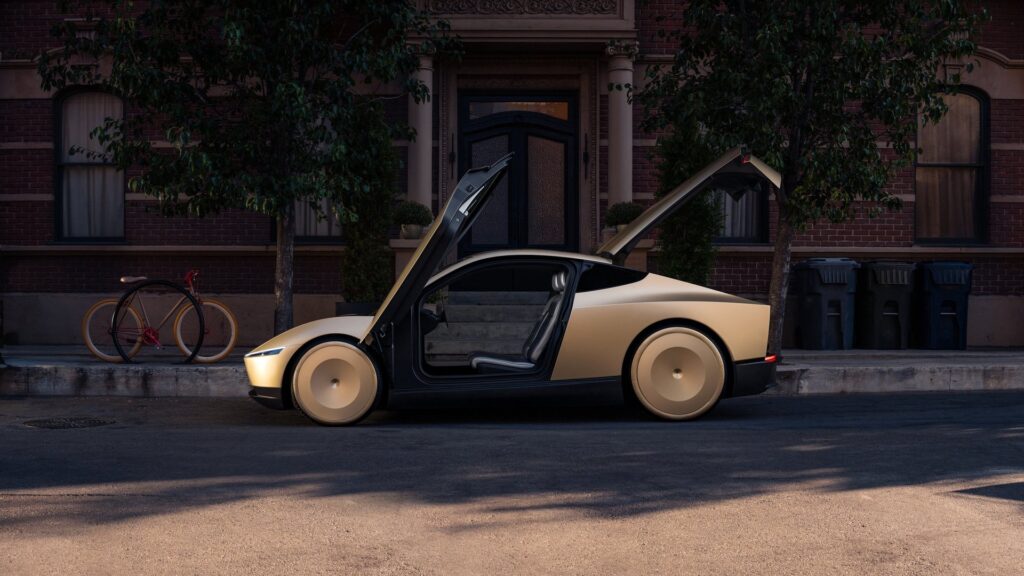
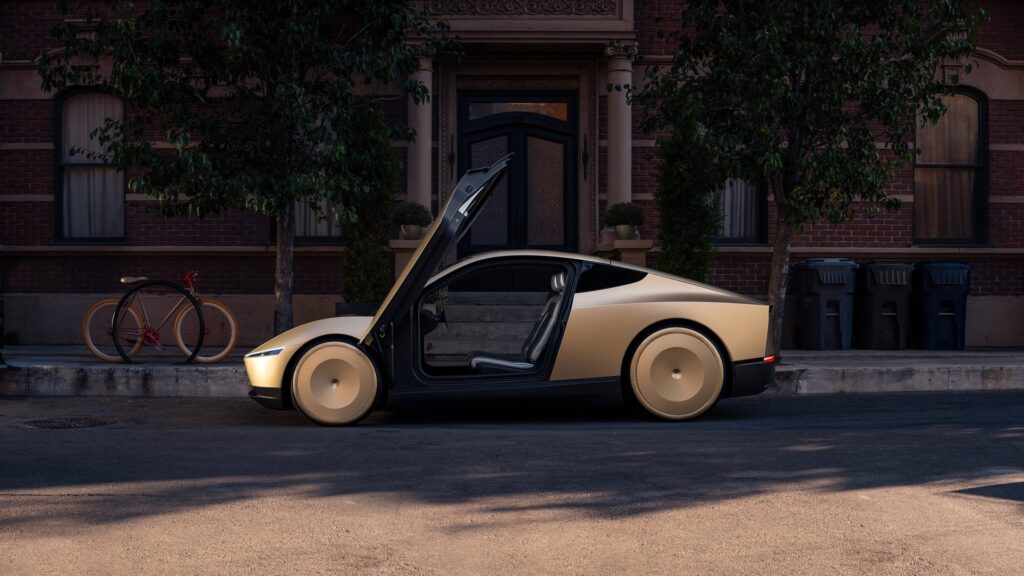
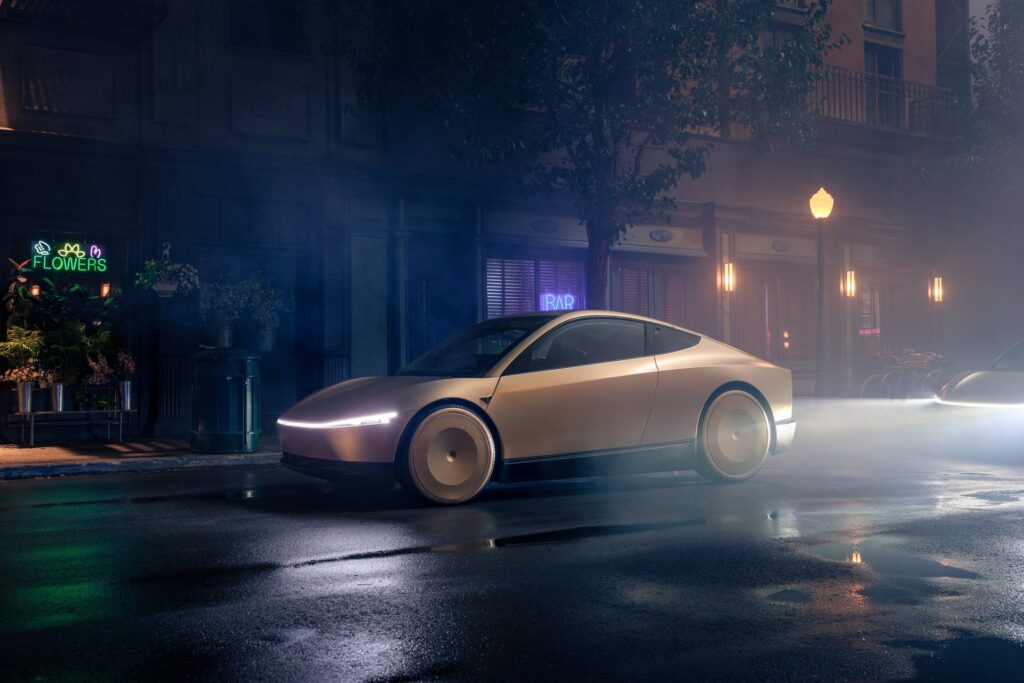
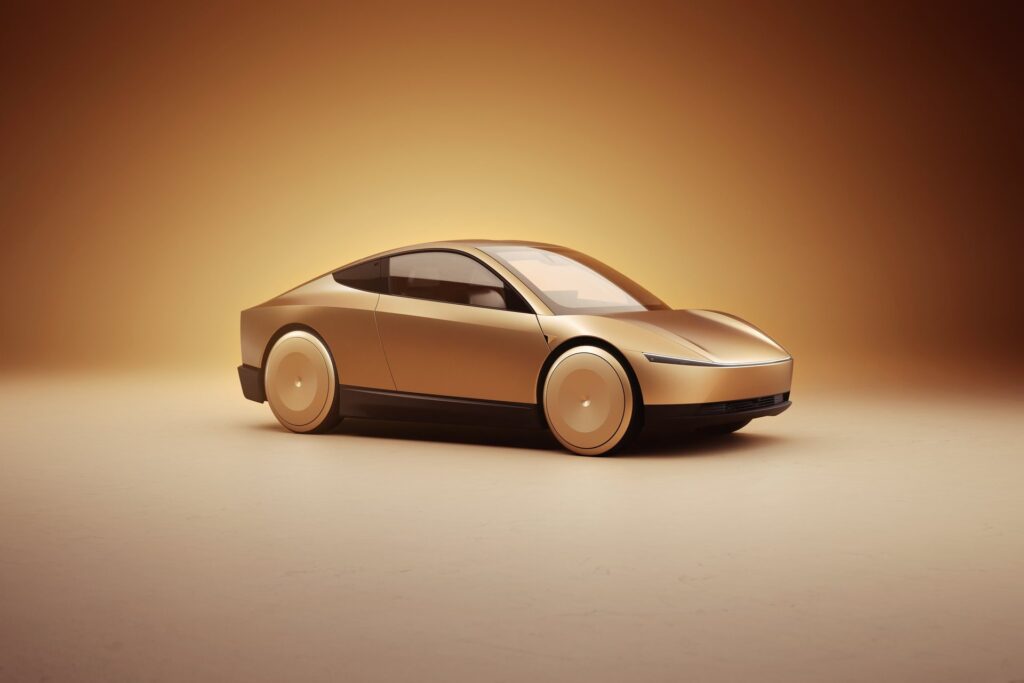
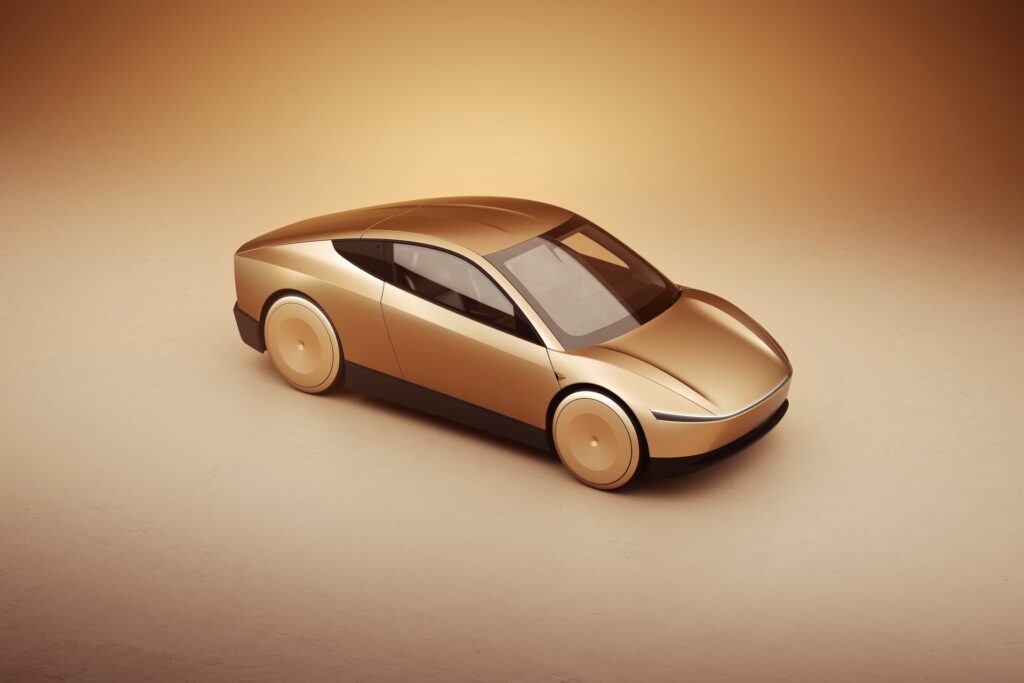
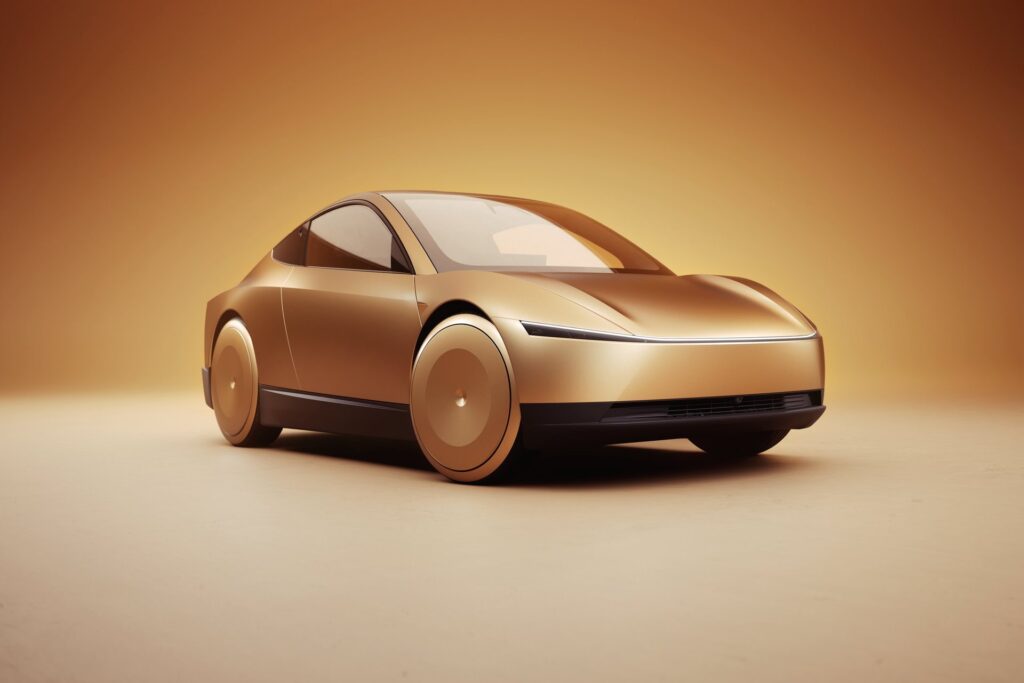
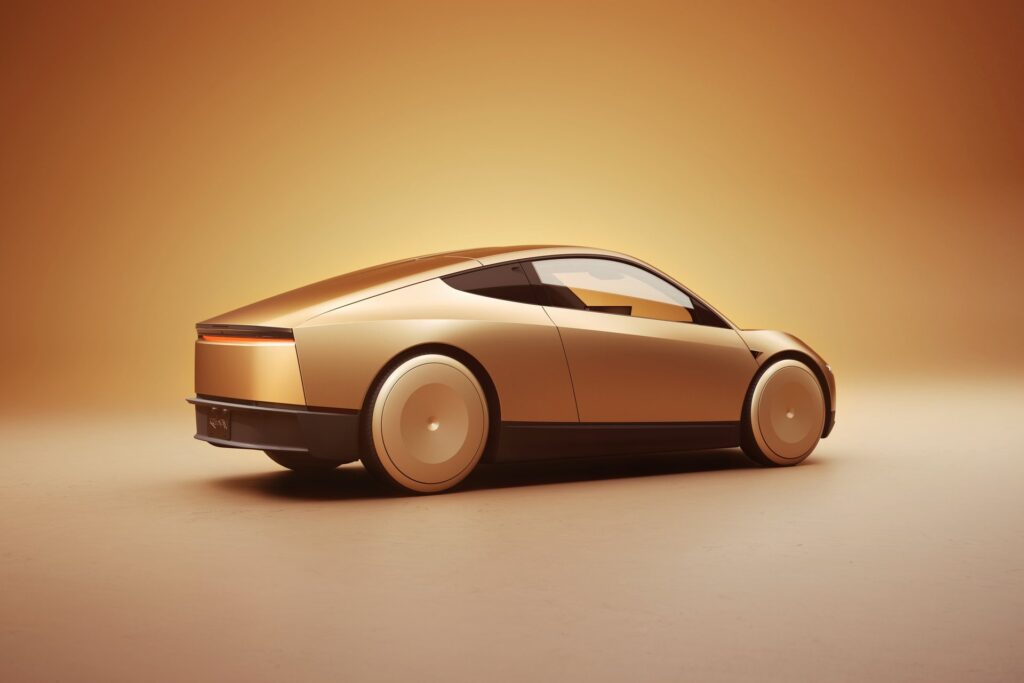
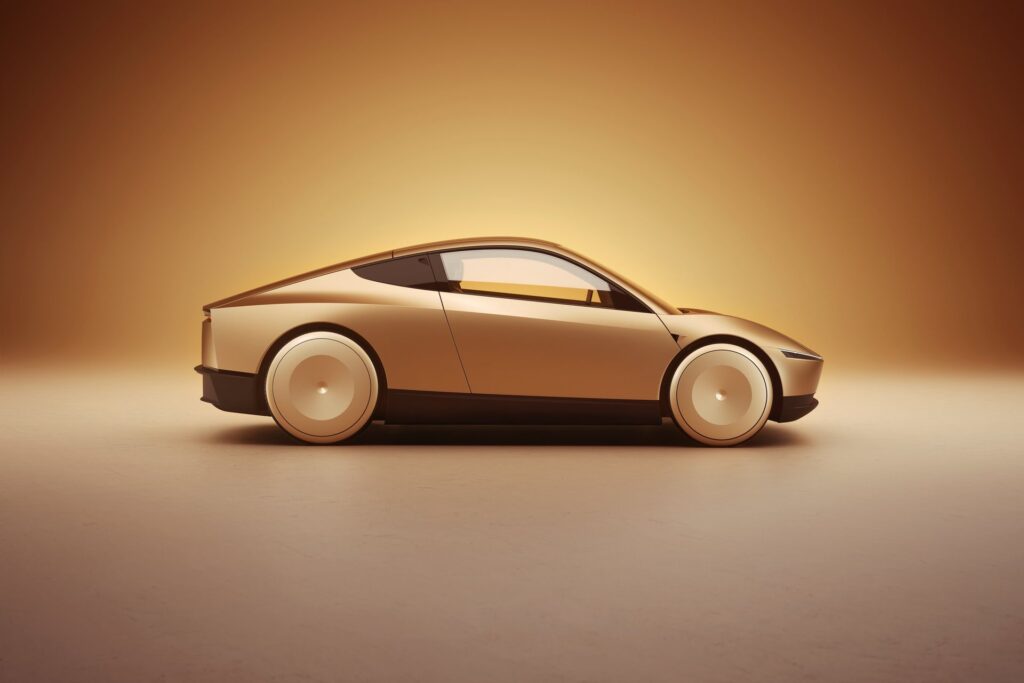
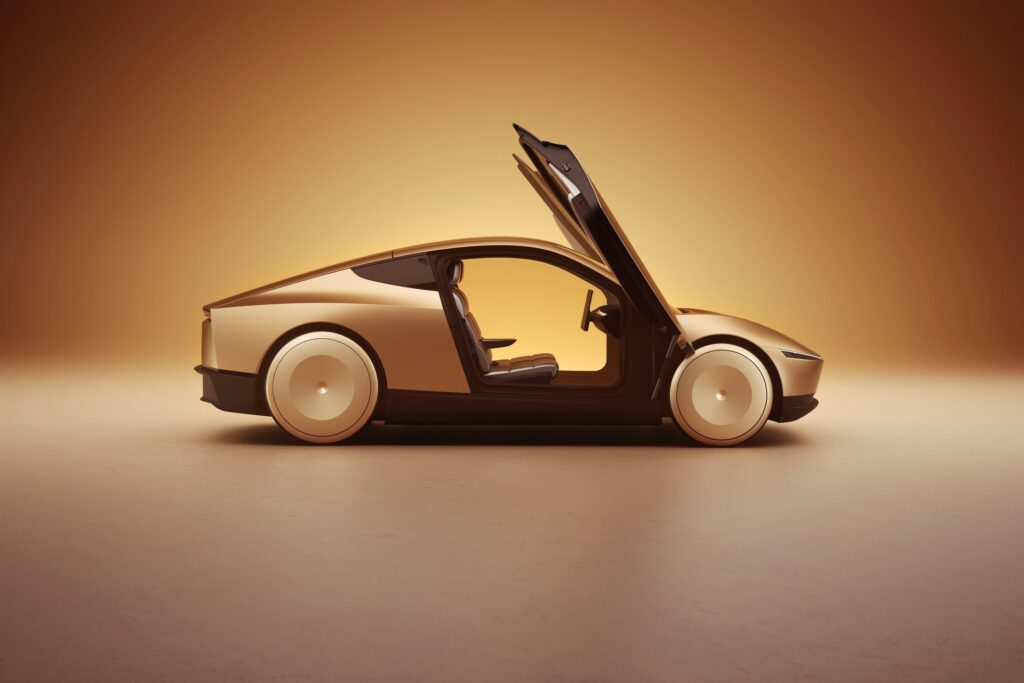
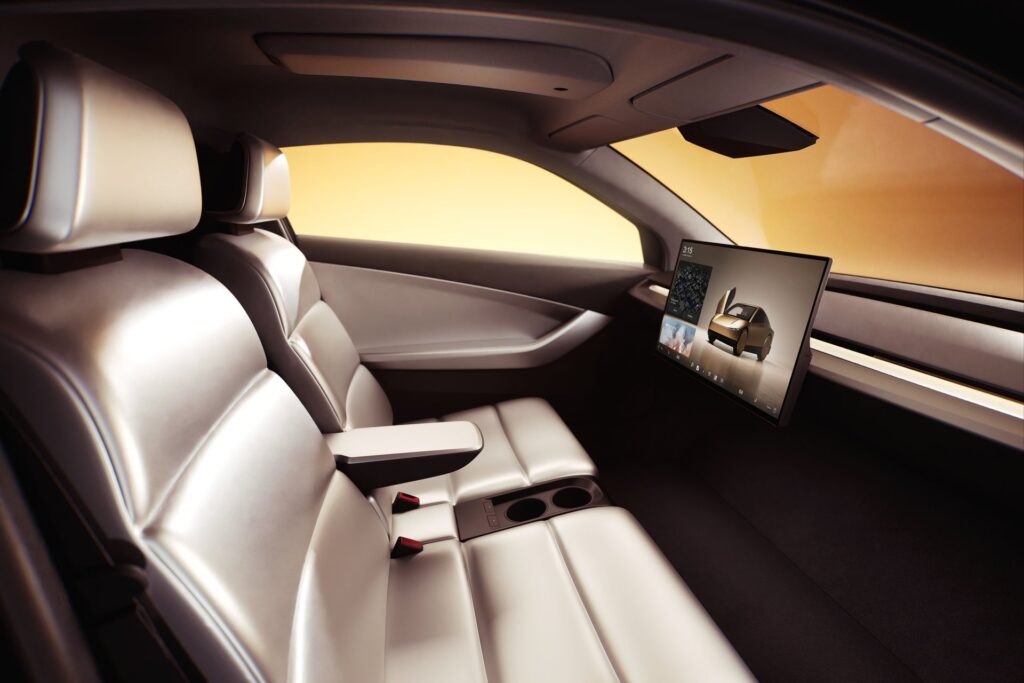
Tesla Cybercab Images Gallery










FAQ
What is the Tesla Cybercab’s efficiency?
Tesla says it’s 165 Wh per mile, which is about 6.1 miles per kWh, 10.3 kWh per 100 km, or 103 Wh per km. Tesla’s VP of vehicle engineering, Lars Moravy, called it the most efficient EV ever certified and built.
Is 165 Wh/mi an official EPA rating?
No. There’s no EPA window-sticker rating for the Cybercab on fueleconomy.gov. Tesla’s EPA certification filing shows a raw lab range of 418 miles and 53.4 kWh to recharge from the wall. After the usual real-world adjustment, that works out to roughly 293 miles and about 182 Wh per mile from the wall. Those adjusted numbers are our estimate.
How does Cybercab efficiency compare with the Model 3 and Model Y?
The 2026 Model 3 Standard RWD and Model Y Standard RWD are both rated at 243 Wh per mile on fueleconomy.gov. Even against our wall-based estimate of about 182, they use about a third more energy per mile. Against Tesla’s 165, it’s closer to half again as much.
Is a Cybercab more efficient than a bus?
Per passenger, it can be. By our estimate, a 40-foot CNG bus with every seat and standing spot full uses about 168 Wh per passenger-mile, close to a one-rider Cybercab at 165 to 182. With two riders, the Cybercab drops to about 83 to 91. At the average US bus load of about 6.7 riders, the bus uses about 1,770. The bus figure is fuel burned on board, so upstream power-plant losses would narrow the gap.
What is the Cybercab’s battery size and range?
The EPA filing lists a 326-volt, 146 amp-hour pack, about 48 kWh. Tesla hasn’t published an official range rating. The raw lab result is 418 miles city and 375 highway, and adjusted for real-world driving it lands near 293 miles.