
If you need to prep your EV for Hurricane Isaias, today is the day to do it. The National Hurricane Center expects Isaias to make landfall on the northern Gulf Coast late Friday or early Saturday, and it says preparations in the warning area should be rushed to completion today. Most EV prep takes minutes: charge it, park it in the right spot, set up home backup, and know what to do if it floods.
Where Isaias is headed
As of NHC Public Advisory 8, issued at 10 a.m. CDT Thursday, Isaias had maximum sustained winds near 85 mph with more strengthening expected through early Friday. A Hurricane Warning covers Ocean Springs, Mississippi, to the Bay/Gulf County line in Florida. A Storm Surge Warning runs from the mouth of the Mississippi River to Florida’s Suwannee River, with 5 to 7 feet of surge forecast from Ocean Springs to Indian Pass, including Mobile Bay. The NHC also flags flash flooding across southern Alabama, the Florida Panhandle and southwestern Georgia.
Forecasts change. Follow the NHC at hurricanes.gov and your local officials for updates.
Charge up, but think about where the car will sit
Tesla Charging posted its storm advice at 9:33 a.m. PT today: if you’re charging at home, charge to 100%, and check live Supercharger availability on the car’s touchscreen or in the Tesla app. After the storm, Tesla says it’s ready to deploy Megapack-powered mobile Superchargers where charging is hit hardest.
Plenty of us keep an 80 or 90% daily limit to go easy on the battery. A few days at 100% before a hurricane isn’t worth worrying about. Running short on range with the grid down is.
There’s one exception, and it’s in Tesla’s own owner’s manual. Tesla recommends 100% if you can move the car somewhere that isn’t at risk. If it has to stay in a flood zone, Tesla says to unplug it, run the charge as low as you can, and raise the air suspension if you have it. A pack that might end up underwater is safer with less energy in it.
Park high and away from the house
Tesla says to move the car to higher ground ahead of a flood if it’s safe to do so. A garage helps with wind and debris, but one in a surge zone is the worst place for an EV that floods, because NHTSA says a damaged EV shouldn’t sit in a garage or within 50 feet of a house. If you’re in the surge zone, a relative’s driveway inland beats your own garage.
Powerwall Storm Watch and home backup
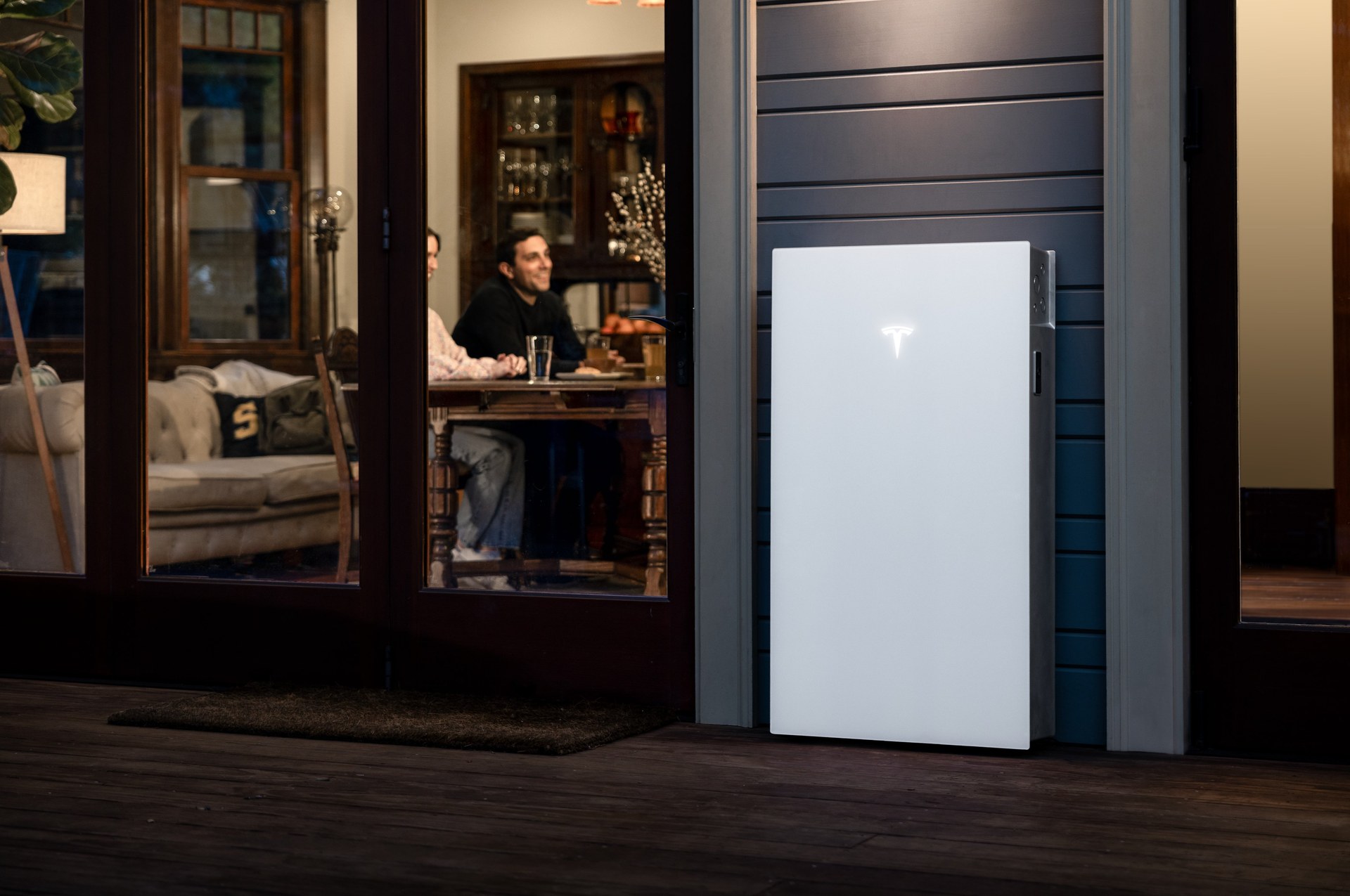
If you have a Powerwall, check that Storm Watch is on. Tesla says it charges Powerwall to full when a qualifying watch or warning is issued for your area. It’s under Settings in the Tesla app, and Grid Charging has to be enabled. If it hasn’t kicked in, Tesla suggests raising your Backup Reserve.

Using your EV as a power source, safely
Ford’s Home Backup Power lets a 2022 to 2025 F-150 Lightning send up to 9.6 kW to a home, but only through a Ford Charge Station Pro and Sunrun’s Home Integration System. Tesla’s Powershare does the same with a Cybertruck, or a newer Model 3 or Model Y paired with Powerwall 3, as we covered in our Powershare post.
That hardware isolates your house from the grid so power doesn’t flow back onto lines crews are working on. Never feed your home’s wiring from a car through an outlet or a homemade cord. Vehicle-to-load outlets, like the ones on the Hyundai Ioniq 5, are great for a fridge, phones or a fan. Use them the way Ready.gov describes using a generator, with heavy-duty extension cords run straight to the appliances.
Evacuating in an EV
Plan your charging stops before you leave and assume some chargers will be packed or without power. Leave full, make your first stop well inland, and keep a backup charger in mind. Leaving early is the best range strategy, since crawling in traffic with the AC on burns miles.
After the storm: flooded EVs and saltwater
Don’t drive through floodwater, in any car. If your EV sat in water, especially saltwater, treat it as if it had been in an accident, as Tesla and NFPA both advise. Don’t charge it, don’t drive it, and call your insurer and the maker’s roadside assistance. Tesla says to tow a submerged car at least 50 feet from structures and other combustibles, and its emergency response sheet calls for a flatbed. NHTSA says to contact your dealer or emergency services if you suspect battery damage. Photograph the waterline inside and out for your claim.
Saltwater is the bigger danger. After Hurricane Ian, the NTSB said salt bridges can form inside a battery pack and provide a path for short-circuit and self-heating, according to NFPA. Salt left behind after the water recedes keeps corroding parts, and NFPA warns a fire can start hours, days or even weeks later. Fires are rare: NFPA, citing a NHTSA-led study, says 3,000 to 5,000 EVs were exposed to saltwater during Ian and 36 caught fire. If you hear hissing or popping, smell something unusual, or see smoke from a flooded EV, get away from it and call 911.
FAQ
Should I charge my EV to 100% before Hurricane Isaias?
Yes, if you can park it somewhere safe from flooding. If it has to stay in a flood-prone spot, Tesla’s manual says to keep the charge low instead.
Is it safe to park my EV in the garage during a hurricane?
Only if your garage isn’t at risk of flooding. NHTSA says a flood-damaged EV shouldn’t be kept in a garage or within 50 feet of a house.
Can I use my EV to power my house during an outage?
Only with the maker’s approved setup, like Ford Home Backup Power or Tesla Powershare. Otherwise, run individual appliances from the car’s outlets.
What should I do if my EV was in saltwater?
Don’t charge or drive it. Have it towed on a flatbed and parked at least 50 feet from buildings, then contact your insurer and the automaker.
Charge up, park smart, and stay safe out there. A car can be replaced, so if officials say go, go.