
The Tesla Roadster reveal happened on Thursday night, October 15. Tesla streamed the event live on X and YouTube starting at 5:55pm PT (00:55 UTC Friday), and the new Roadster arrived with a thruster system built with SpaceX.
Tesla calls the new car “the best of the last human-driven cars.” Elon Musk had set expectations high that morning, posting that the new Roadster is “beyond movies, beyond imagination, beyond human, yet still made by humans on Earth.”
Franz von Holzhausen noted on stage that it has been 20 years since the original Roadster, and Lars Moravy said the Roadster is the reason he joined Tesla.
If you missed it live, the full replay is above, and our guide to watching the Tesla Roadster reveal still lists every official stream link.
Tesla x SpaceX: the thruster system
The headline of the night is a partnership between two of Musk’s companies. Just before the stream began, Musk summed it up in three words on X: “Tesla x SpaceX.” During the event, Tesla explained what that means for the car.
Flying cars are real.
Elon Musk, at the Roadster reveal
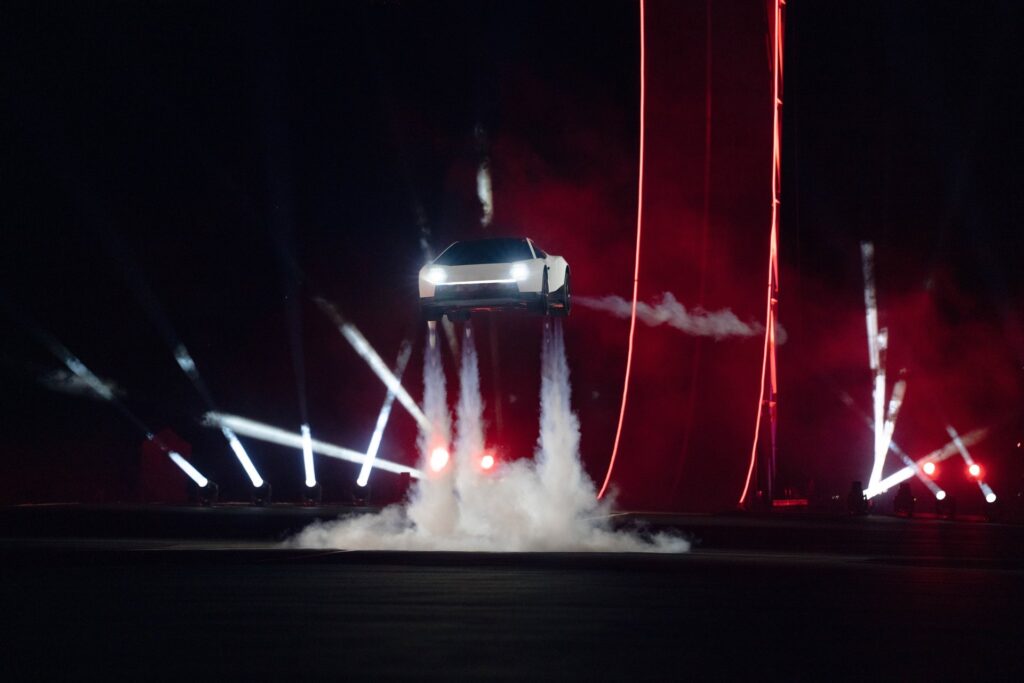
SpaceX has used thrusters to position spacecraft for decades. Tesla says making them work in a road vehicle instead of the vacuum of space took all-new hardware and controls. The result is a Roadster with a thruster system that, according to Tesla, generates four to five times the force its tires can.
That matters because, as Tesla points out, every car on the road today is limited by one thing: tire grip. A conventional car can only accelerate, brake and corner as hard as its tires can hold the road. By adding force that does not depend on grip, the Roadster can push the same mass much harder. In Tesla’s words, more force on the same mass means significantly better acceleration, and “physics does the rest.”
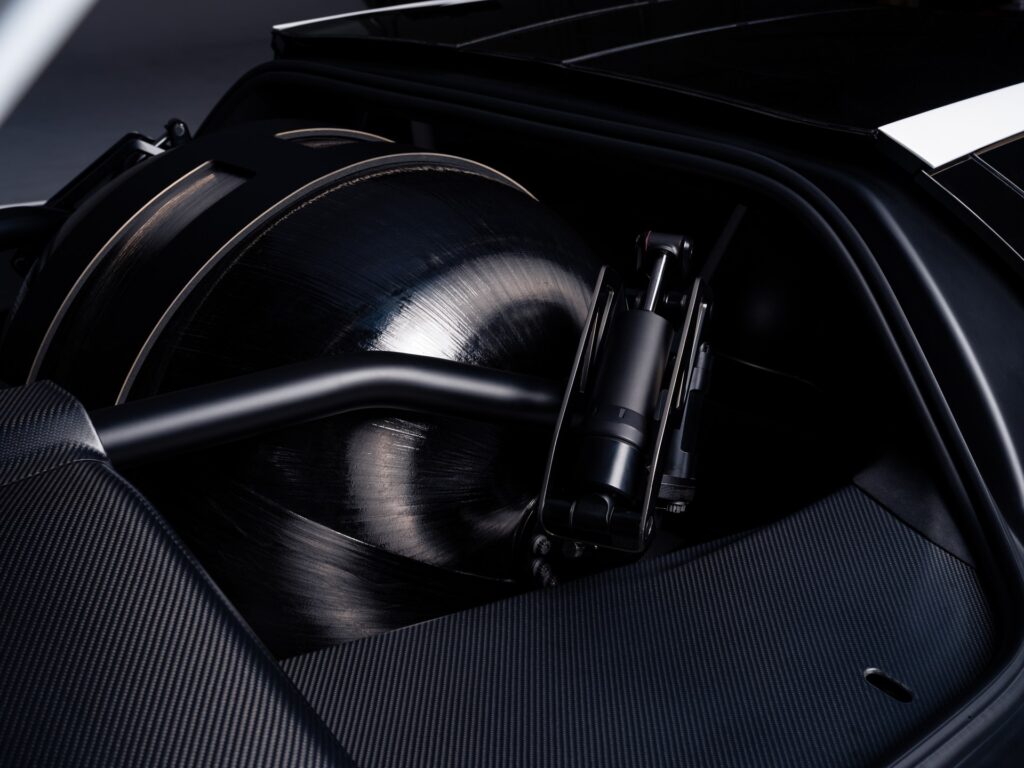
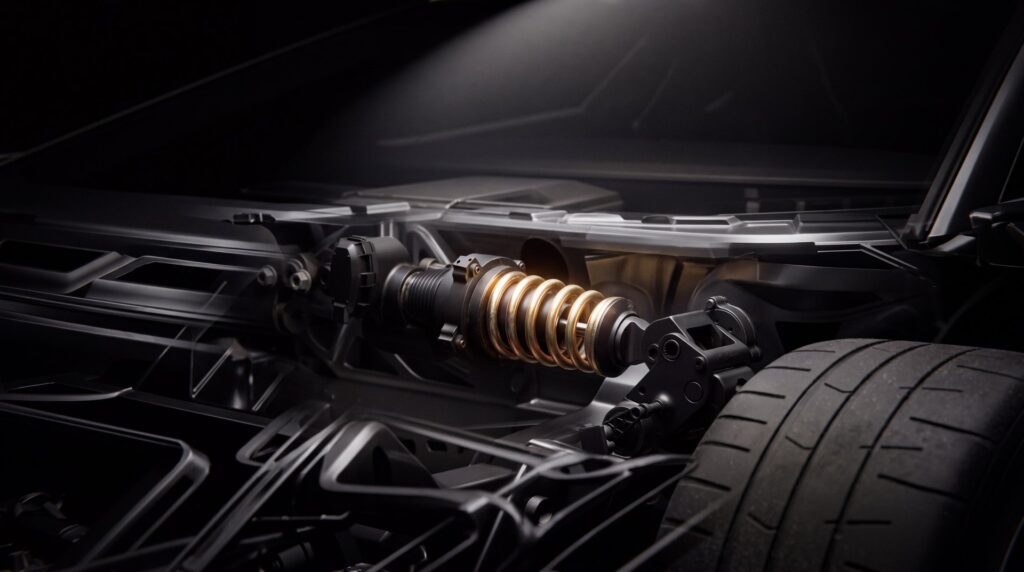
To feed those thrusters, Tesla says every usable void in the car is packed with Carbon Fiber Overwrapped Pressure Vessels, or COPVs, the same kind of high-pressure tanks used in spaceflight. The more compressed gas the car carries, the more the thruster system has to work with.
The live demo
Tesla built the evening around showing the Roadster in action rather than just talking about it. Minutes before the stream, when a fan wrote that people would need to see the demo live or they would think it wasn’t real, Musk replied simply: “Yup.” He also kept the mood playful and honest right before the stream: “Success is not certain, but excitement is.”
Tesla held the reveal at SpaceX’s 4,000-acre rocket test and development center in McGregor, Texas, opening with a Raptor engine static fire as a pre-show. Musk said Tesla wanted a live audience “to prove that it’s not AI or CGI,” calling the Roadster a collaboration between “the world’s best car company and the world’s best rocket company.”
Franz von Holzhausen introduced Andy Bautista and Lamar Hermanns, the two Tesla engineers who drove the Roadster onto the stage.
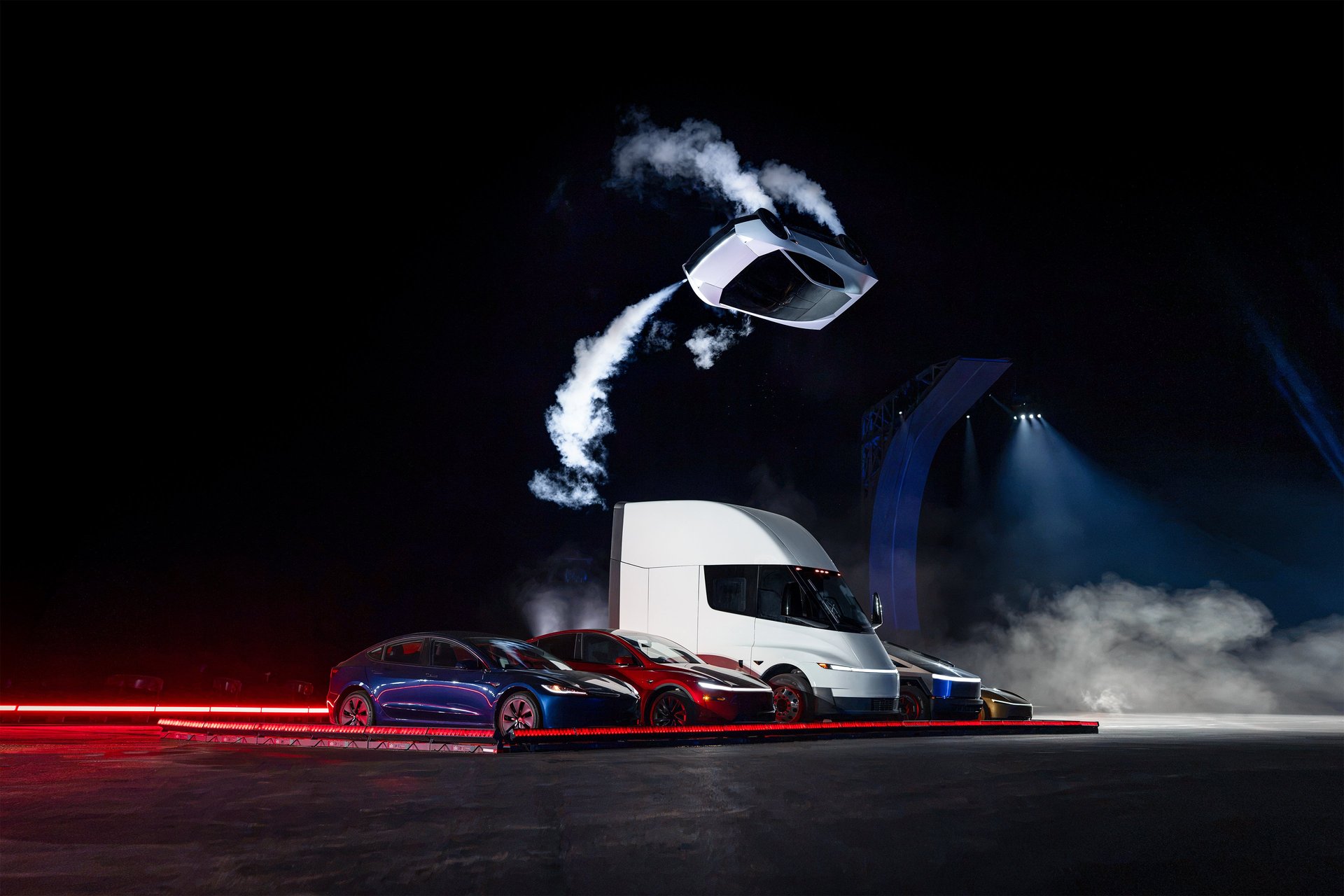
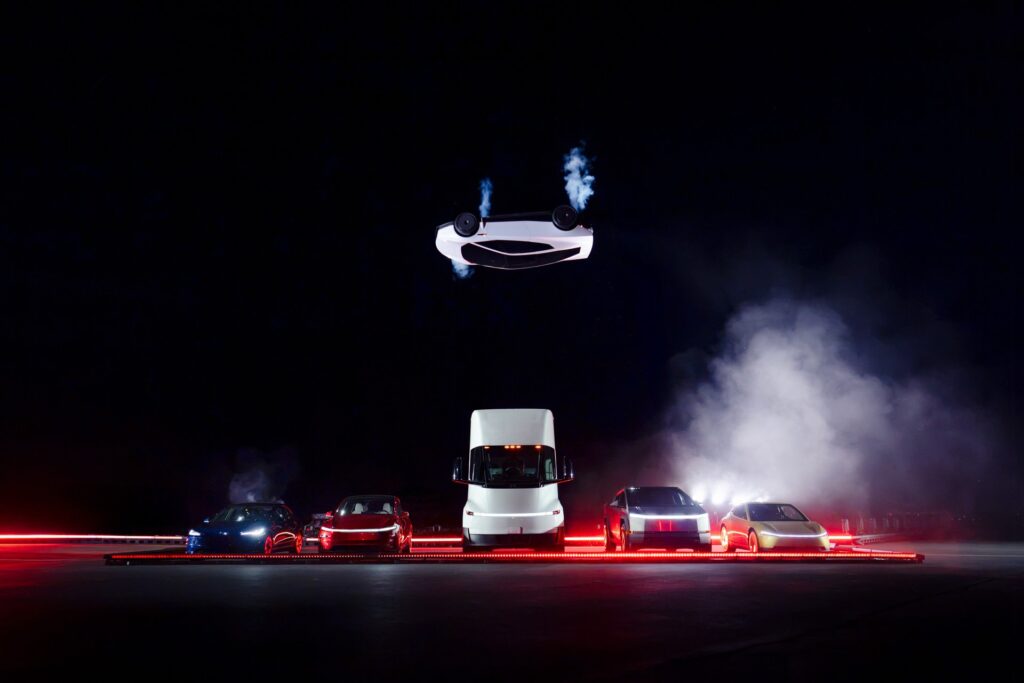
The car ran autonomously during the demo as a precaution. After the first flight, Musk declared, “Flying cars are real.” The team named the second stunt the kickflip, joking that Tony Hawk would be proud, and Musk teased more demos to come, including a nod to Evel Knievel’s Snake River Canyon jump.
Acceleration was the headline moment. After a demo video showed the Roadster hitting 60 mph in 1 second, moments later, Tesla ran it live in front of the crowd and beat that, with Lars Moravy announcing a 0 to 60 mph time of just 0.81 seconds. That run came on a shortened run-up, because the team said there wasn’t much room on the pad. Tesla has not said which trim set that run.
The replay above is the best way to see the Roadster in motion for yourself. Beyond the 0.81 second run, Tesla has not yet published other measured times or distances from the event in writing.
Design inspired by the SR-71 and F-35
Since we knew Roadster was going to fly, we looked for some inspiration about flying, and we thought we would lean into the most badass stuff out there: the SR-71, cars that transform.
Franz von Holzhausen, Tesla’s chief designer, on stage at the reveal
The new Roadster looks nothing like the 2017 prototype. Tesla says its design language has evolved since the last Roadster reveal, moving from the S3XY lineup through Cybertruck, Cybercab and Optimus. For the Roadster, the inspiration came from two legendary aircraft: the SR-71 Blackbird and the F-35.
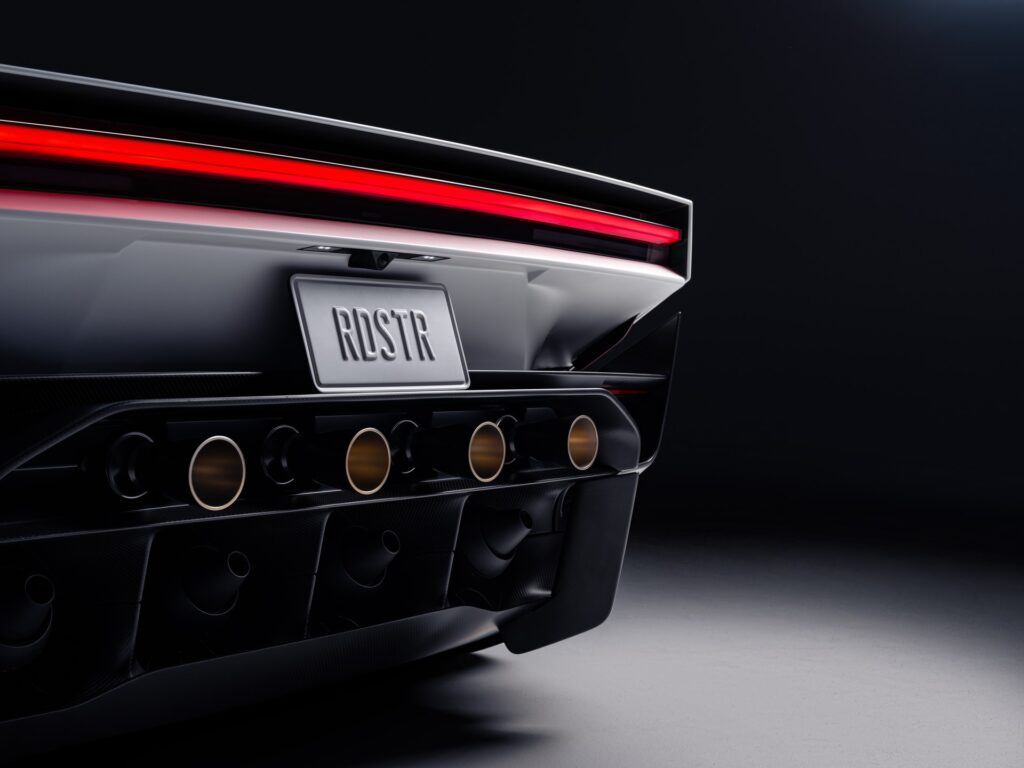
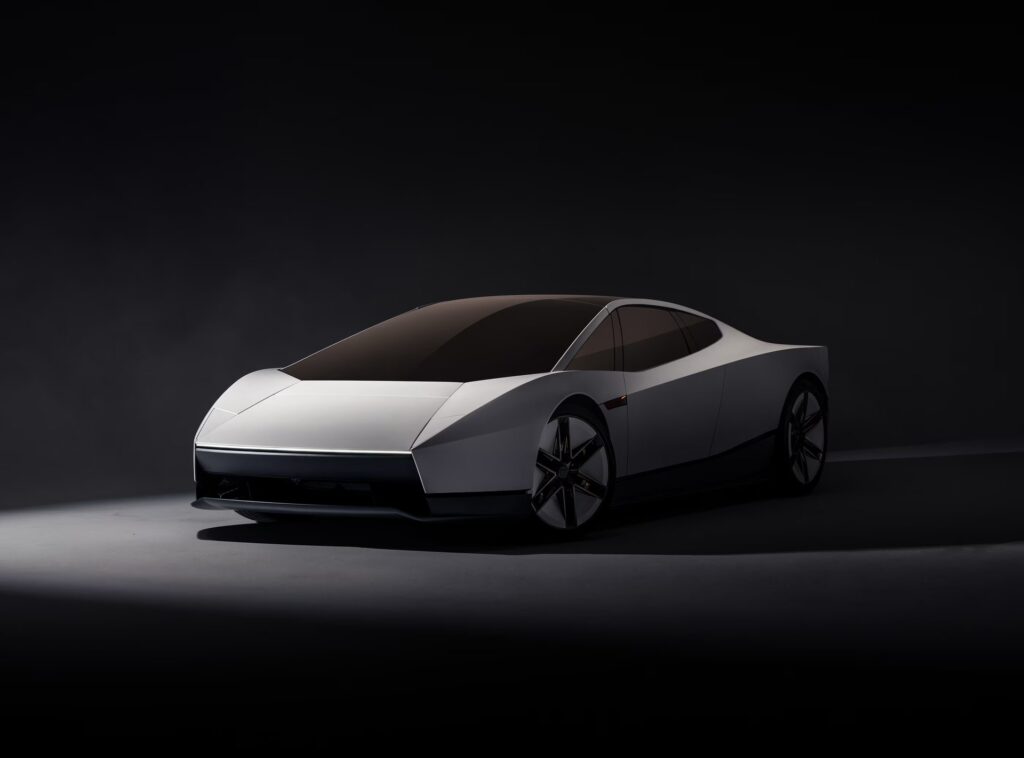
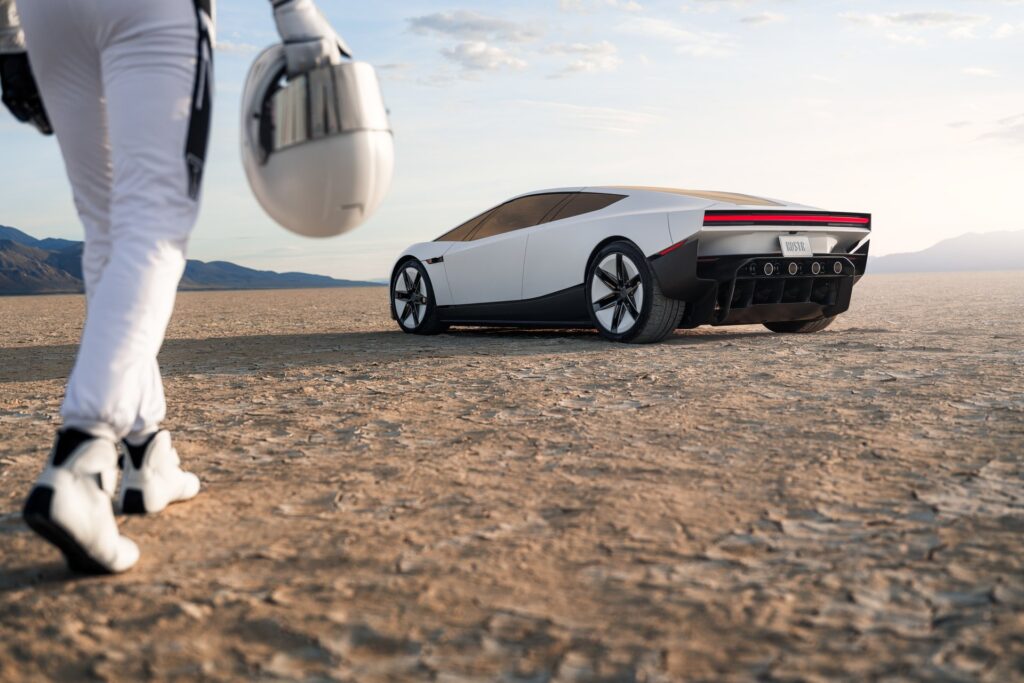
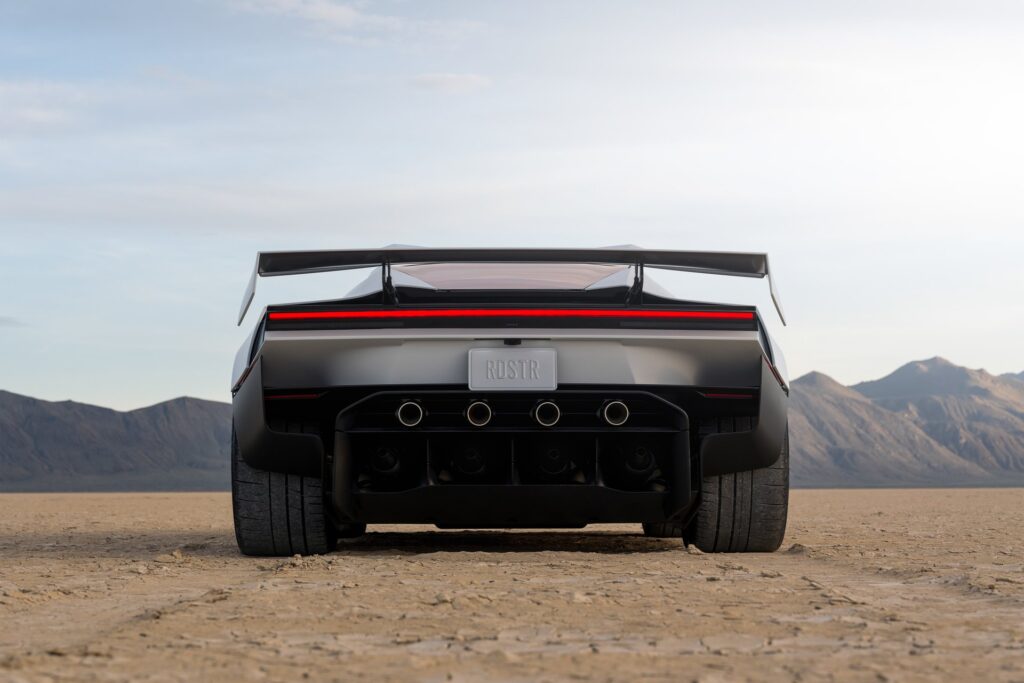
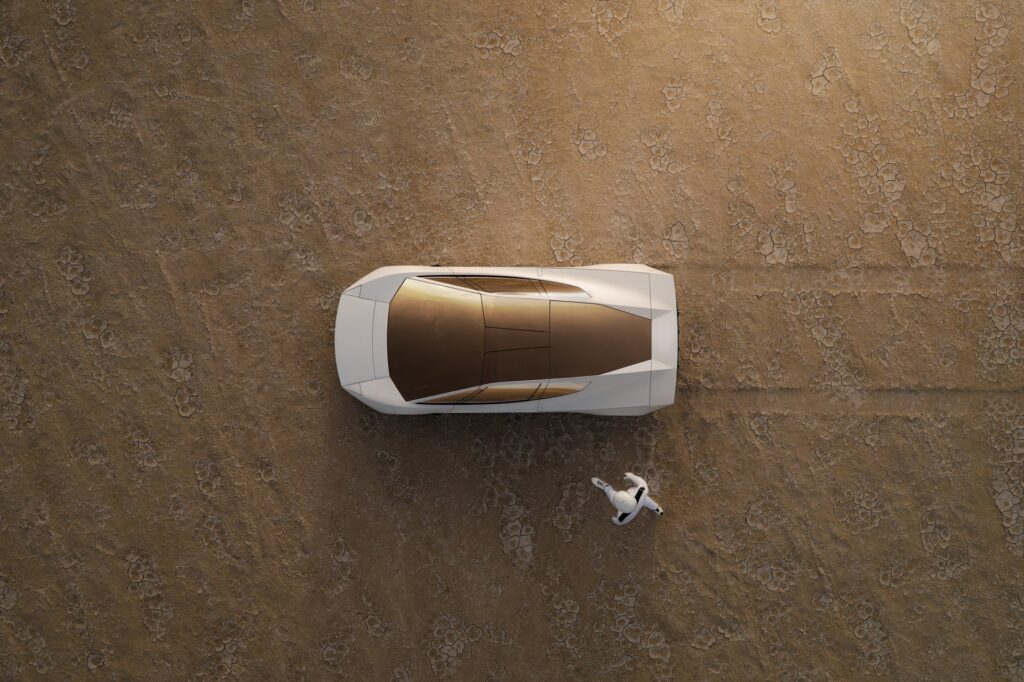
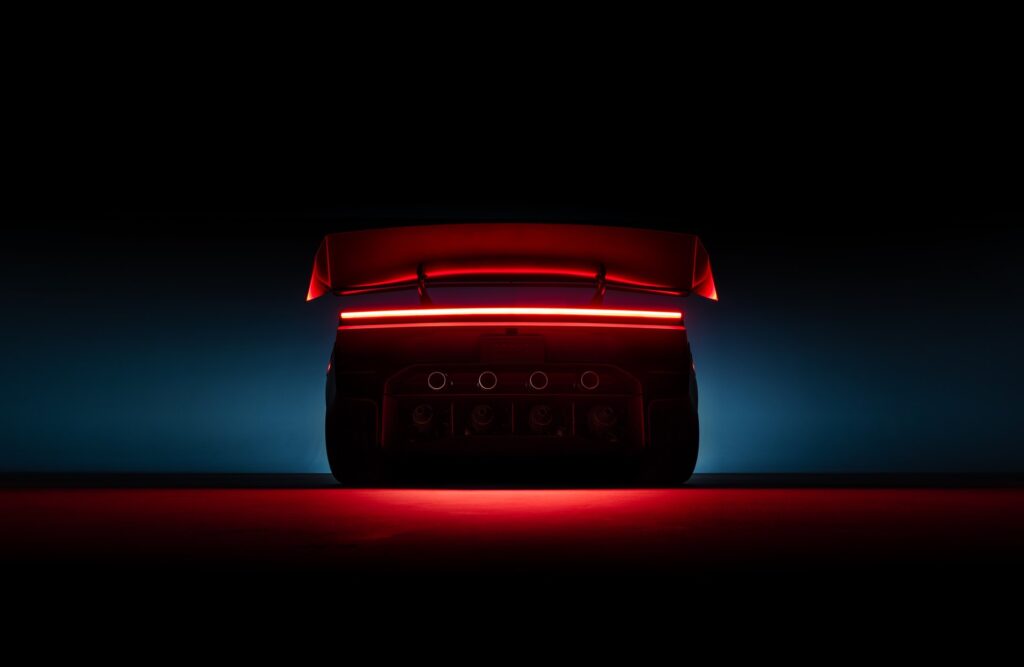
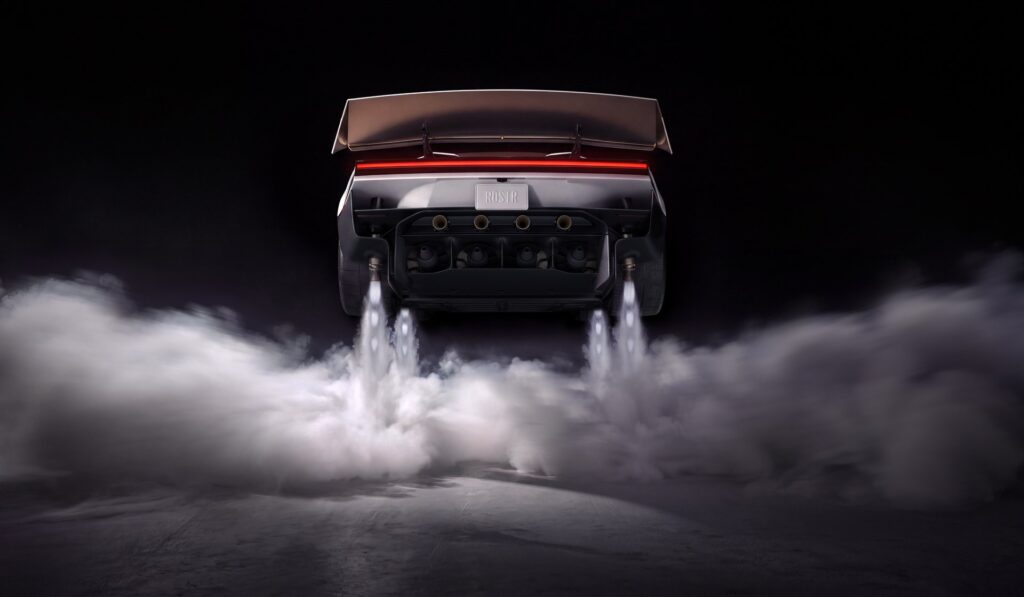
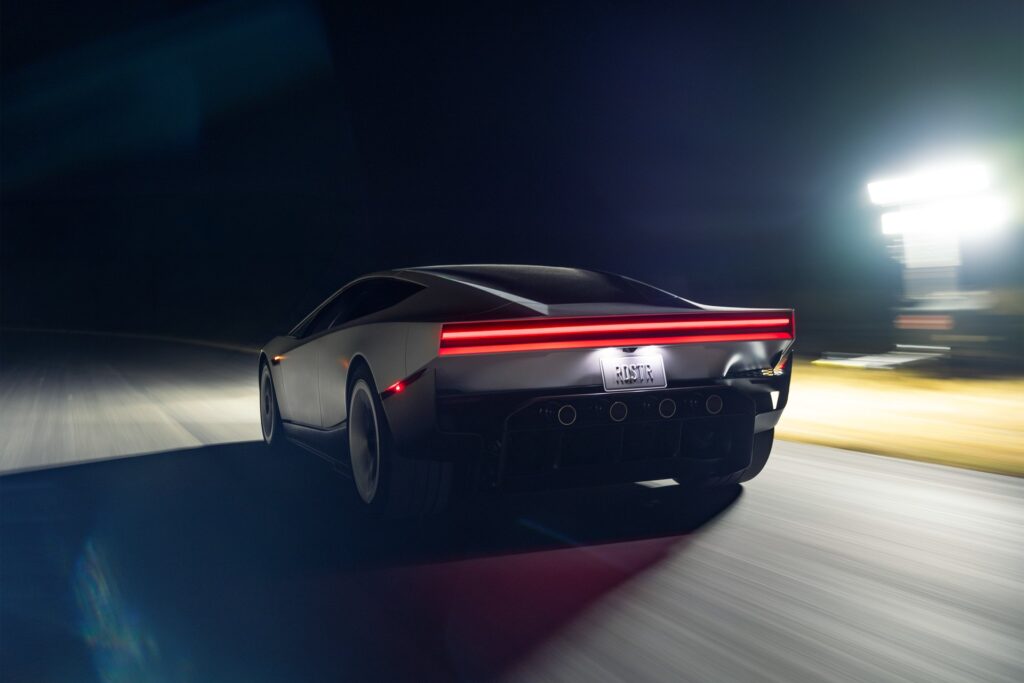
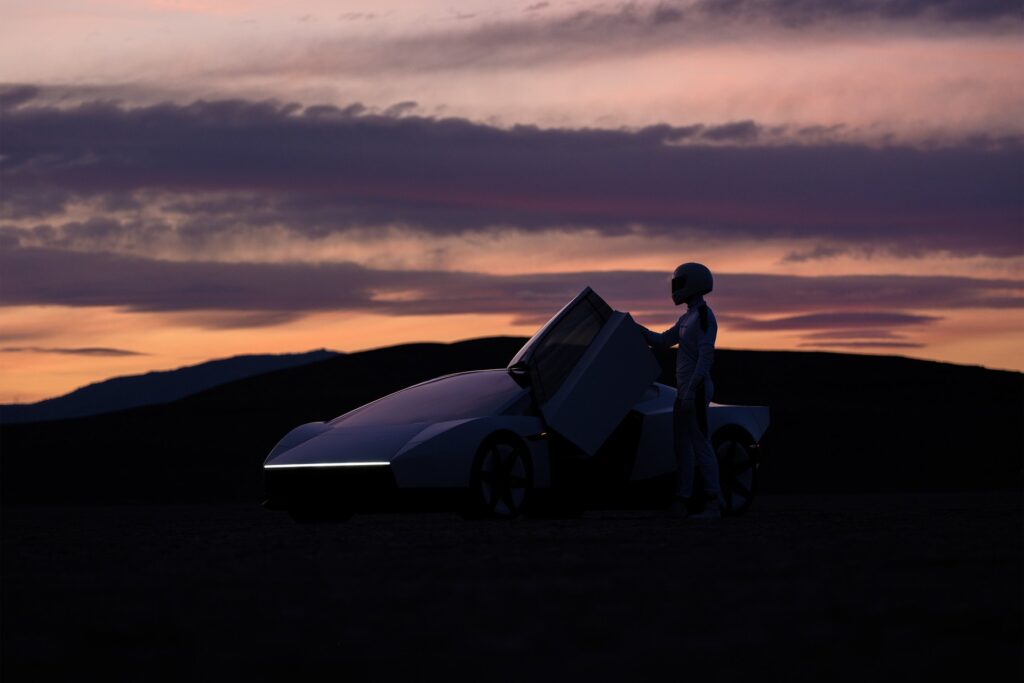
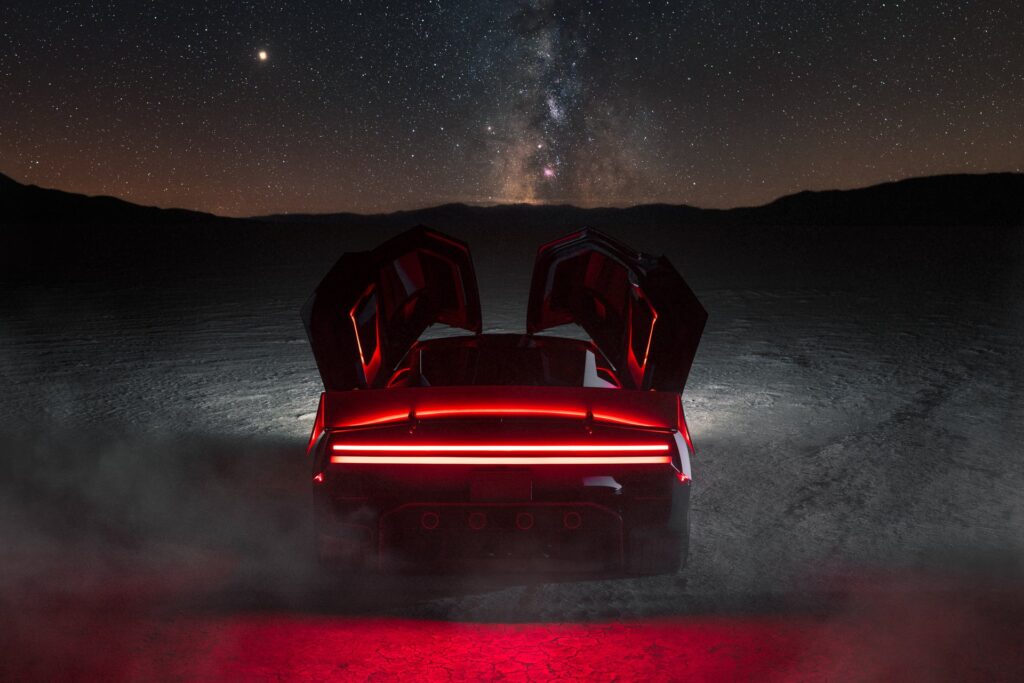
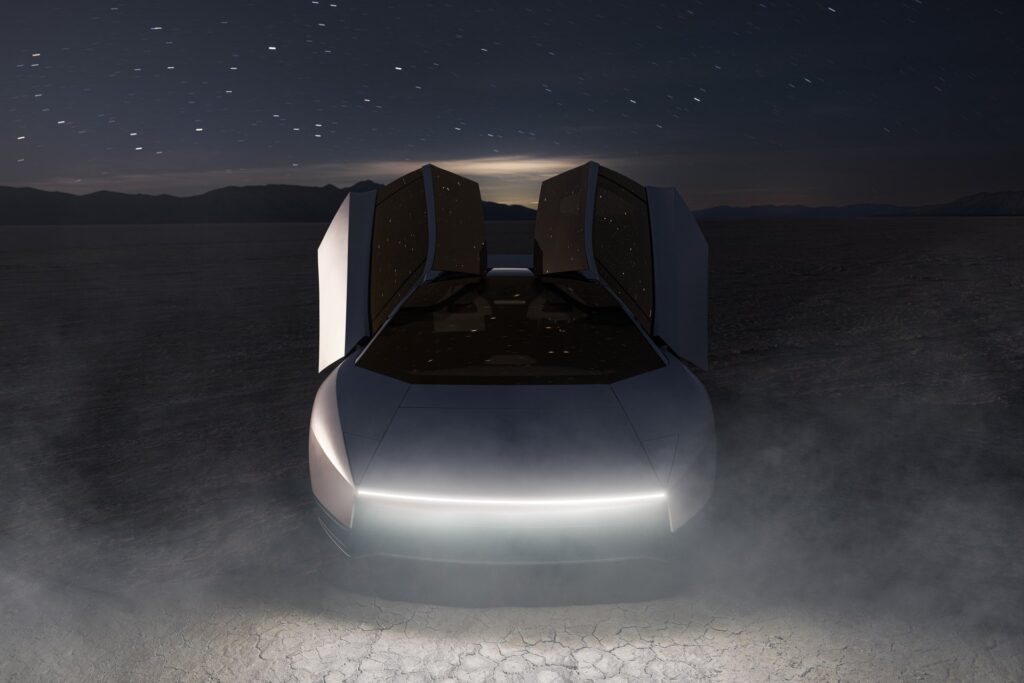
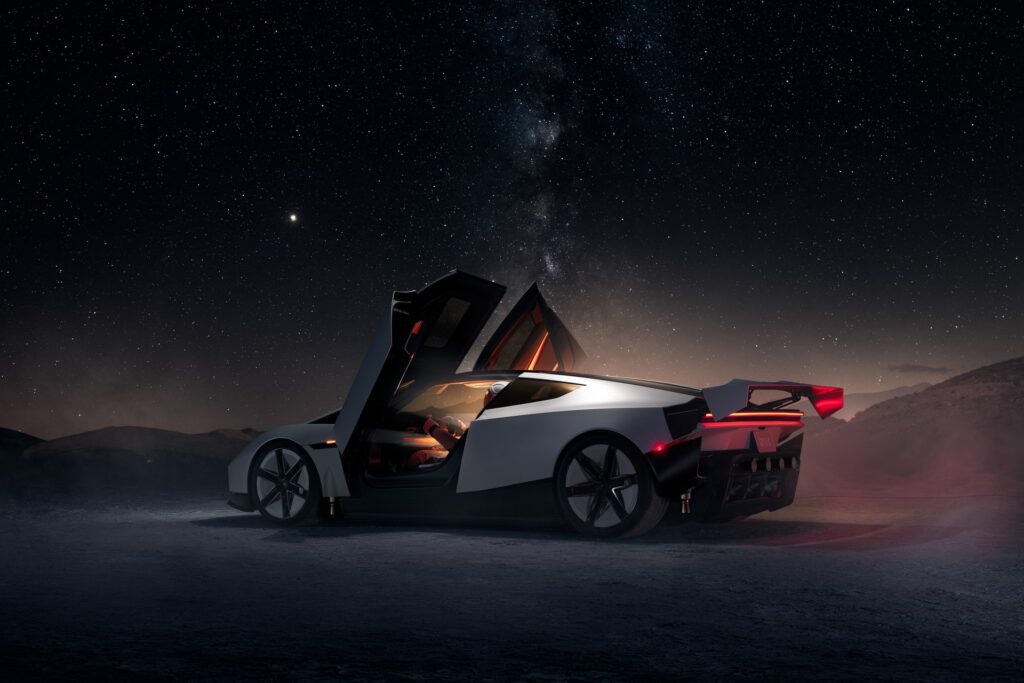
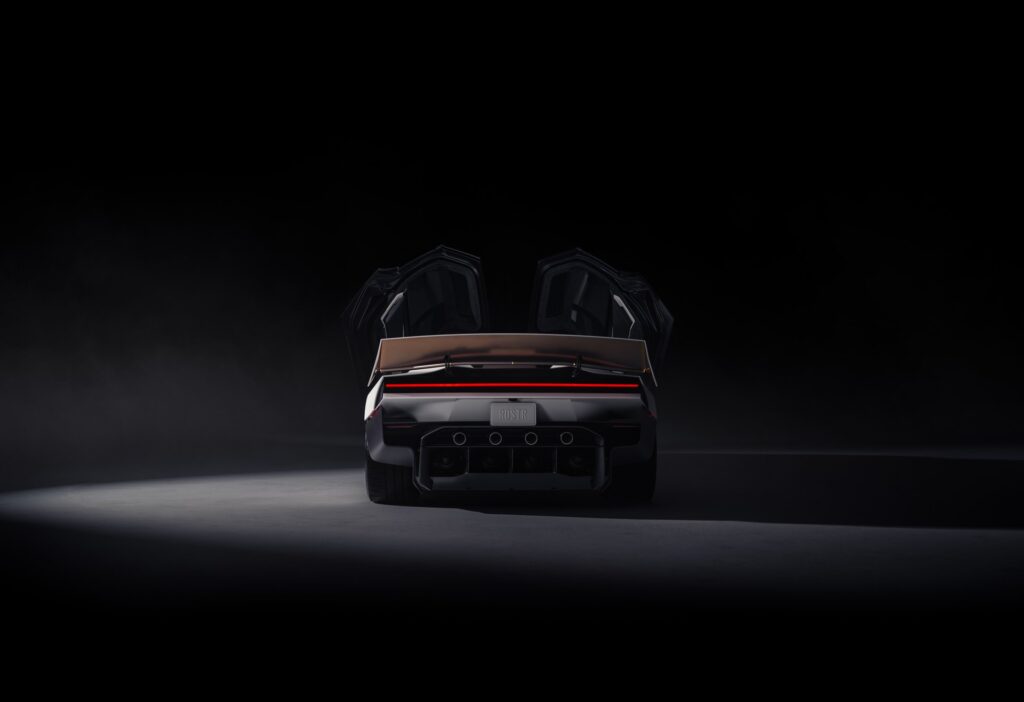
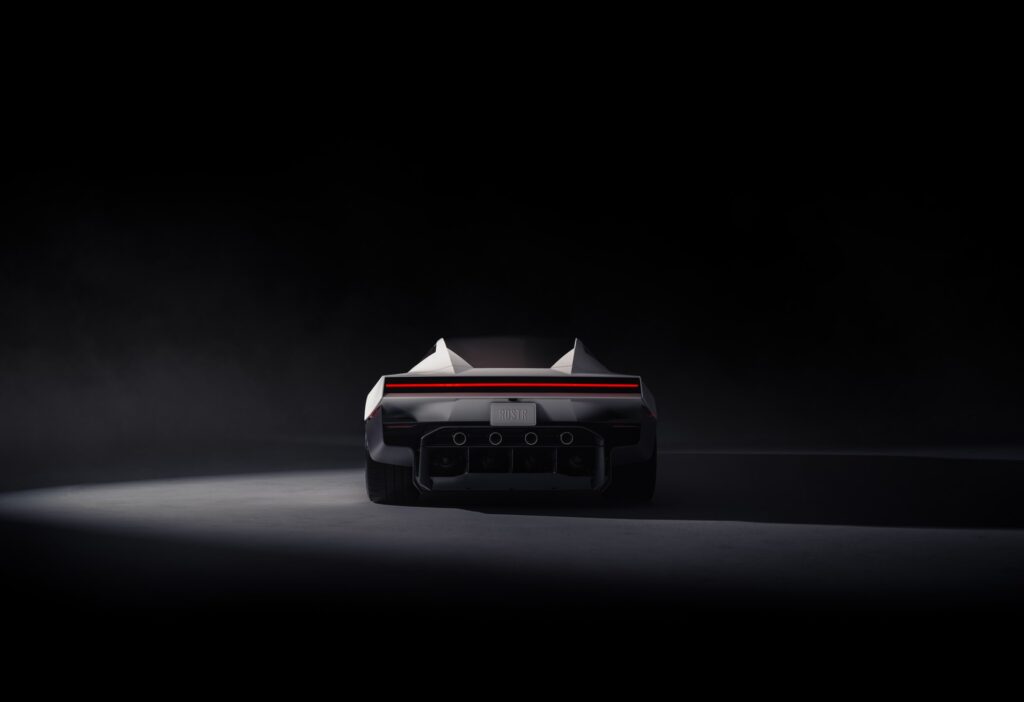
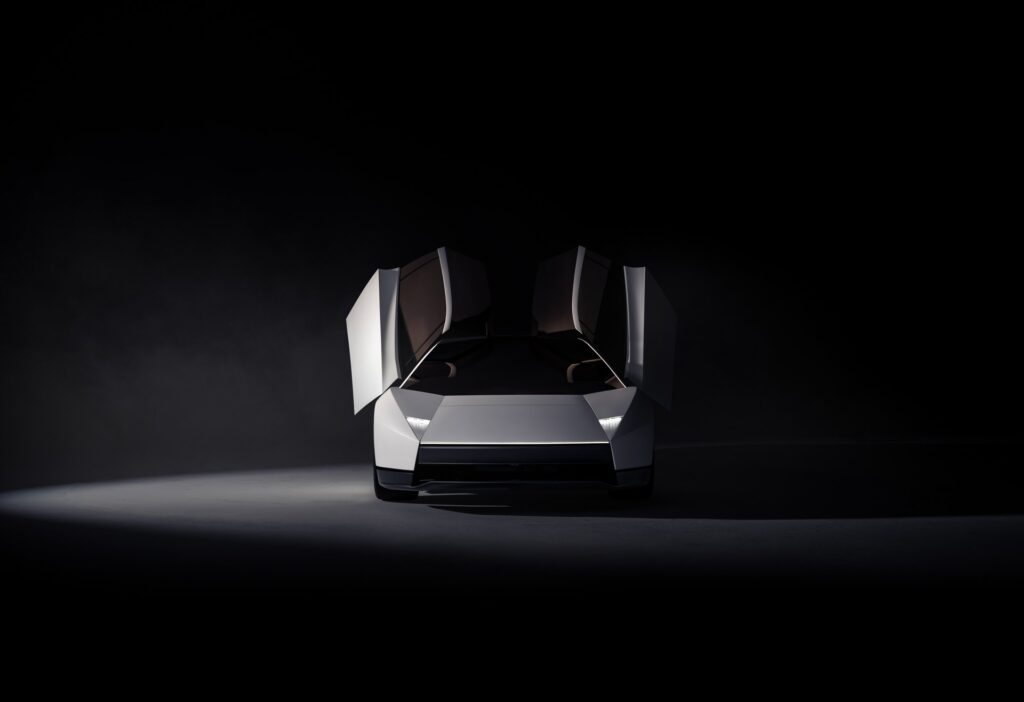
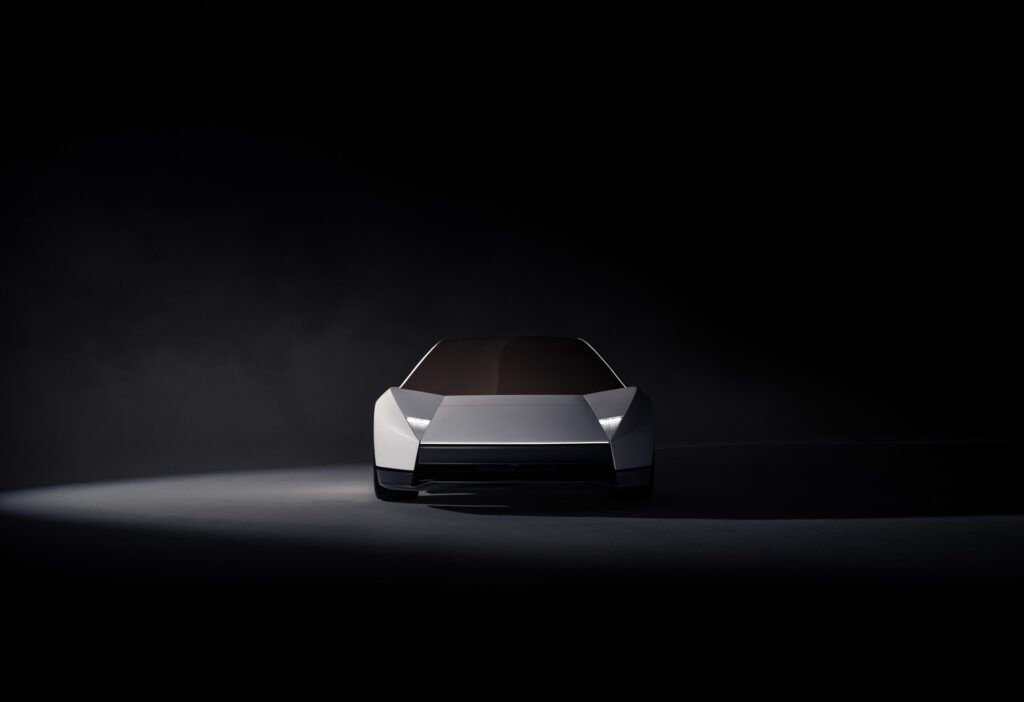
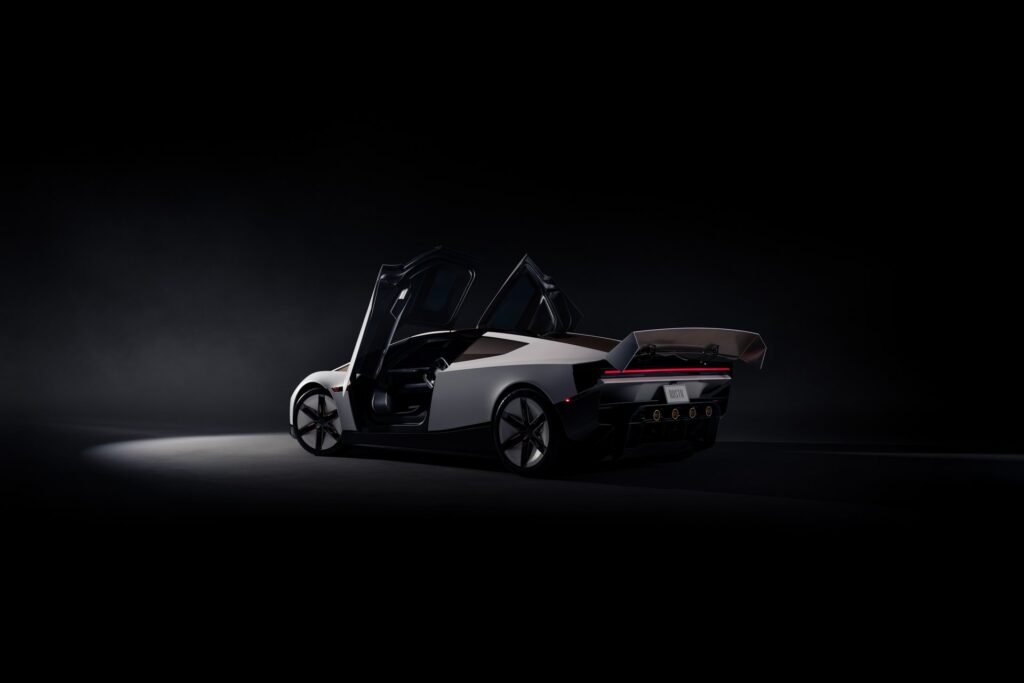
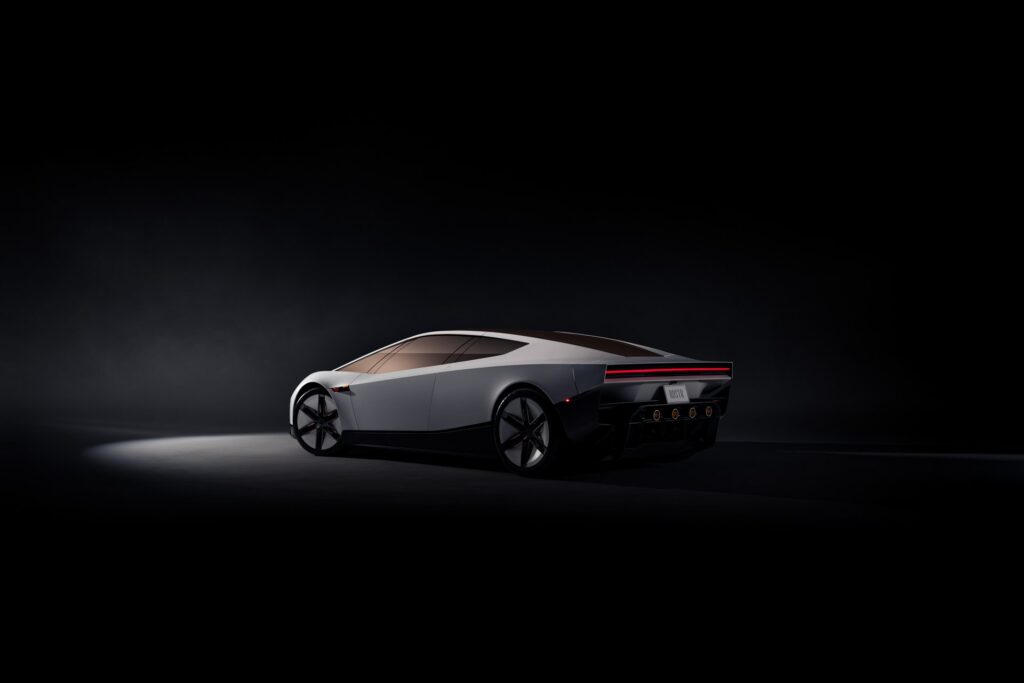
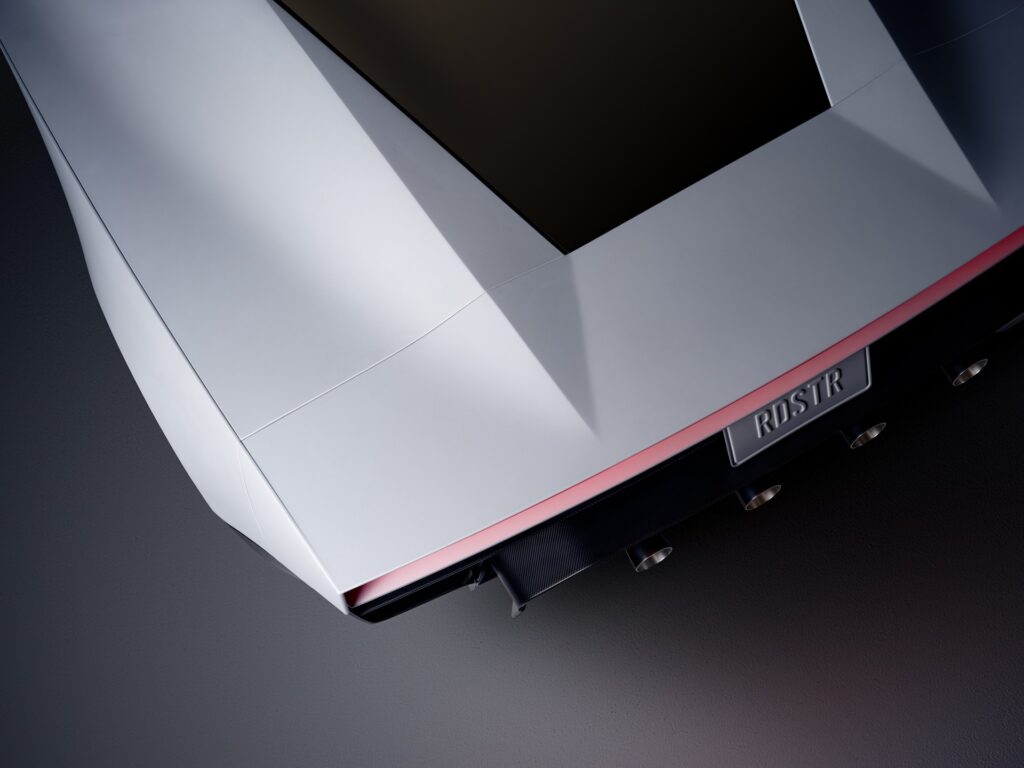
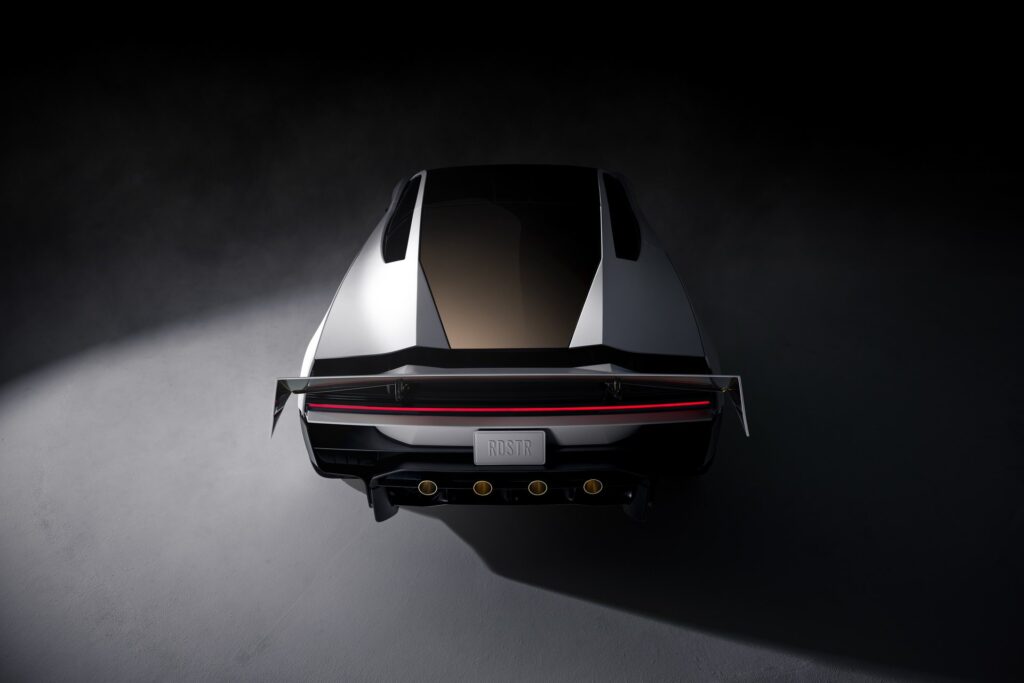
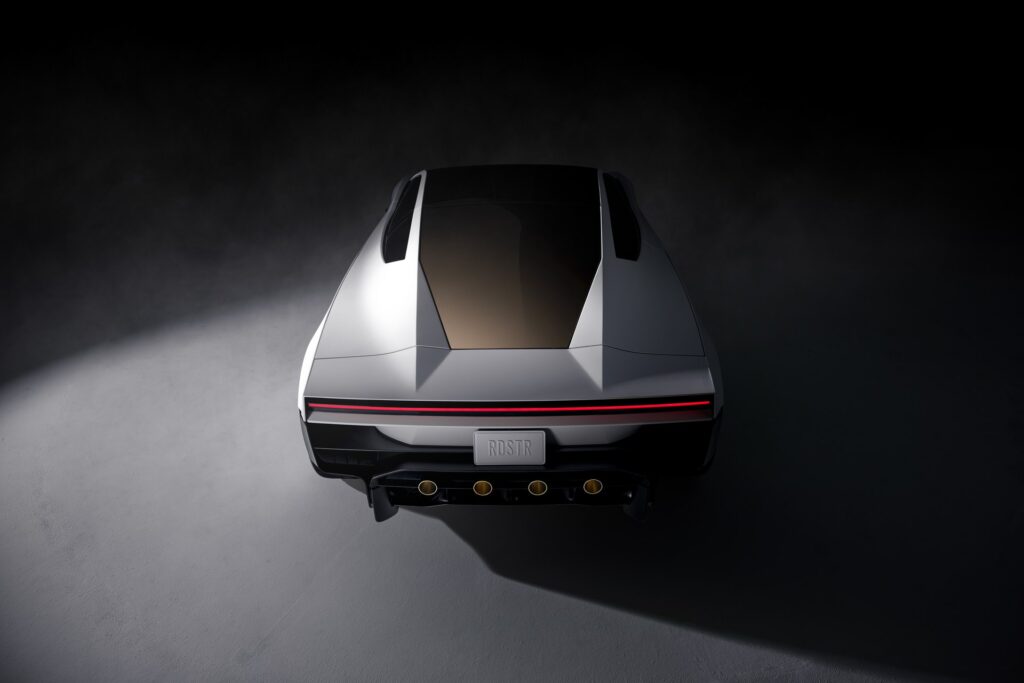
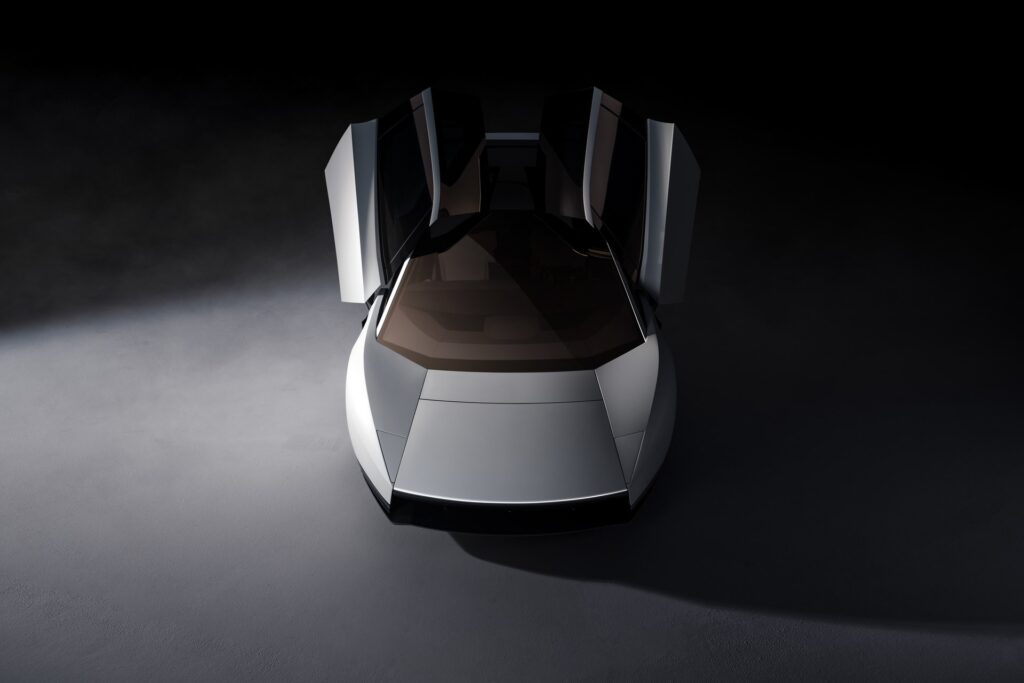
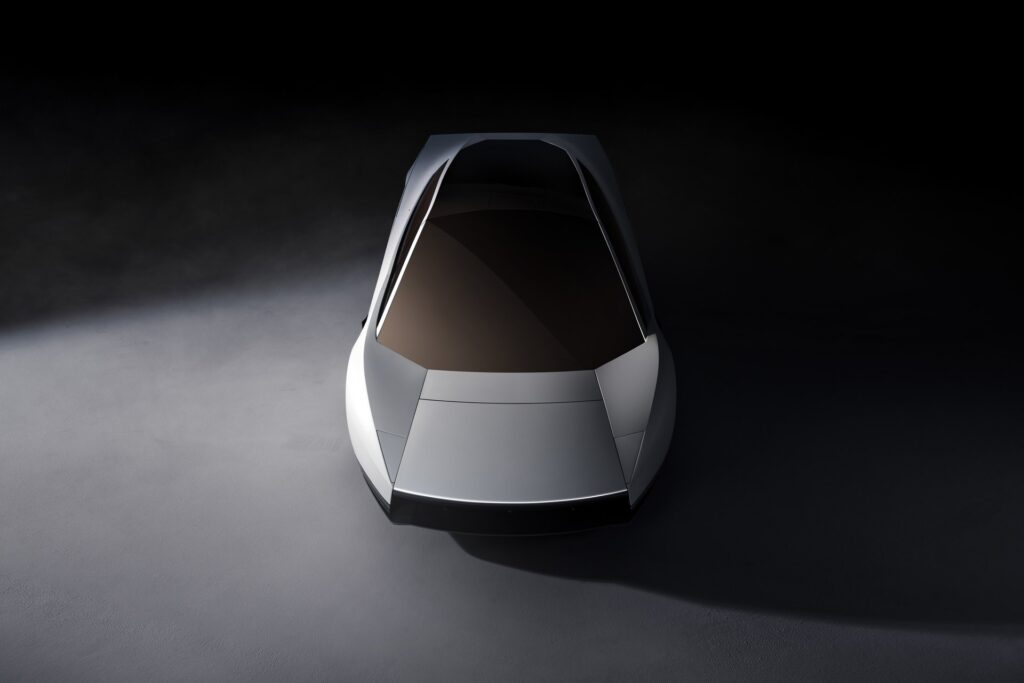
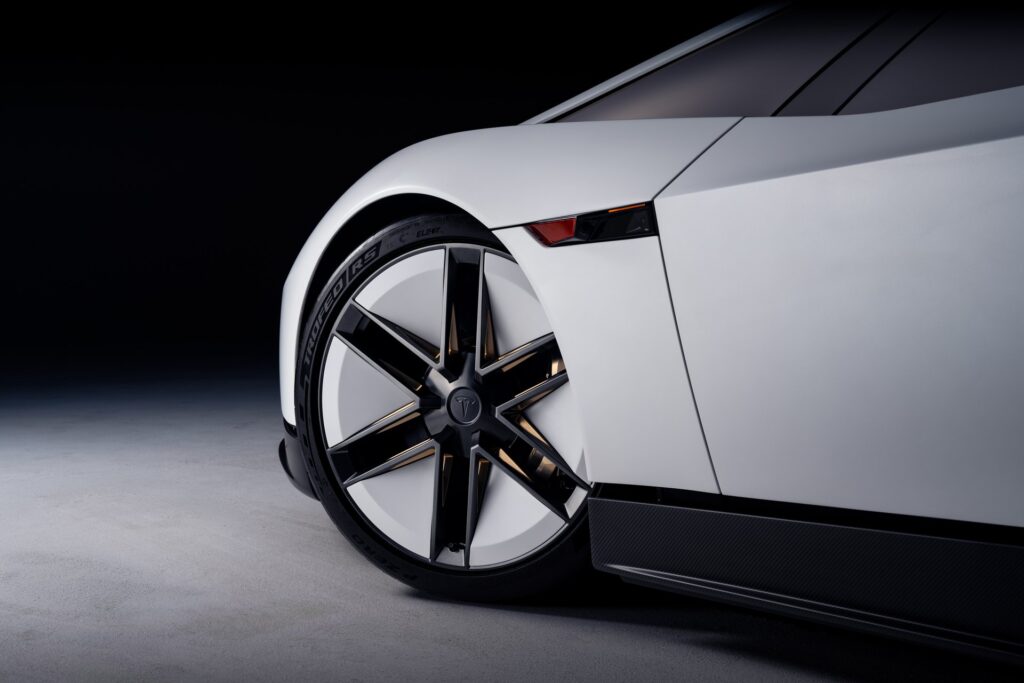
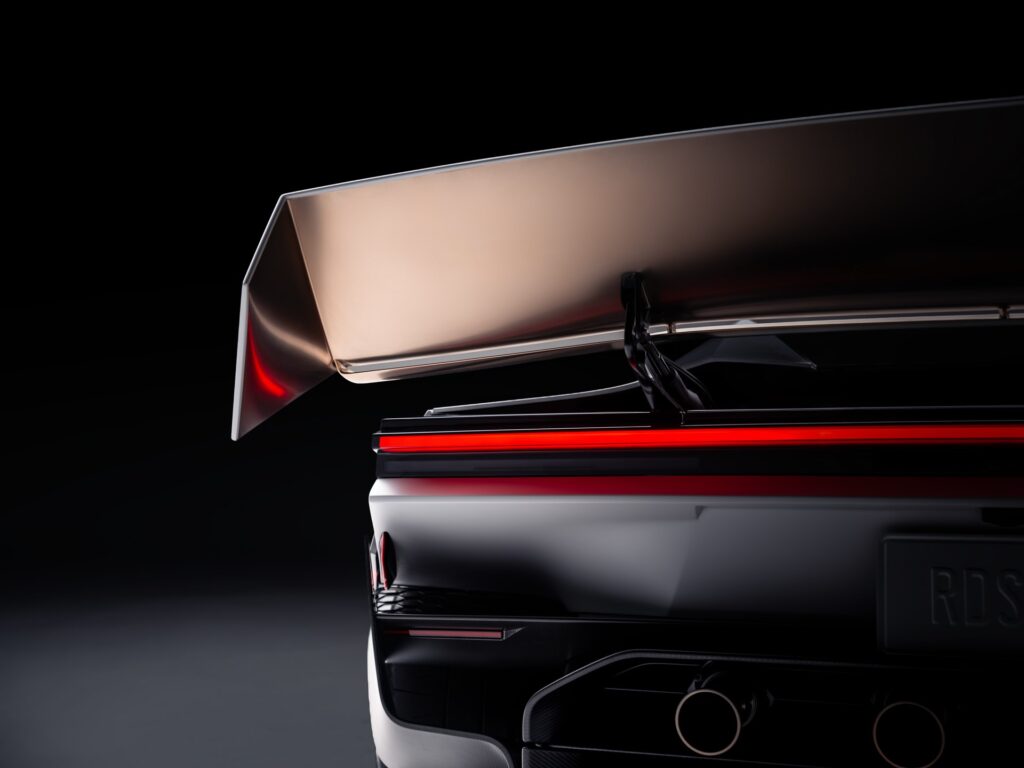
You can see it in the official images. The car is low, wide and sharply faceted, with crisp angular surfaces, a pointed nose and a dramatic upward opening door. At the back, a full width light bar sits above a row of thruster nozzles, and the plate in Tesla’s photos reads “RDSTR.” It is a bold, jet age shape that fits a car built with rocket technology inside.
Design details
After the show, Tesla shared a design thread on X calling the Roadster “a true pilot’s car,” built around active aerodynamics, a multi-mode suction system and cold-gas thrusters.
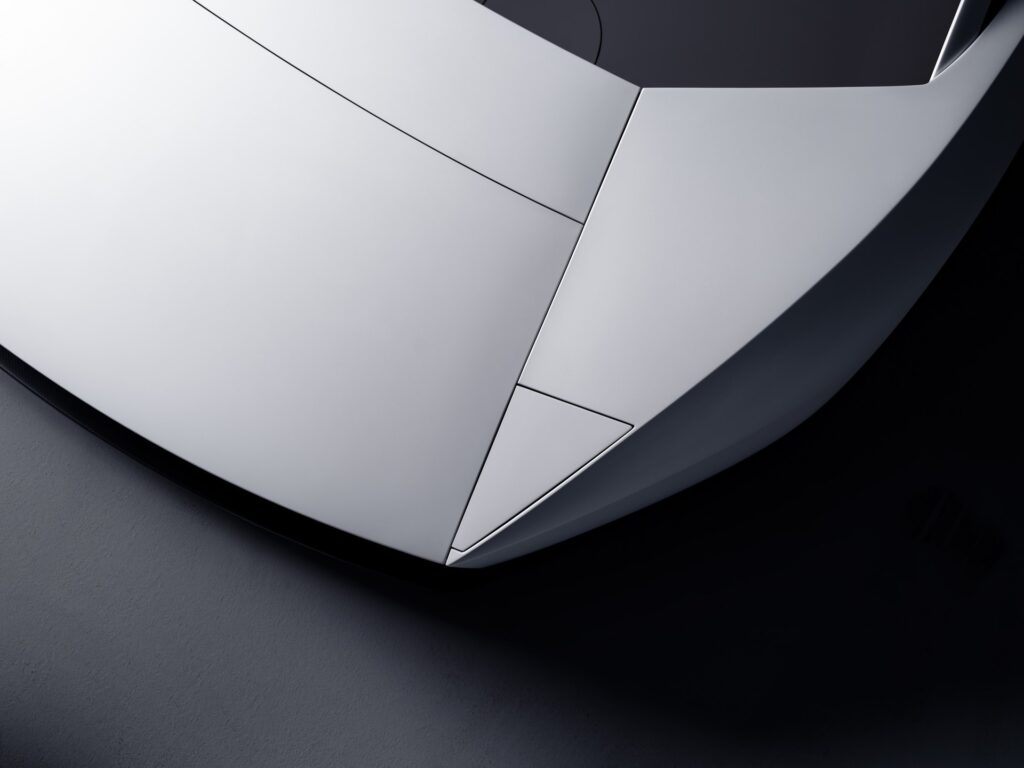
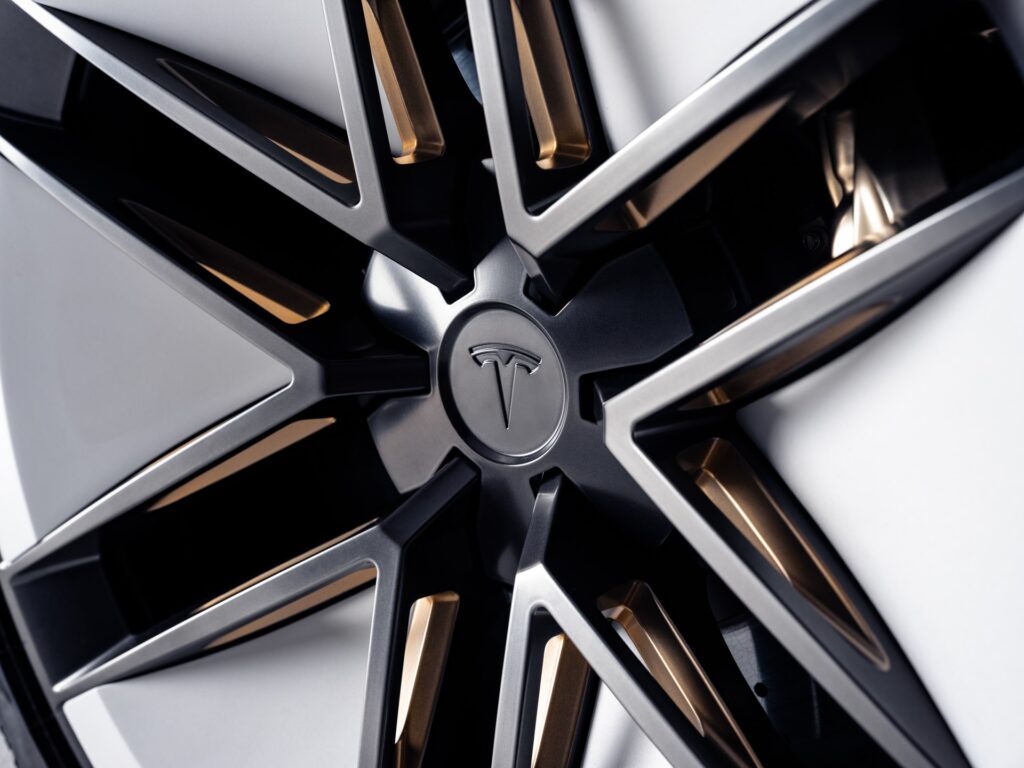
Exterior. Concealed headlights, a full-length taillight and flush-mounted surfaces give the car what Tesla calls “a minimalist, highly technical form.” The super light wheels use thin spokes that reinforce structural strength. The paint is Ano White, an aerospace-derived finish with UV and cryogenic protection, electrostatic dissipation and corrosion resistance. The glass is Gold Glazed, tinted to mimic the copper coating of spacesuit visors, with subtle titanium accents.
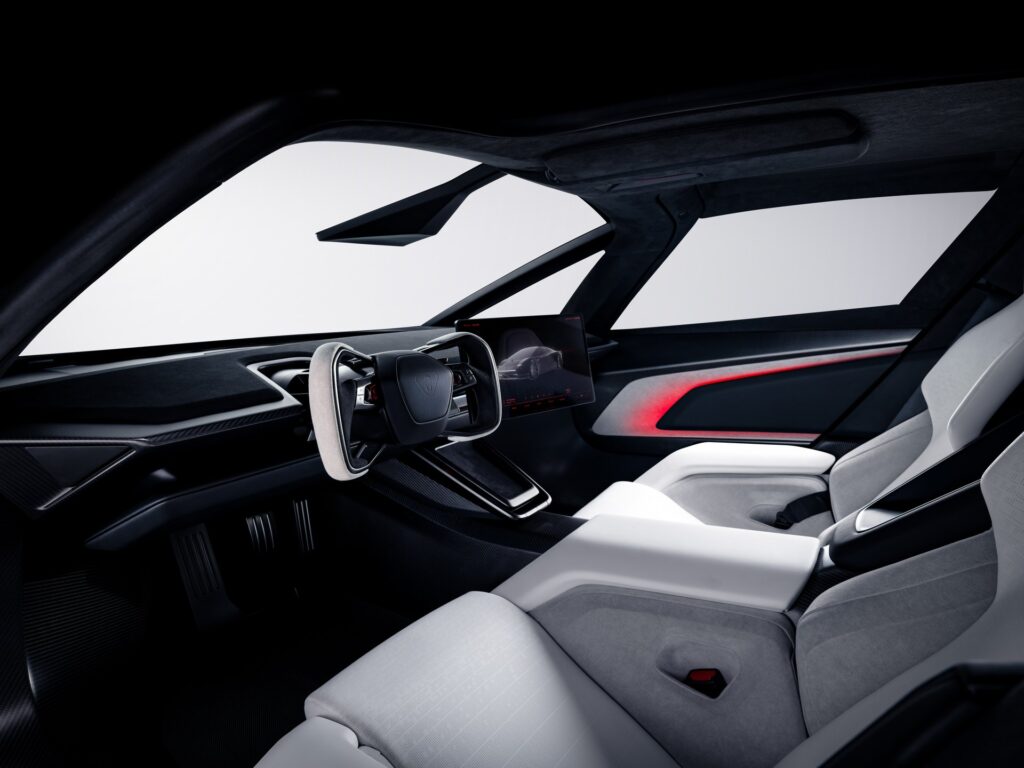
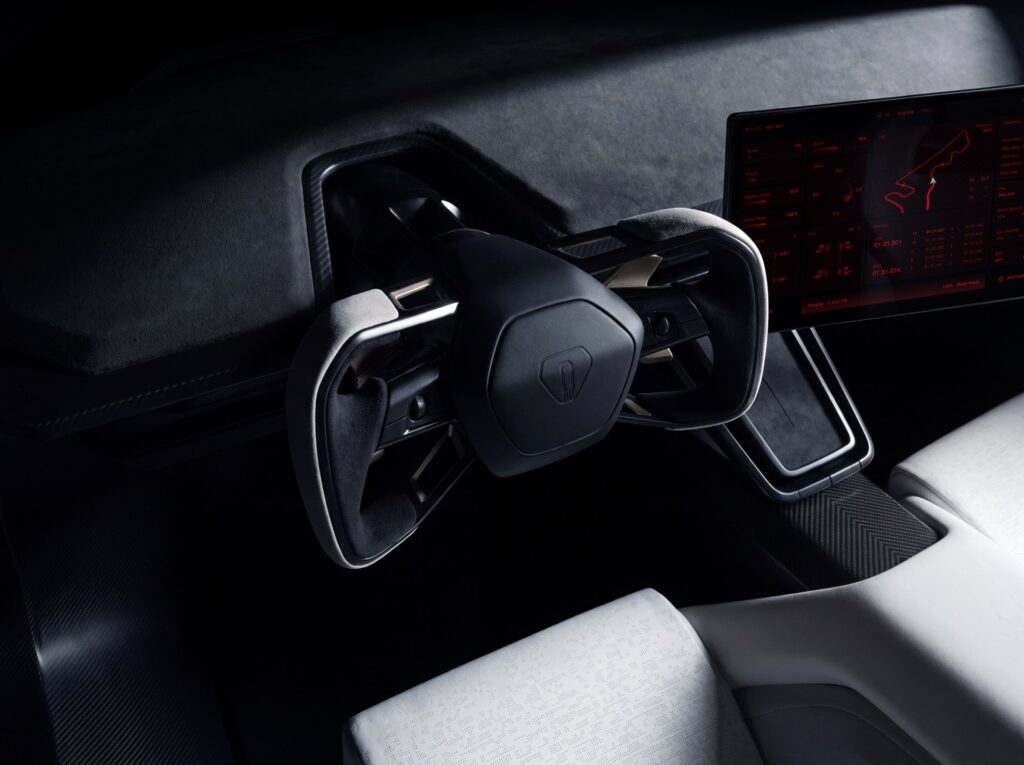
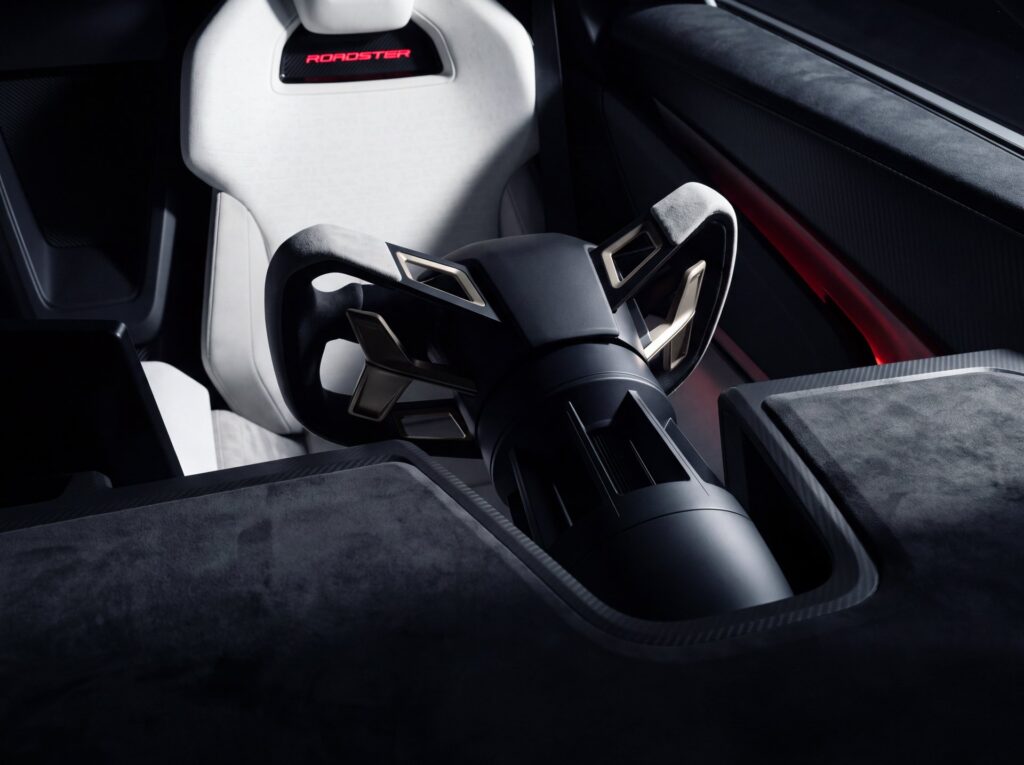
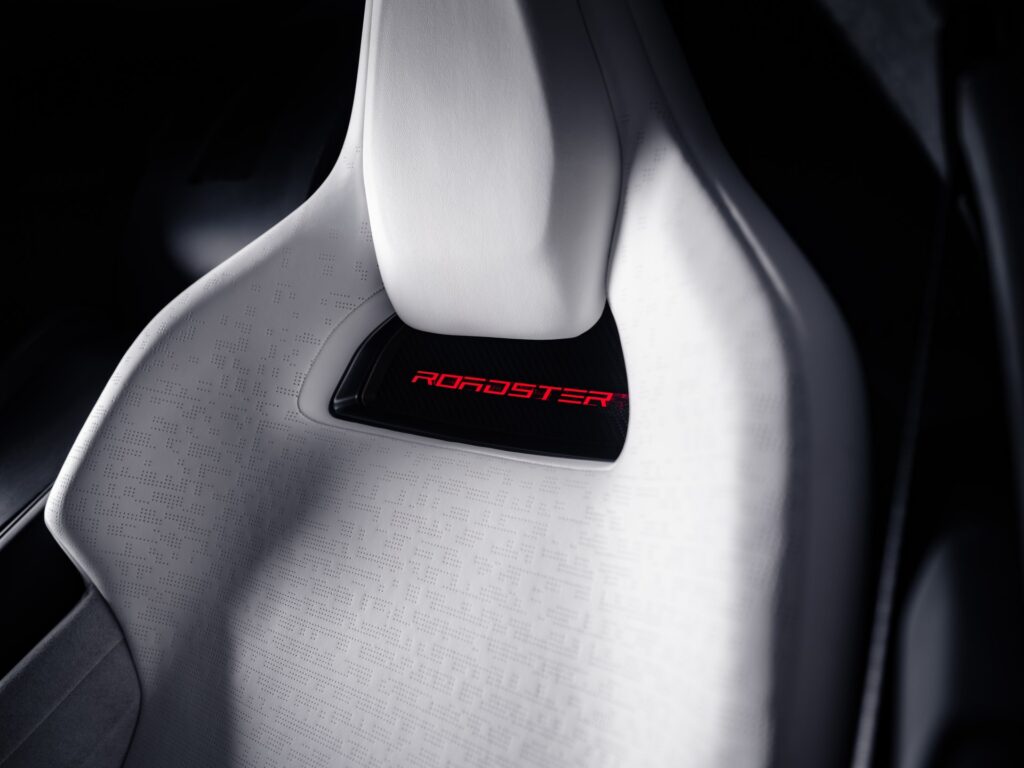
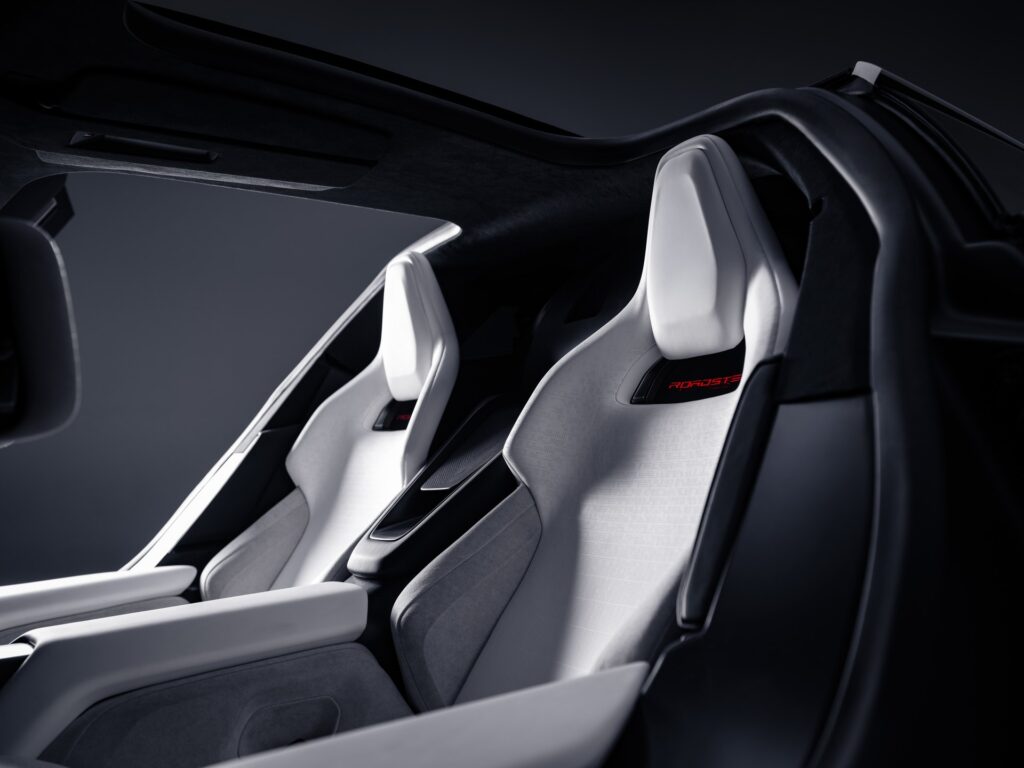
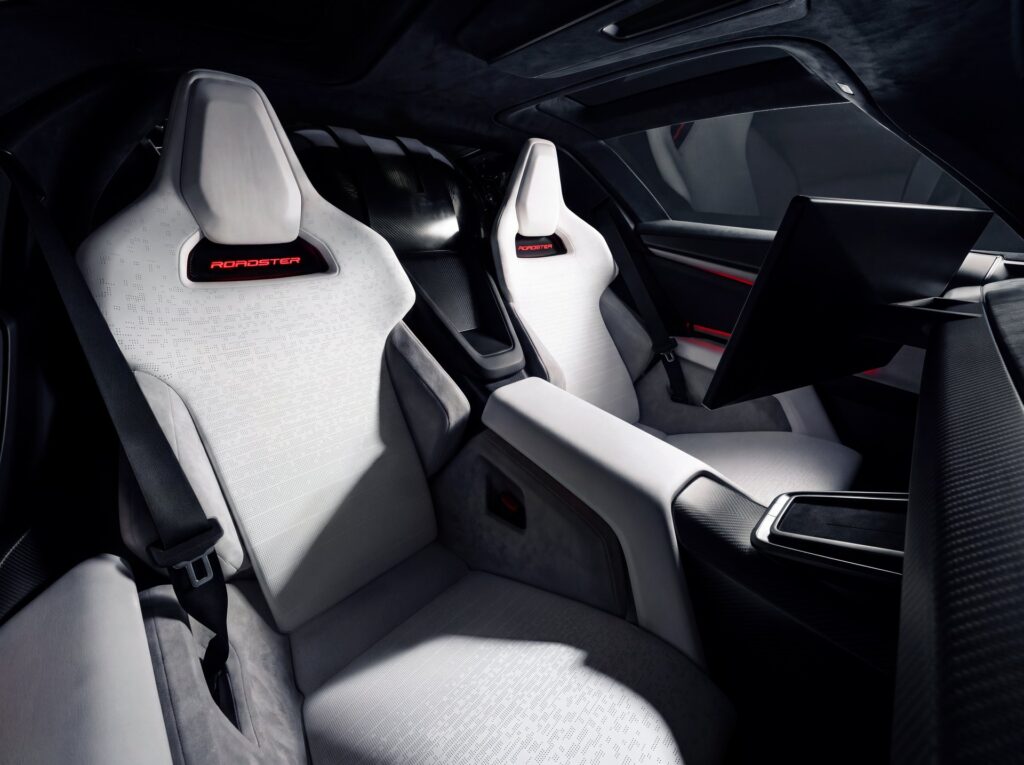
Interior. Inside, the cabin is Ultrawhite with gray microsuede detailing and seat bolsters for added grip. Manual controls and a fixed seat position cut overall mass, and lightweight, high-strength materials including magnesium, titanium and carbon fiber reduce it further. Tesla says the result lets the Roadster respond to driver inputs almost instantly. On the car shown, a two-seater, the seats are molded into the chassis to save weight, and the car is fully by-wire, with a steer-by-wire yoke, by-wire brakes and by-wire throttle.
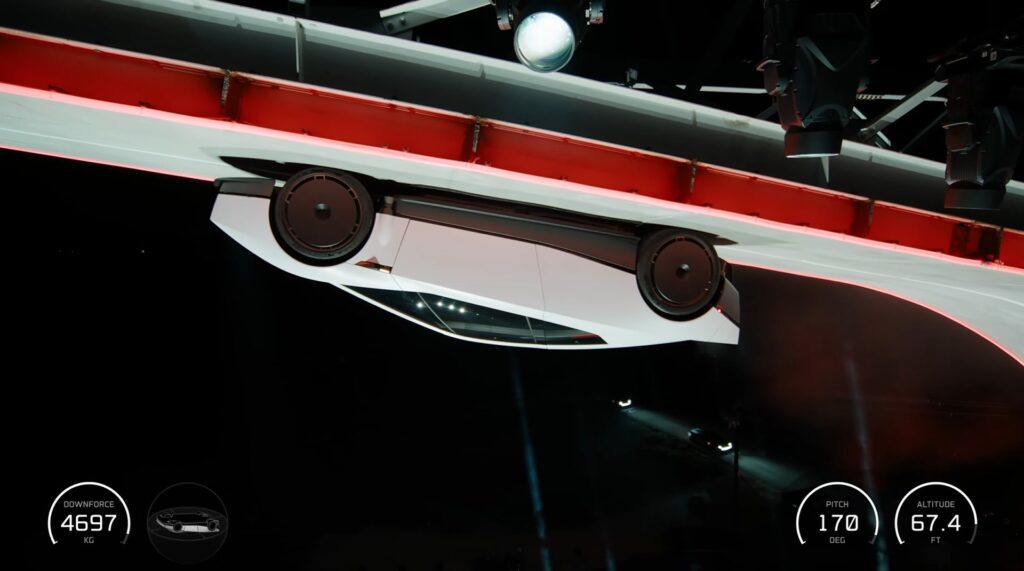
Suction fan and active aero. Tesla describes a multi-mode fan and ground sealing system that pulls air from beneath the car, generating enough suction to hold it upside down while stationary. Powered fans and active wings maximize traction and cornering speeds in all conditions, achieving what Tesla calls “massive downforce at zero speed.” In Track Mode, Tesla says the aero delivers “the best passive downforce package of any road car (approaching F1 levels!),” with the wing moved by the Tesla Optimus actuator system. The thrusters and fans sit in the diffuser, which Franz called “the business end” of the car. Franz said the car transforms because “we wanted to make a pretty car, but also a car that could deliver amazing downforce,” and the team switched the fans on live on stage, loud enough that the presenter apologized for the noise. The car switches between a high-downforce mode and a low-drag mode, and the fan system pulls the car down for traction at low speed, then opens the front and rear of the suction system at high speed to push more air underneath. Musk said the rear wing has variable pitch and adjusts downforce automatically. On the grip, he added: “It looks like you’re breaking physics, because the car sticks to the ground so hard.”
Cold-gas thrusters. Finally, advanced cold-gas thrusters with all-electric actuators make micro adjustments within a fraction of a second to stabilize the vehicle in flight. In Tesla’s configurations post, Thrust pairs the suction system with rear-mounted thrusters, while Rocket adds perimeter-mounted thrusters for forward and upward acceleration plus lateral rotational movement. For the flight systems, the team said it “borrowed some technology from SpaceX,” and Musk said the car “could do rolls. It could do crazy gymnastics. Whatever you want, really.” As Tesla puts it: “So…yes, it can fly.”
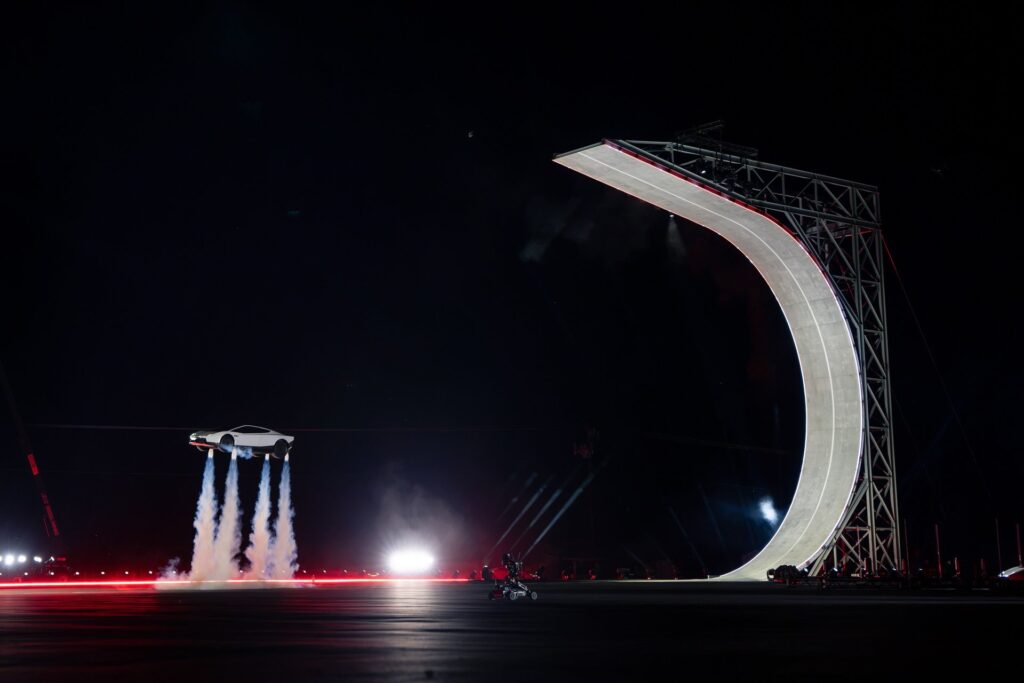
Lars Moravy said two carbon fiber overwrapped pressure vessels, 600 liters in total, hold about 250 kilograms of air feeding 10 nozzles. Musk said the car recharges its own high-pressure air tank, so no special propellant is needed. Exhaust from the four rear thrusters leaves faster than the speed of sound, producing visible Mach diamonds and over 80 kilonewtons of thrust. As Musk put it: “There are cars, and then there’s one car that has Mach diamonds.”
Real life, baby
Tesla has also posted the ramp run on YouTube.
Tesla followed it with The Kickflip, another stunt from the reveal.
Tesla also shared a behind-the-scenes development video from the event with Sawyer Merritt, and it shows how much work went into the show. Engineers lower a large pressure tank into the Roadster’s bare chassis, before any body panels go on. Slow-motion footage captures the cold-gas thrusters firing on a test stand, and a skeletal metal test rig hovers inside a tall tarp-covered tower, the tent-wrapped structure on SpaceX’s McGregor site that onlookers had long suspected was Roadster testing. The same rig fires itself high into the air on outdoor jump tests, and a quick test-stand blowup shows the team pushing hardware to its limits along the way. The video ends with the C-shaped ramp, its scaffolding draped in black covers, where a white Roadster is tested at night hanging upside down at the top, well before the public saw it.
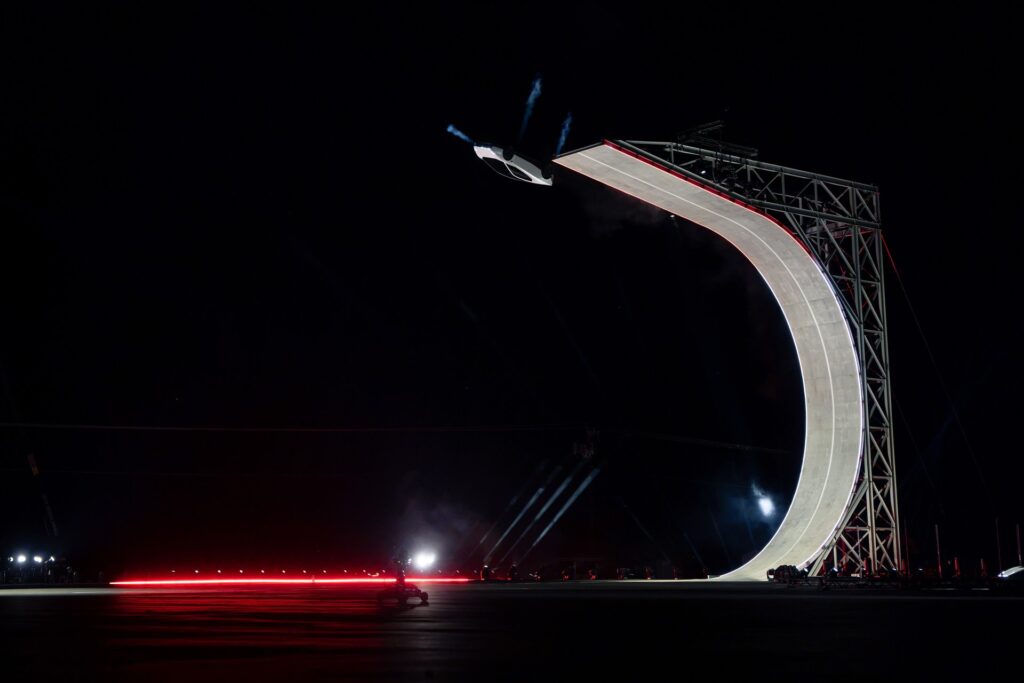
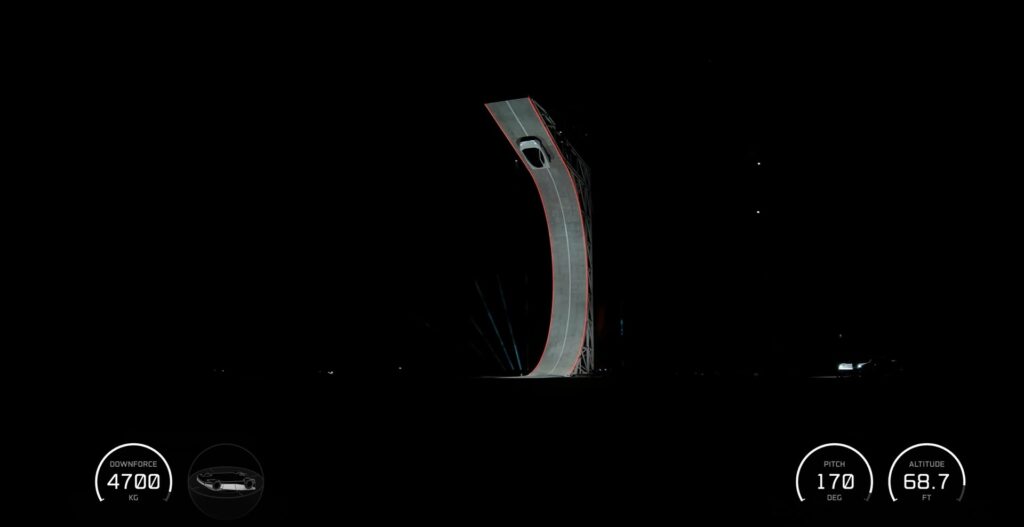
Tesla also posted real footage of the system at work. At night, the Roadster drives up a fully vertical ramp that curves into an inverted overhang, drops off the top, fires four blue cold-gas thrusters from its underside to stay level as it falls, lands flat in a cloud of smoke and drives away. Tesla shows it from rear, side, overhead and wide aerial angles.
Specs Tesla has confirmed so far
Tonight’s event focused on the thruster system and the design. Here is where every key spec stands, based only on Tesla’s own channels:
- Thruster system: confirmed, developed with SpaceX, generating 4 to 5 times the force the tires can
- Gas storage: confirmed, Carbon Fiber Overwrapped Pressure Vessels in every usable void
- Design inspiration: confirmed, the SR-71 and F-35
- Track Mode aero: confirmed, with wing actuation from the Optimus actuator system
- Configurations: Performance (road ready, seats 2), Thrust (race ready, seats 2), Rocket (air ready, seats 1)
- 0 to 60 mph: under 1.6 seconds (Performance), under 0.9 seconds (Thrust), under 0.59 seconds (Rocket), per Tesla; 0.81 seconds was achieved live at the reveal, announced by Lars Moravy, and Musk said Tesla expects the production car to do even better
- Top speed: over 230 mph (Rocket), per Tesla, and Musk said he wants it to reach about Mach 0.5 (roughly 380 mph at sea level)
- Range: over 300 miles, per Tesla
- Battery: Tesla has not yet confirmed (the 2017 prototype used a 200 kWh pack)
- Motors and drive: Tesla has not yet confirmed
The fan suction system can pull up to 2 g, enough to hold the car upside down, and lets the Roadster corner at over 2 g versus roughly 1.26 g from tires alone. Musk said it is “going to crush every track record that has ever existed.” Tesla also called it the world’s quickest production car from 0 to 60, covering a half mile in the time other cars take for a quarter mile, and Musk said the Roadster will be Tesla’s one manually driven car for the long term.
We will update this list as soon as Tesla publishes official figures on tesla.com/roadster or on X.
Price, orders and deliveries
- Starting price: final prices are not announced yet
- Reservations and orders: reservations are open with deposits. Tesla’s video description points fans to tesla.com/roadster for the latest details.
- Production start and first deliveries: production starts in 2028. As Musk put it on stage, “We enter production in 2028. Actually, for real.” Tesla has not yet confirmed first delivery dates
- Markets: Tesla has not yet confirmed which countries get the Roadster first
For reference, the 2017 listing put the base Roadster at $200,000 and the Founders Series at $250,000. Tesla has not announced final prices for the car revealed tonight.
From 2008 to tonight
Tesla framed the evening as a full circle moment. “In 2008, Roadster had one job: prove that an electric car could be fast, sexy and worth wanting,” the company posted during the stream. That first Roadster launched Tesla and helped start the global shift to electric cars.
The Roadster also has a famous connection to SpaceX. In 2018, Musk’s own red Roadster, with Starman at the wheel, rode a Falcon Heavy into space. As Tesla put it tonight, “Roadster and a rocket have shared a ride before.” Now the rocket technology rides inside the car.
For the complete story of how we got here, read our Tesla Roadster history, from the original 2008 car to tonight’s reveal.
Tesla Roadster Images Gallery
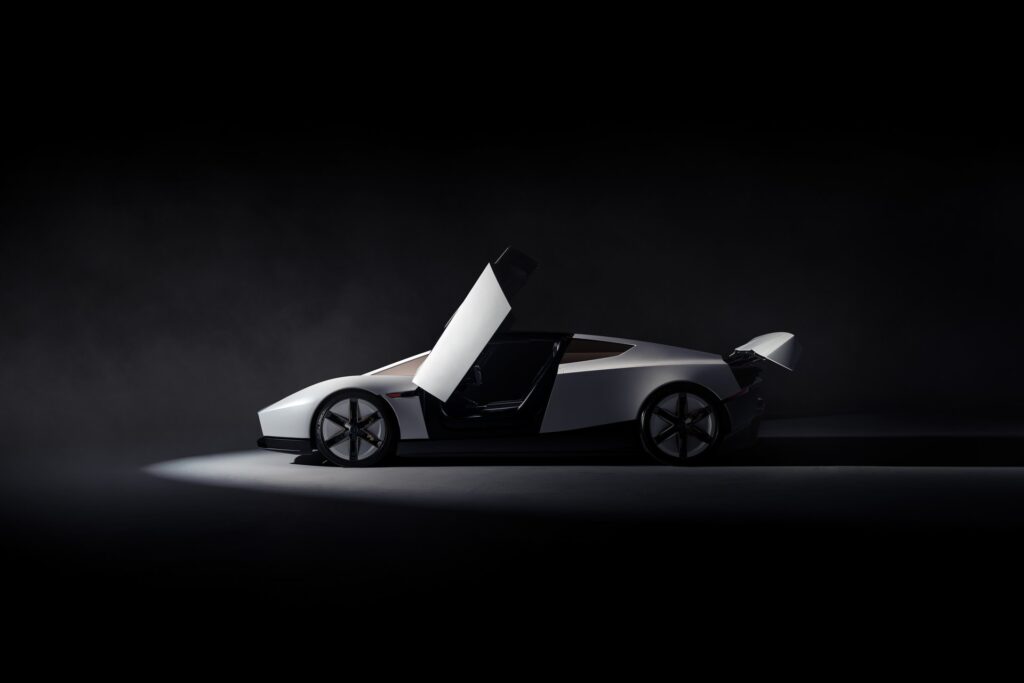
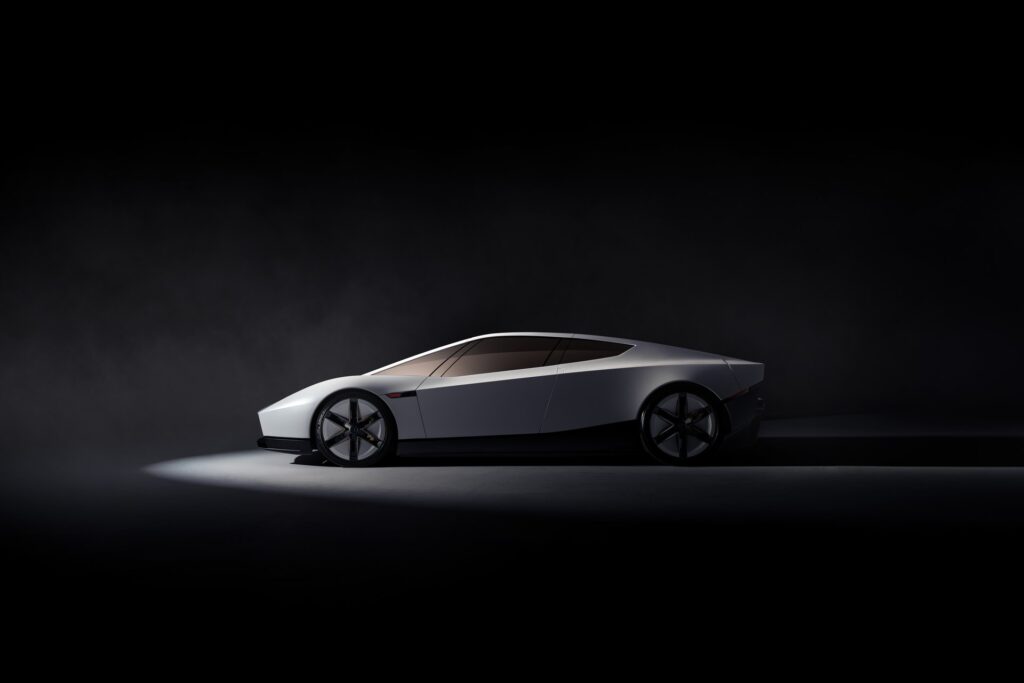
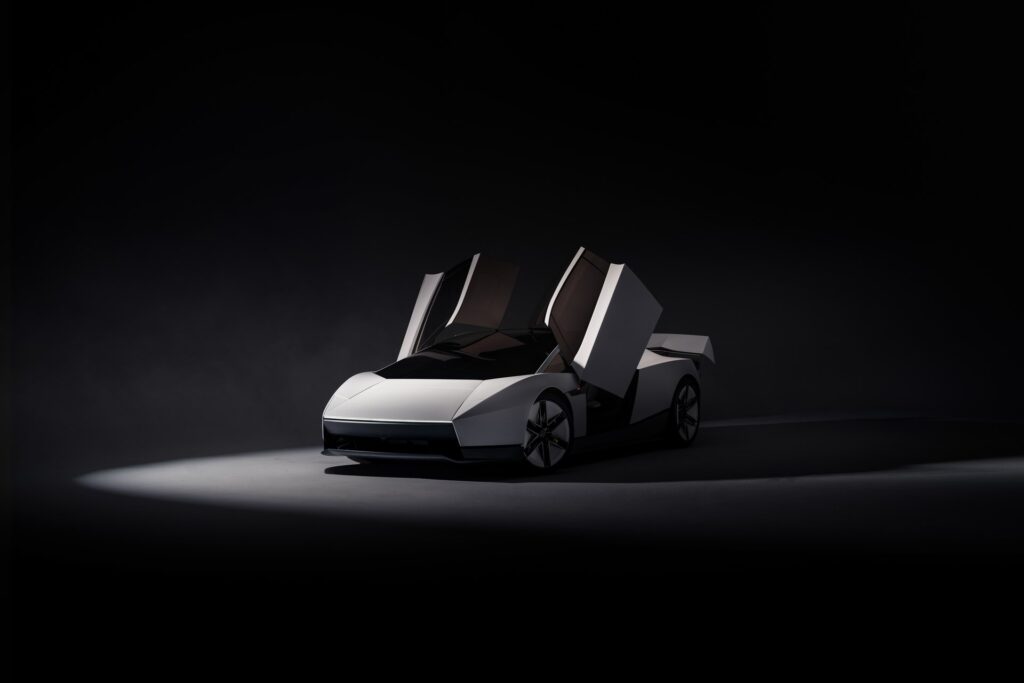
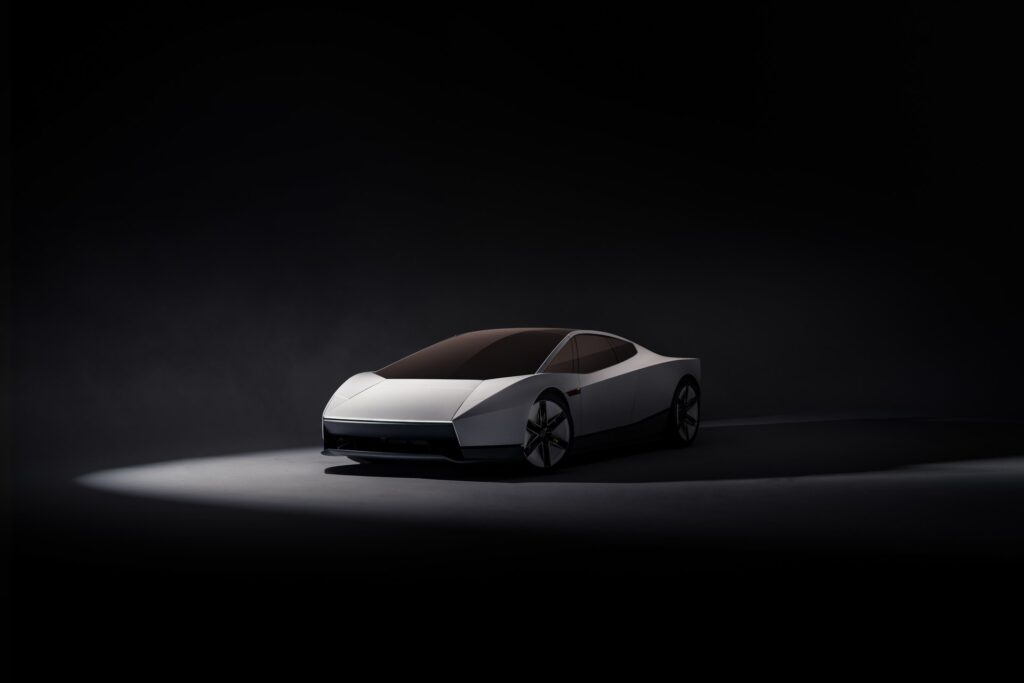
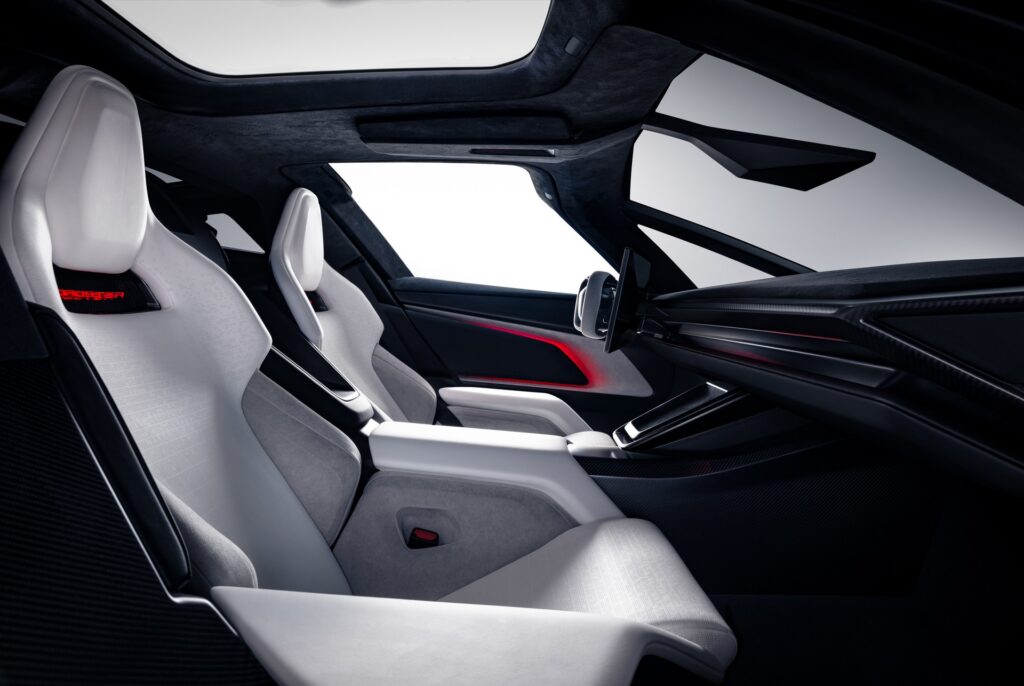
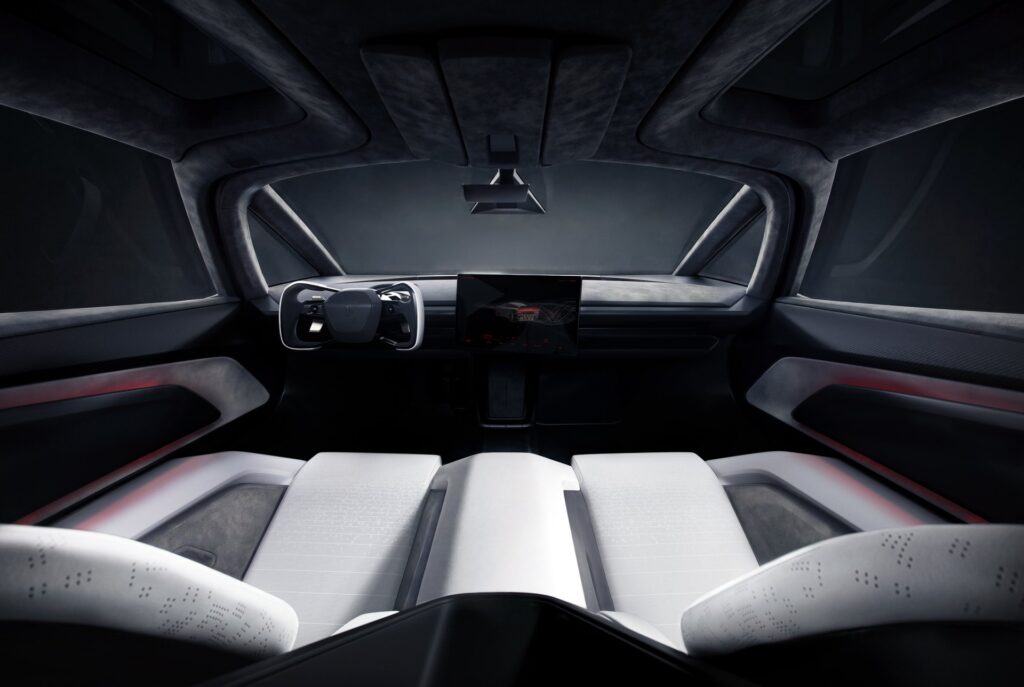
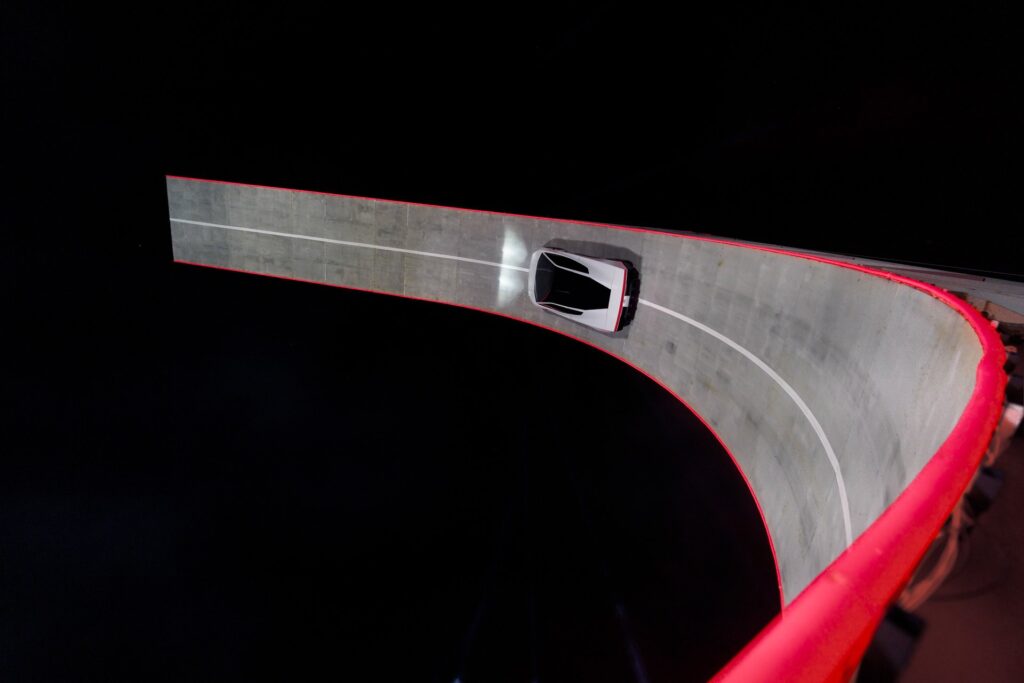
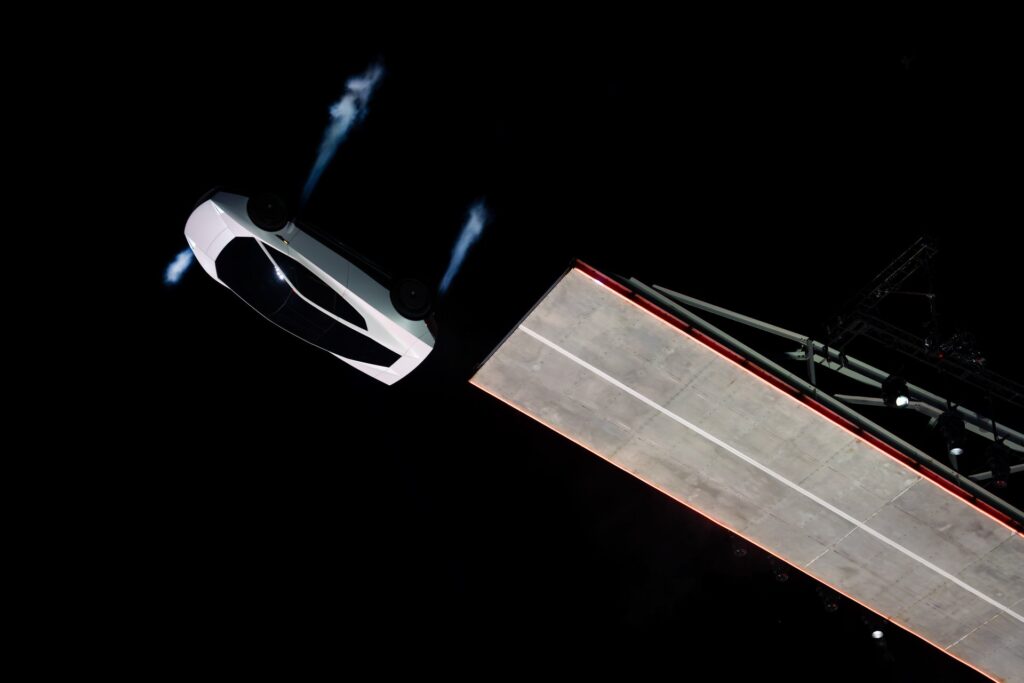
Roadster trims, deposits and timing
Tesla’s Roadster reservation page lists three versions, and production is set to start in 2028. Final prices have not been announced yet, but reservations are open with deposits.
- Performance ($50,000 deposit): road ready with seating for two, active aero and a multi-mode suction system.
- Thrust ($250,000 deposit, limited): race ready with seating for two, everything in Performance plus acceleration thrusters.
- Rocket (invite only): air ready with seating for one, everything in Performance and Thrust plus a full flight system.
Shopping for a Tesla you can drive sooner, or Tesla Solar for your home? Our Tesla referral link may offer benefits on eligible vehicles and solar (not the Roadster reservation), and it helps support Electron Motion.
Electron Motion has also written an open letter to Tesla: Dear Tesla, please build a driver’s car the rest of us can afford.
Tesla Roadster Reveal Transcript
Download the full transcript of Tesla’s Roadster reveal livestream, edited from YouTube’s auto-generated captions, with timestamps.
What’s next
The Tesla Roadster reveal answered the biggest question fans had, which is what would make this car special, and the answer is SpaceX thrusters. Pricing, performance numbers and delivery timing are the next pieces to watch for, and Electron Motion will update this post the moment Tesla shares them. Until then, the replay above is well worth a watch, wherever in the world you are.