
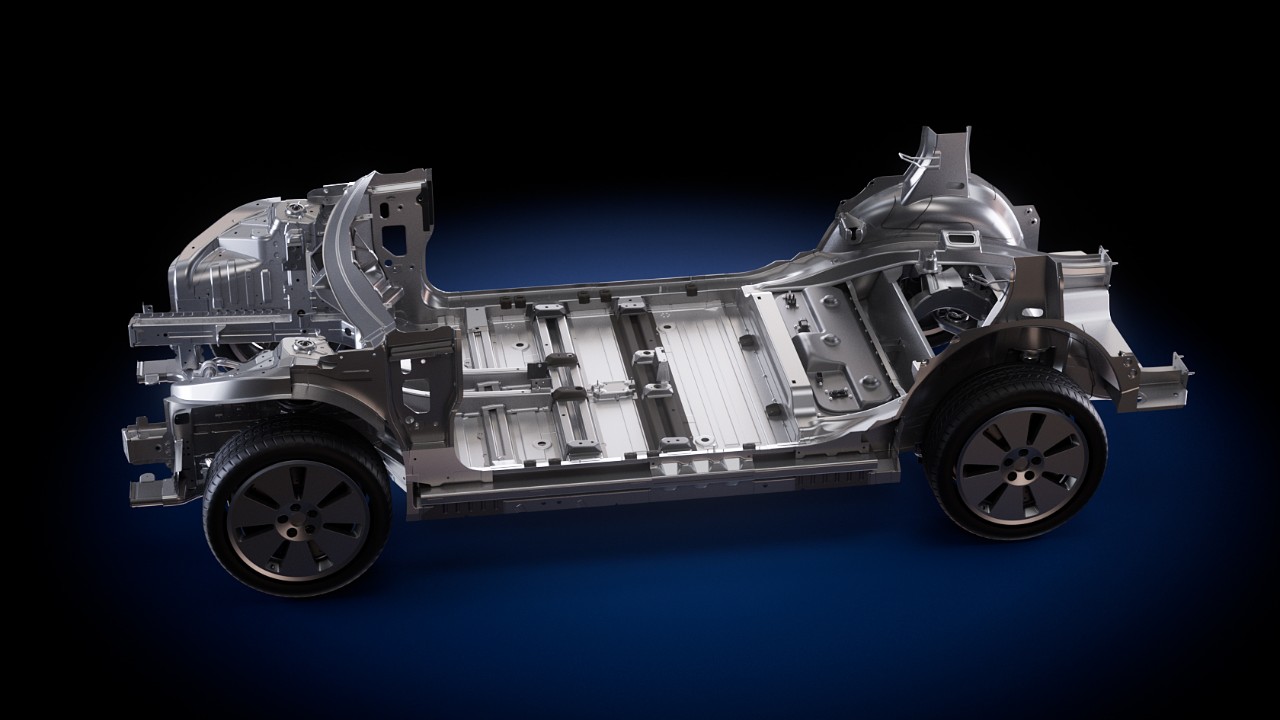
General Motors says its next EV platform will be the first to use lithium manganese rich (LMR) batteries in production, and it is putting them in the segments that sell the most cars. In a release on October 21, GM said early work on the fourth-generation platform points to roughly 20% more range from every kilowatt-hour of battery, compared with its current EVs.
GM did not name a vehicle, a price, or a launch date. What it did give is a set of engineering targets that show where its next affordable EVs are headed.
What GM announced
The fourth-generation platform combines four things GM says it is building together rather than one after another: LMR battery cells, a new family of motors and power electronics, a centralized computer and wiring layout, and an updated version of Super Cruise. GM describes the result as “an accessible, high-value package” built “for broad appeal in the market’s largest segments.”
The cells are prismatic (flat, rectangular cans instead of the pouch cells in today’s Ultium packs) and will be made by Ultium Cells, GM’s joint venture with LG Energy Solution, in Spring Hill, Tennessee. GM says it plans to use LMR in its “highest-volume EV segments, where range, durability, and affordability matter most.”
That is a broader target than GM first described. When GM and LG announced the LMR cell in May 2025, the plan was for future electric trucks and full-size SUVs, with a goal of more than 400 miles of range in an electric truck. The new release moves LMR into the volume end of the lineup as well.
Why LMR matters for range and price
Most affordable EVs now use lithium iron phosphate (LFP) cells, which are cheap and durable but hold less energy for their size. High-nickel cells, like the ones in GM’s current long-range trucks, hold more energy but cost more, partly because of nickel and cobalt. LMR uses a higher share of manganese, which is cheaper.
GM says LMR is designed to offer 33% more energy density than LFP at a comparable price. In practice that gives an engineer two options: the same range from a smaller, lighter pack, or more range from a pack of the same size. GM’s wording is that LMR “can support longer driving range in a smaller, lighter battery pack at a price comparable to LFP.”
The 20% range-per-kWh figure is a separate number. It covers the whole vehicle, not just the cells. GM credits the LMR batteries, new drive units, and better aerodynamics working together. GM did not say which current model it measured against or what range a fourth-generation vehicle will have.
| Area | What GM says | What it means for a buyer |
|---|---|---|
| Battery chemistry | LMR designed for 33% more energy density than LFP, at a comparable price | More range per dollar of battery, or a lighter pack for the same range |
| Whole-vehicle efficiency | Roughly 20% more range per kWh vs. today’s GM EVs | Fewer kWh needed for the same trip, so less to pay at the charger |
| Drive units | 40% fewer parts in each drive unit | Smaller, lighter motors with lower production cost, and more room for people and cargo |
| Wiring and computing | Fewer control modules, 30% less wiring, 40 times the processing power | A simpler base for over-the-air updates, voice controls, and Super Cruise |
| Battery development | 300,000+ designs modeled before a physical prototype; first LMR pack concept to program approval in one month | Faster engineering, not a spec you will see on the window sticker |
| Development time | Expected to halve the traditional five-year cycle | New models and updates could arrive sooner |
| Factory | Battery packs move through assembly 30% faster with GM’s digital tools | Lower build cost, if GM carries it through |
Fewer parts in the motors and wiring
GM says the new motors and power electronics cut the number of parts in each drive unit by 40%, making the system smaller and lighter. A smaller drive unit frees space for passengers and cargo, and fewer parts lower what each one costs to build.
The electrical side gets the same treatment. GM’s new compute and electrical architecture uses fewer control modules and 30% less wiring than its current EVs, and GM says it provides 40 times more processing power for AI-enabled features. GM lists software updates, energy management, faster displays and voice controls, and continued work on Super Cruise and OnStar as the uses.
Less wiring and fewer modules also matter on the assembly line. GM says a fourth-generation vehicle can test its own electrical connections as it moves through the plant, which removes the final validation check after the vehicle is built.
A faster way to build the next models
GM compares the old process to a relay race, where each team waits for the last one to finish. On the new platform, design, engineering, and manufacturing teams work at the same time, and GM expects that to cut its traditional five-year development timeline in half.
The battery is GM’s main example. Instead of building and testing hundreds or thousands of physical cells, GM says it used computer models to test more than 300,000 battery designs before building a prototype, and went from its first LMR pack concept to formal program approval in one month.
The same approach carries into the factory. GM’s PlantBrAIn system combines plant-floor data with computer models, and GM says it has already helped move battery packs through its pack assembly plants 30% faster.
When it arrives
GM has not said. The October 21 release has no vehicle name, brand, price, or on-sale date.
The Spring Hill plant gives a rough outer bound for the cells. GM said on September 29 that work to convert Spring Hill for LMR cells starts later this year and should be complete in 2028, adding 500 jobs to the plant’s 1,200. GM’s 2025 plan called for commercial LMR cell production in the US by 2028, with pre-production at an LG facility by late 2027. Neither release says when the first LMR vehicle goes on sale. GM also said in September that high-nickel batteries will remain its longest-range option, so LMR is not replacing everything.
What it means if you are shopping now
Nothing on sale today uses this platform. Chevrolet’s current affordable EVs, the 2027 Bolt from $27,600 and the Equinox EV from $34,995 before destination, are built on GM’s existing hardware. If you need a car in the next year or two, the fourth-generation platform shouldn’t change that decision.
It matters more for what follows. GM’s EV sales fell hard in the third quarter, with the Equinox EV down 92.4% and the cheaper Bolt now Chevy’s top seller. A battery with more range at LFP-level cost, in a vehicle with fewer parts and less wiring, is how GM plans to make its next Equinox-, Blazer-, or Silverado-sized EV cheaper to build. GM has not said which models those will be or what they will cost.
FAQ
What is an LMR battery?
A lithium-ion battery whose cathode uses a high share of manganese and less of the costlier metals, like cobalt. GM says its LMR cells are designed for 33% more energy density than LFP at a similar cost.
Which GM EV gets LMR first?
GM hasn’t said. The October 21 release only says LMR will go into GM’s highest-volume EV segments on the fourth-generation platform.
Where will the batteries be made?
At Ultium Cells in Spring Hill, Tennessee, GM’s joint venture with LG Energy Solution. GM expects the plant upgrade to be finished in 2028.
GM wants more range from each kWh, a cheaper battery chemistry, and simpler hardware in the segments where it sells the most. Range and price stay unknown until GM names the first vehicle.