
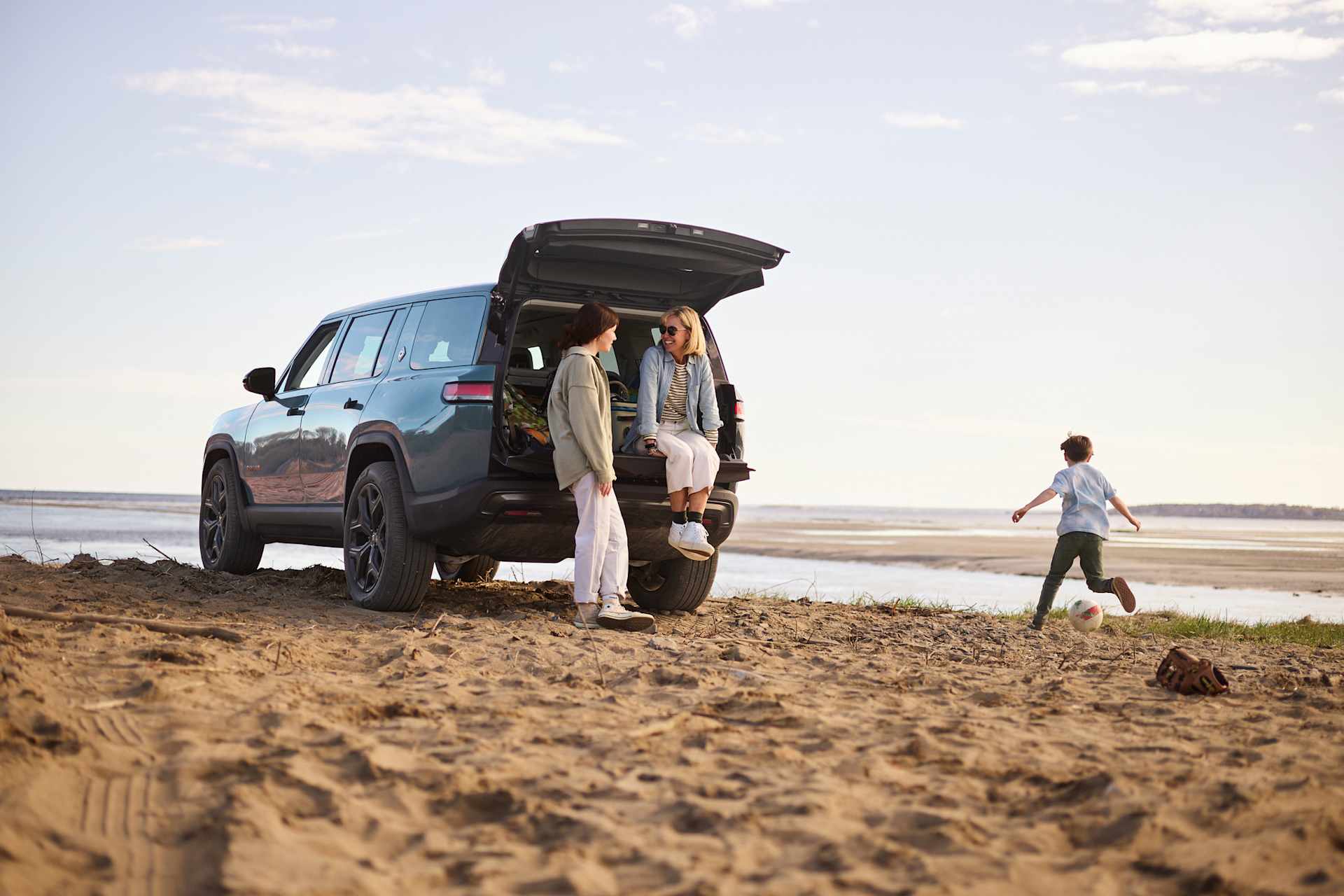
The Rivian rear camera recall covers 98,828 vehicles in the US, because a pop-up alert on the center screen can cover the backup camera image when you shift into reverse. The recall covers 2022-2027 R1S, 2022-2026 R1T and 2027 R2 models. The good news is that the fix is a free over-the-air software update that has been out since September, and Rivian says more than 95 percent of affected vehicles already have it. Most owners won’t need to do anything at all.
Here is how to make sure your vehicle is one of them, what the bug actually does, and why a small screen glitch still counts as a federal safety recall.
What owners should do
If your Rivian installs software updates as they arrive, you are almost certainly covered already. The recall filing lists the affected software as anything older than 2026.23 on the R1S and R1T and anything older than 2026.31.40 on the R2. If your vehicle is on one of those versions or newer, the fix is in place.
There is no service visit, no parts and no cost. Rivian’s recall page lists the remedy as available now.
How to check your software version
- On the center display, tap Settings, then Vehicle, then Updates. Your current software version is listed there, along with any update waiting to install.
- Or open the Rivian app and go to Vehicle Software Settings in the About section.
- Compare the number with the fixed versions: 2026.23 or later for an R1S or R1T, 2026.31.40 or later for an R2.
- If you’re on an older version, install the latest update from the same Updates screen. Park the vehicle first. It can’t be driven during an update, and Rivian says most updates finish in about an hour.
R2 owners who already have update 2026.36, the one that brought Rivian Assistant to the R2, are past the fixed version.
How to look up your VIN
Rivian’s recall information page lets you search by VIN or by model and year. NHTSA says VINs in this recall will be searchable at nhtsa.gov/recalls starting November 9, 2026, so a lookup there before that date may not show it yet.
Rivian also has to mail owner letters on or before November 9. If you get one and your software is already current, the letter is a formality.
Which vehicles are included
| Model | Model years | Vehicles | Built | Fixed in software |
|---|---|---|---|---|
| R1S | 2022-2027 | 62,259 | Mar 30, 2022 to Aug 6, 2026 | 2026.23 or later |
| R1T | 2022-2026 | 34,088 | Aug 23, 2021 to Jul 6, 2026 | 2026.23 or later |
| R2 | 2027 | 2,481 | Apr 23 to Aug 10, 2026 | 2026.31.40 or later |
Figures come from Rivian’s Part 573 Safety Recall Report to NHTSA. Rivian says every vehicle built after August 10, 2026 left the factory with the corrected software. The recall numbers are NHTSA 26V597 and Rivian FSAM-1866.
The filing puts the share with the fix at 95 percent for R1 vehicles and 96 percent for the R2, as of the September 16 filing date.
What the bug does
This only happens after a very specific chain of events. According to Rivian’s report, it starts with stability control switched off in certain drive modes. If the driver leaves the vehicle for a while and comes back, the center display can show a safety alert saying stability control is off and asking whether to switch back to a mode with it on. Federal rules on electronic stability control (FMVSS 126) require that kind of reminder.
If the driver shifts into reverse without answering the prompt, the alert can sit on top of the camera image. The camera view comes back as soon as the vehicle starts moving, or right away if the driver taps the camera page on the screen.
Rivian found the problem in its own testing, looked into it from July through September 2026, and decided on September 10 that it couldn’t rule out a compliance problem. The company says it knows of no customer reports, crashes, injuries or deaths linked to the issue.
Why FMVSS 111 matters
FMVSS 111 is the US rear visibility standard. Since May 1, 2018, it has required every new passenger vehicle, SUV and light truck sold in the US to have a backup camera, and it sets out how that camera has to behave. Under the rule’s response time section, the rearview image must appear within 2.0 seconds of the driver selecting reverse, and the system has to default to that view at the start of every backing event.
A notification covering the image before the vehicle moves can break that rule, even for a moment. That is why this is a noncompliance recall rather than a defect recall. The standard exists because the first seconds of backing up are when a driver is most likely to miss a small child or a pedestrian behind the vehicle, so regulators treat any gap in the image seriously, however rare.
NHTSA’s summary sums up the risk plainly: an obstructed camera image “can reduce the driver’s view behind the vehicle, increasing the risk of a crash.”
The first recall to include the R2
This recall was filed on September 16, which makes it the first NHTSA recall to include the R2. A second R2 recall followed on September 29, but it covered only 14 SUVs with a high-voltage battery fastener that may not have been tightened correctly, and Rivian brought all of those in for service (our earlier coverage).
Those are the only two recalls on file for the 2027 R2 so far. This one touches 2,481 of them, roughly the first four months of R2 production, and it’s an over-the-air fix that 96 percent of those owners already have. For a vehicle in its first months on the road, that’s a fairly mild start. If you’re still deciding on an R2, our R2 trim cheat sheet compares Standard, Premium and Performance.
Outside the US
The NHTSA recall covers US vehicles. Rivian’s recall page also lists a Transport Canada recall number for the same issue, 2026-443, and refers to both FMVSS and CMVSS 111, Canada’s matching rear visibility standard. Canadian owners can use the same software check above.
Who to call
Rivian Service Support is at 1-855-748-4265, the number on Rivian’s recall page. NHTSA’s recall notice lists Rivian customer service at 1-888-748-4261. You can also reach NHTSA’s Vehicle Safety Hotline at 1-888-327-4236.
Why it matters
The headline number is big, but the real story is how little it asks of owners. Rivian found the issue itself, shipped the fix before filing the recall, and had it on more than 95 percent of affected vehicles by the time the paperwork reached NHTSA. That is how software-defined vehicles are supposed to handle this kind of problem, and it’s the same over-the-air pipeline Rivian is counting on for features like Point to Point driving.
For owners, the to-do list is short: check that your software is current, install any waiting update, and keep the November 9 letter with your records.