
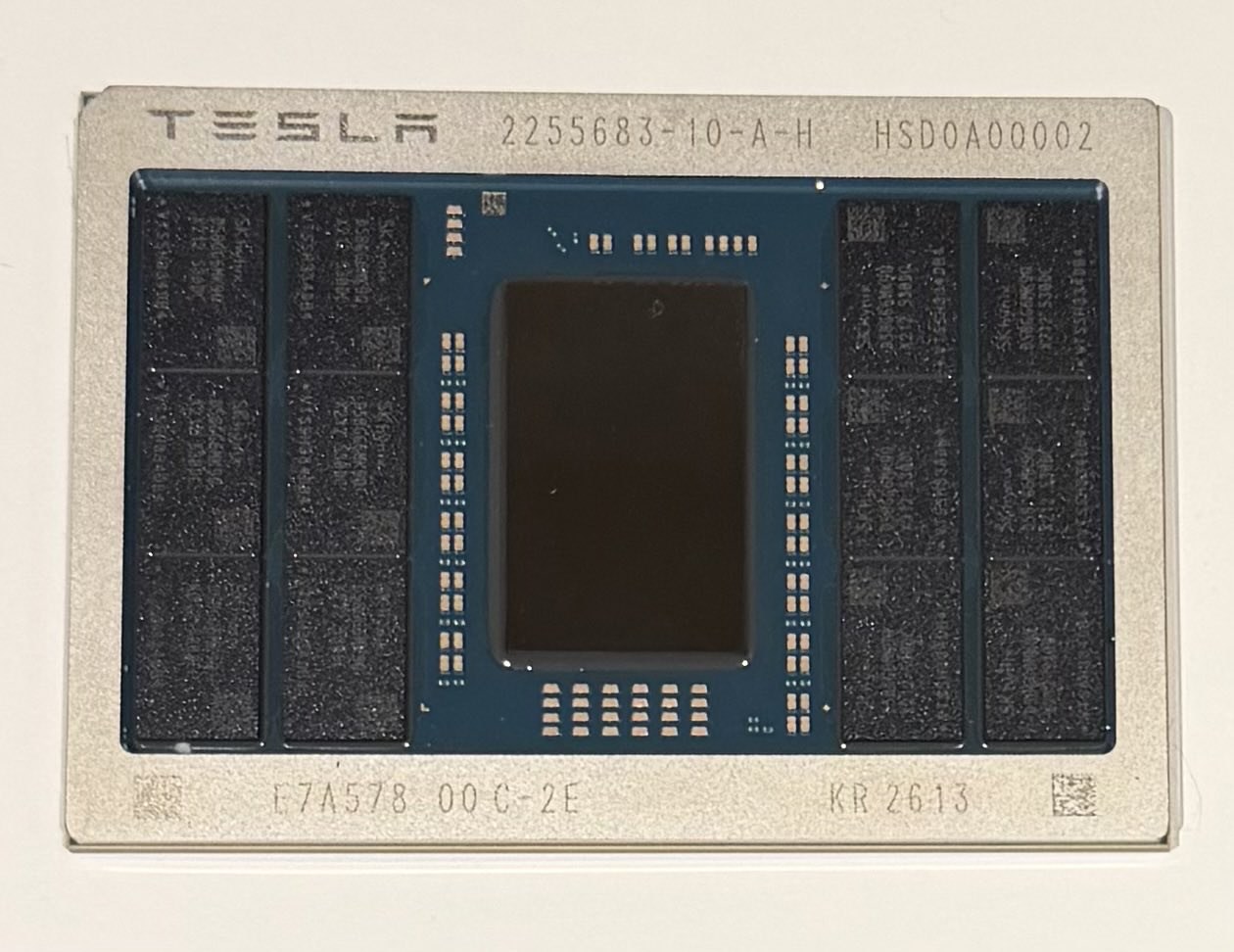
The RAMpocalypse has reached self-driving cars. Every autonomous car is a rolling AI computer, and AI computers run on memory. Data centers training and running AI models are buying DRAM faster than the world can make it, prices have climbed for more than a year, and Tesla has already trimmed the memory on its next self-driving chip to make sure it can get enough.
The good news is that relief is under construction. More than a dozen new memory fabs and cleanrooms are going up in South Korea, the United States, Taiwan and Japan, and the first of them open in 2027. How fast they ramp will decide when the computers in self-driving cars, and everything else that runs on DRAM, get easier to build.
Why self-driving needs so much memory
A self-driving computer has to hold its whole neural network in fast memory and feed it with camera data many times a second. The bigger and smarter the model, the more memory it needs, and the faster that memory has to be.
Micron, one of the three big DRAM makers, put numbers on it in its September 30 earnings remarks. “Memory content in Level 4 and higher autonomous vehicles typically exceeds 200GB, while storage content reaches multiple terabytes, each more than an order of magnitude greater than in today’s Level 2+ and Level 3 semi-autonomous vehicles,” the company said. Micron called autonomous vehicles “the first major deployment of physical AI,” and said humanoid robots are expected to have comparable memory and storage needs.
You can see the trend in real hardware. NVIDIA’s DRIVE AGX Thor developer kit, the platform many automakers are building on, ships with 64 GB of LPDDR5X memory and up to 273 GB/s of memory bandwidth, up from 205 GB/s on the previous Orin chip.
Tesla’s next chip goes further. Tesla AI5, which will run FSD and Optimus, was planned with even more memory before the crunch hit. On October 1, Elon Musk said Tesla had cut it:
We cut our RAM in half for the Tesla AI5 chip (now 72GB of LP5) and 1/3 for AI6 (now 144GB of LP6). This was the only way to get enough volume for Optimus production and greatly reduces cost.
Musk added that the change should have “a negligible effect on Optimus performance, as memory bandwidth is a bigger limiting factor than total memory storage (bandwidth was held constant).” Overnight, he nudged AI5 back up to 96 GB, “as Tesla would otherwise be the only company using the min RAM version of LP5.”
That’s a smart move. Tesla kept the bandwidth, which is what the chip actually waits on, and gave up capacity it can design around. Musk said in April that about half of the TRIP AI computation accelerators on AI6 and AI6.5 are dedicated to on-chip SRAM, so calculations that fit in that cache get an order of magnitude more effective bandwidth than DRAM can give. It’s a clear example of how good chip design can stretch scarce memory.
What’s causing the crunch
Self-driving cars are not the main reason memory is scarce. AI data centers are.
The newest AI accelerators use high-bandwidth memory (HBM), which stacks many DRAM dies on top of each other right next to the processor. TrendForce expects HBM per chip on AI ASICs to jump from 96 GB or 192 GB to 216 GB or 288 GB in 2026, and NVIDIA’s Rubin Ultra platform to carry 384 GB of HBM per GPU in 2027. One of those GPUs holds almost twice the 200-plus GB Micron expects in a level 4 car.
HBM also eats more factory space than its share of bits suggests. TrendForce estimates HBM will take about 22% of the top three suppliers’ DRAM wafer input by the end of 2026 and about 30% by the end of 2027, while making up only about 9% and 13% of total DRAM bit supply. Every wafer that goes to HBM is a wafer that doesn’t become the LPDDR5 a car or phone uses. TrendForce calls it a “crowding-out effect” that it expects to “intensify further” in 2027.
The results show up in the memory makers’ books:
- Micron reported record fiscal Q4 revenue of $54.23 billion, up from $11.32 billion a year earlier. DRAM revenue was $39.8 billion, and DRAM prices rose by a high-teens percentage in that quarter alone.
- SK hynix posted record second-quarter revenue of 79.32 trillion won, up 257% from a year earlier, with a 76% operating margin.
- Samsung guided to about 107.4 trillion won in third-quarter operating profit, up from 12.17 trillion won a year earlier.
Prices are still climbing, but more slowly. TrendForce projects conventional DRAM contract prices to rise another 10 to 15% in the fourth quarter of 2026, and says “the pace of contract price increases is expected to moderate.” It also expects PC makers to keep buying aggressively because they expect DRAM to stay tight in 2027. Our sister site GameClimate explains why your next console or PC costs more.
Cars are feeling it too. Micron’s Automotive and Embedded business brought in a record $6.8 billion last quarter, up from $1.4 billion a year earlier, which the company put down to higher prices and more bits shipped.
Tesla saw this coming. On the company’s first-quarter call in April, Musk said chip supply isn’t growing fast enough to keep up with Tesla at scale, “in logic, but even more so in memory.”
We just anticipate hitting a wall if we don’t make chips ourselves. So that’s the reason for the Terafab.
Elon Musk, Tesla CEO, April 2026
The fab wave
Memory makers are responding with a huge build-out. Building a fab shell and cleanroom takes years, which is why the crunch has lasted so long, but many of these projects are now well underway. Here’s what’s coming, in order of when each is expected to start producing. Dates are the companies’ own targets unless a row says reportedly or gives an analyst estimate.
| Company | Site | Makes | Status (Oct 2026) | First output target |
|---|---|---|---|---|
| SK hynix | M15X, Cheongju, South Korea | DRAM for HBM | Reportedly started wafers in early 2026, now ramping | Ramping through 2026 and 2027 |
| SK hynix | Yongin Y1, South Korea | HBM, next-gen DRAM | Under construction | First cleanroom opens February 2027 |
| Micron | ID1, Boise, Idaho, USA | Leading-edge DRAM | Under construction | First wafer output mid-2027 |
| Micron | Tongluo, Miaoli, Taiwan | DRAM | Micron agreed to buy the site from PSMC for $1.8 billion | Meaningful shipments mid-2027 |
| Nanya | Fab 5A, New Taipei, Taiwan | 10nm-class DRAM | Under construction | First wafers reportedly in the second half of 2027 |
| Tesla | Research fab, Giga Texas, Austin, Texas, USA | Pilot chipmaking | Broke ground April 2026 | No official output date; Giga Texas watcher Joe Tegtmeyer expects limited operations in late 2027. For comparison, Giga Texas went from construction start to first deliveries in about 21 months |
| Samsung | P5, Pyeongtaek, South Korea | DRAM, HBM | Construction reportedly resumed | Reportedly 2028 |
| Micron | ID2, Boise, Idaho, USA | Leading-edge DRAM | Under construction | First wafer output late 2028 |
| Micron | Hiroshima, Japan | Advanced DRAM, HBM | Broke ground July 4, 2026; equipment from the second half of 2028 | Initial output late 2028 |
| SpaceX and Tesla | Terafab, Grimes County, Texas, USA | Logic, memory and packaging | Land clearing began in early August 2026 (drone footage), with concrete footings and pipe work under way by mid-October (Oct 16 flyover) | Commercial operations 2028 per state filings; SemiAnalysis estimates late 2029 |
| SK hynix | Yongin Y2, South Korea | HBM, next-gen DRAM | Groundbreaking planned July 2027 | First cleanroom opens June 2029 |
| Samsung | Yongin National Industrial Complex, South Korea | Memory and foundry | Site preparation began October 2026; first fab reportedly starts construction in 2028 | First fab reportedly targets operation in October 2029 |
| Micron | Clay, New York, USA | Leading-edge DRAM | Broke ground January 16, 2026 | Initial wafer output 2030 |
South Korea is where the most new memory capacity lands first. SK hynix began running wafers through M15X in Cheongju early this year, according to Korean trade press, and is pulling the first Yongin cleanroom forward from May to February 2027. Its Yongin cluster will eventually hold four fabs, and the company has moved its target for finishing all four from 2045 to 2033. Samsung’s own Yongin complex, with room for six fabs, started site work this month. Samsung hasn’t published a date, but Korean press reports put its first fab’s target at October 2029, about a year earlier than planned.
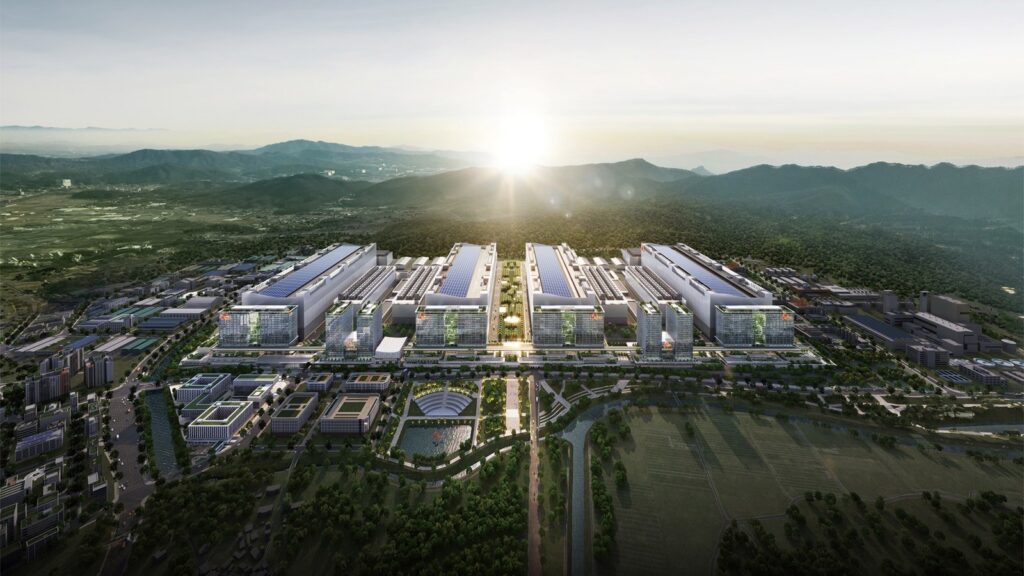
The United States gets two Micron fabs in Boise, a $100 billion megafab complex in Clay, New York, and Tesla and SpaceX’s Terafab in Texas, with a research fab at Giga Texas in Austin and the main Terafab site near Iola in Grimes County. Micron says these sites support its goal of making 40% of its DRAM in the US. Terafab is the wild card. SpaceX says the combined Tesla and SpaceX demand for chips “is expected to be in excess of 1 terawatt (TW) of compute,” and Terafab will make “chips optimized for edge computing and inference for use in hardware like Tesla’s Optimus robots and self-driving Cybercabs.” The research fab in Austin comes first, which Musk described as a roughly $3 billion project for testing new chipmaking ideas at a few thousand wafer starts a month. The main Terafab is already moving, though. Drone footage from mid-September showed foundation excavation and rebar cages going in at the Grimes County site, according to Tom’s Hardware, only about six weeks after SpaceX announced the site.
Taiwan and Japan round it out. Micron agreed to buy a ready-made cleanroom in Tongluo to save years of construction, Nanya is reportedly putting its largest investment ever into Fab 5A, and Micron’s new Hiroshima cleanroom will add advanced DRAM and HBM capacity in Japan.
These come on top of the fabs that already make the world’s memory: Samsung’s Giheung, Hwaseong and Pyeongtaek campuses in South Korea, SK hynix’s home campus in Icheon and its Cheongju sites, Micron’s fabs in Manassas, Virginia, Taoyuan and Taichung in Taiwan, and Hiroshima, and CXMT’s fabs in Hefei and Beijing in China. Most of today’s supply growth comes from moving those fabs to newer, denser process nodes. That helps, but each new node squeezes fewer extra bits out of a wafer, which is why the industry now needs new cleanroom space.
When relief arrives
Put the companies’ own timelines and forecasts side by side and a rough schedule for relief appears.
2027: the first new cleanrooms open. SK hynix Yongin Y1, Micron ID1 and Tongluo, Nanya Fab 5A and the M15X ramp all land in 2027. Don’t expect prices to fall right away. Micron says production from a new fab “takes time to ramp and gradually becomes more meaningful starting a few quarters after initial output,” and it expects supply to be even tighter in 2027 and 2028 than in 2026. What we expect to see first is a slowdown in price increases, which TrendForce and Micron both already see in their outlooks.
2028: the ramp becomes real. By 2028, the 2027 fabs should be producing in volume, and Micron ID2, Micron Hiroshima, Terafab’s first phase and, according to Korean press reports, Samsung P5 are all targeted to come online. Terafab’s 2028 date comes from Texas incentive filings, and analysts at SemiAnalysis expect the Grimes County fab to start operating in late 2029 and reach volume by mid-2030. Micron is spending more on construction specifically to have more cleanroom space ready in late 2028.
2029 to 2030: the second wave. SK hynix Y2, Samsung’s first Yongin fab and Micron’s first New York fab follow. This is when we think the market moves from “how do we get any memory” to “how much does it cost,” and the shortage tapers off as the new fabs fill in.
To be fair, the memory makers themselves aren’t calling a date. Micron said on its September call that “we do not have line of sight to when supply and demand will return to balance,” and SK hynix said in July that customer demand exceeds what it can supply. Both are seeing demand from AI keep rising. But they’re also locking customers into multi-year agreements, which Micron says now cover more than 35% of its expected revenue through 2030, and those deposits and commitments are paying for new cleanrooms. New capacity is what ended past memory shortages, and this time the makers have years of signed demand giving them the confidence to keep building.
What the RAMpocalypse means for EV buyers and robotaxis
For most EV buyers, the RAMpocalypse is something to watch rather than worry about. Memory is a small slice of a car’s cost compared with the battery, and automakers are getting smarter about how much they need. Tesla’s AI5 decision shows the playbook: protect bandwidth, trim capacity, and lean on on-chip SRAM. Expect other automakers to make similar trade-offs while memory is tight.
Robotaxis are where memory matters most. A level 4 car needs far more memory than a driver-assist car, and every robotaxi fleet that scales up adds to demand. That’s why Tesla is building Terafab instead of waiting on suppliers, and why Cybercab, which Tesla began producing at Gigafactory Texas this year, is designed around efficiency from the start. We looked at that in our piece on Cybercab’s efficiency.
The longer view is positive. Over the next four years, more than a dozen new memory fabs and cleanrooms are scheduled to open across four countries, and Tesla and SpaceX are adding their own fab on top. Self-driving cars need a lot of memory, and by the end of the decade there should be a lot more of it to go around.