
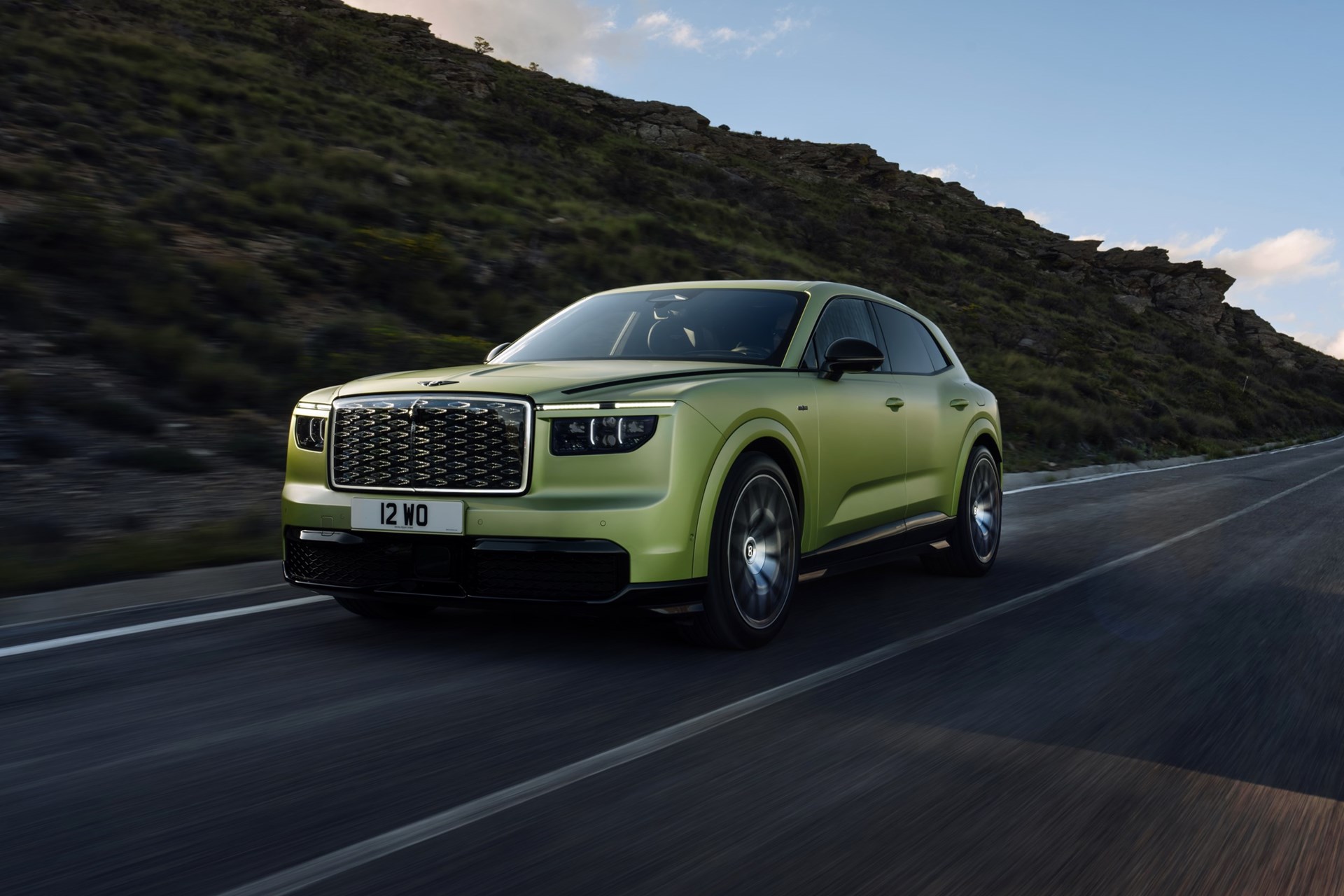
The Bentley Torcal is Bentley’s first model with a fully electric powertrain, and the brand’s fourth model line. It made its global debut in London on September 23, 2026. Bentley rates range at up to 375 miles (600 km) WLTP, peak output at up to 888 PS and 1,350 Nm, and a 10 to 80 percent charge in 16 minutes at 400 kW. It launches as a core Torcal and a more sporting Torcal S, both designed, engineered and built in Crewe.
Chairman and CEO Dr. Frank-Steffen Walliser called it a Bentley first and foremost, “created by hand by people who care, using the best available materials and technology to blend heritage with cutting-edge innovation.” He also said he believes it is “one of the best Bentleys ever.” The Torcal sits alongside Bentley’s existing combustion and hybrid models rather than replacing them.
Core and S: two power levels at launch
Both versions use a pair of permanent magnet synchronous motors, one per axle. The front motor has an open differential. The rear motor uses a locking differential with a multi-plate clutch on each output shaft. Both motors are dry-sump designs filled with oil for life.
The core Torcal makes 821 PS and 1,194 Nm. Bentley rates 0 to 60 mph in 3.3 seconds (0 to 100 km/h in 3.4 seconds) and a top speed of 155 mph (250 km/h).
The Torcal S goes further when Launch Control is active: 888 PS and 1,350 Nm, which Bentley says is the highest torque of any Bentley ever made. It reaches 60 mph in 2.8 seconds (0 to 100 km/h in 2.9 seconds) and a top speed of 162 mph (260 km/h).
Bentley’s R&D team says it chose this level of performance on purpose. Most customers, it says, find acceleration beyond this point uncomfortable. The driving experience is meant to stay accessible and progressive rather than extreme for its own sake.
| Spec | Torcal (core) | Torcal S |
|---|---|---|
| Peak power | 821 PS | 888 PS (Launch Control) |
| Peak torque | 1,194 Nm | 1,350 Nm (Launch Control) |
| 0-60 mph | 3.3 s | 2.8 s |
| 0-100 km/h | 3.4 s | 2.9 s |
| Top speed | 155 mph (250 km/h) | 162 mph (260 km/h) |
| Standard wheels | 21 inch | 22 inch (ten-twin-spoke) |
Source: Bentley Motors, London debut release, 23 September 2026.
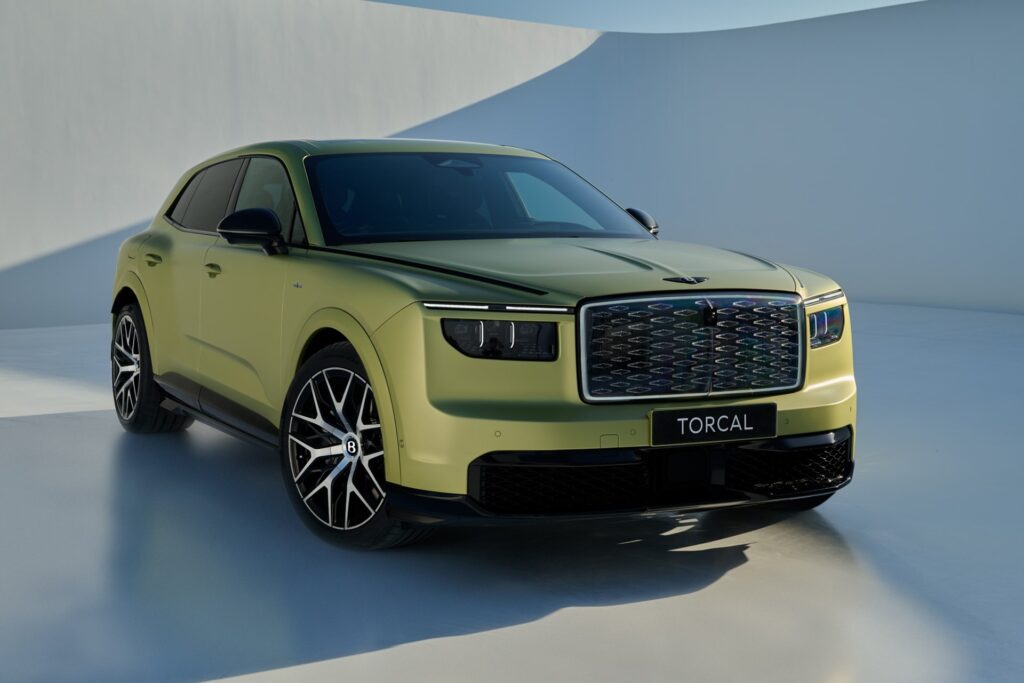
The S also gets a sportier look: black exterior brightware and mirror caps, dark rear lamps, a rear diffuser with sports sills and front bumper strakes, red brake calipers, S fender badges with black Bentley wings badges, a dedicated colour split and stitch pattern, sports pedals, piano black veneer as standard, illuminated treadplates and dynamic “waterfall” mood lighting. The core car comes with satin silver brightware, a single-tone colour split and Open Pore Crown Cut Walnut.
Battery, range and charging
The high-voltage pack uses 192 lithium-ion pouch cells in series at 800 V nominal. Bentley rates net capacity at 113 kWh, with a 100,000 mile, 10-year battery warranty.
Bentley’s technical specification sheet breaks that down as 113.3 kWh total and 108.7 kWh usable.
Official WLTP range is up to 375 miles / 600 km. Bentley’s lead figures for the debut say the Torcal can charge from 10 to 80 percent in 16 minutes at 400 kW, and add about 100 miles in seven minutes. The same release later says 10 to 80 percent takes “just under 20 minutes” at 400 kW, while keeping the same roughly 100 miles in seven minutes. Bentley’s technical specification sheet lists 16 minutes for 10 to 80 percent at 400 kW, matching the headline figure.
Chassis: first fully active suspension on a Bentley
For the first time on a Bentley, the Torcal uses fully active suspension with adaptive two-valve dampers. Each damper can raise or lower on its own, reacting to the road and to driver inputs. The system replaces anti-roll bars by using the dampers to supply adjustable anti-roll torque. Electronic All Wheel Steering is standard, with rear steering angles up to five degrees, for a turning circle of 11.1 metres.
Standard brakes are iron: 420 mm front and 370 mm rear discs. Buyers can upgrade to Carbon Silicon Carbide (CSiC) ceramics at 440 mm front and 410 mm rear. Calipers come in black, red or grey, with three more colours through Mulliner.
Bentley positions the Torcal as comfortable as a Flying Spur and as dynamic as a Continental GT Speed, with four experience modes (Bentley, Comfort, Sport and Refresh) that change light, sound, climate and display behaviour together.
Size, space and everyday kit
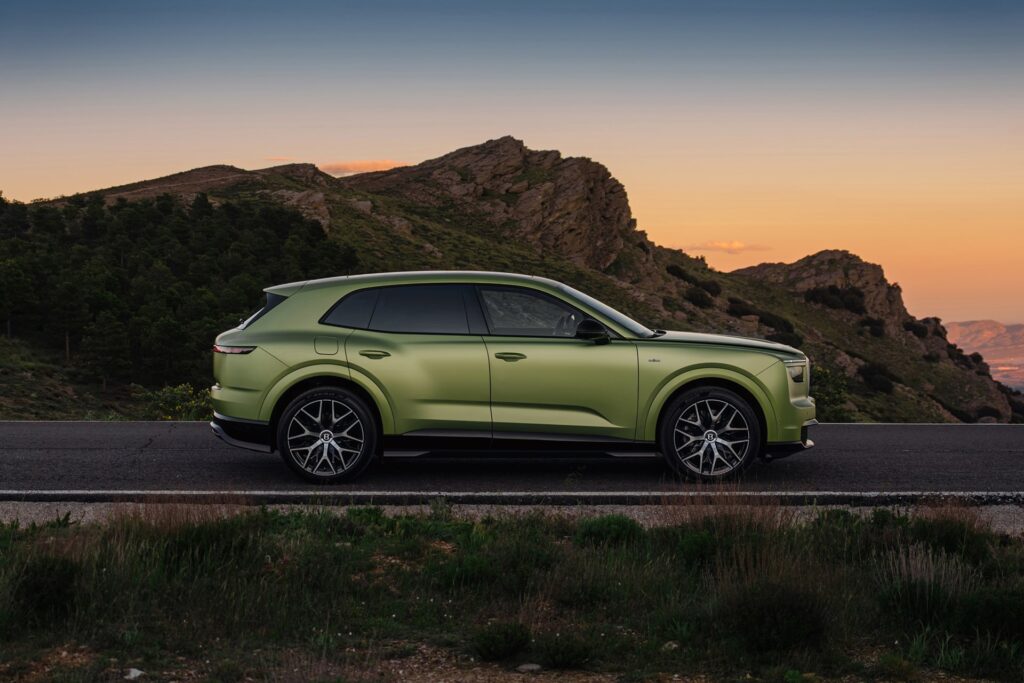
The Torcal is about five metres long. Bentley calls it the shortest four-door in its line-up, with a 460 litre boot plus a 90 litre front storage area (frunk). Standard seats offer 16-way adjustment, heating, ventilation, adjustable bolsters and massage. Optional Postural Adjust and Smart Seat Climate can keep reshaping the seat and managing temperature on long trips. A Wellness Seat Specification extends massage into the cushion. The rear three-occupant seat gets a power fold for the first time in a Bentley.
A set of 25 radars, sensors and cameras feed driver assistance and parking features, including garage and parallel parking help, remote parking via app, and trained parking manoeuvres. Four radar-controlled powered doors can open and close on their own. Closing can follow a passenger fastening a seat belt, a touchscreen command, or the driver pressing the brake.
Sound without an engine
Bentley wanted a soundtrack that was not a simple electronic imitation of a combustion engine. The team recorded real instruments, including drums, viola and bass guitar, to build the Bentley Dynamic Symphony, inspired by the rhythm of a Bentley 6¾ litre V8 and left with small natural variations. Volume rises in Sport mode and can be turned off entirely. Indicator clicks come from a hammer striking leather in Bentley’s upholstery workshops. Touchscreen and digital assistant tones come from a crystal glass.
Two audio packages are offered: a 620 W, 16-speaker system as standard, and a Naim package at 1,780 W with 28 speakers, including seat shakers, front headrest speakers and Dolby Atmos 7.1.
Design notes and materials
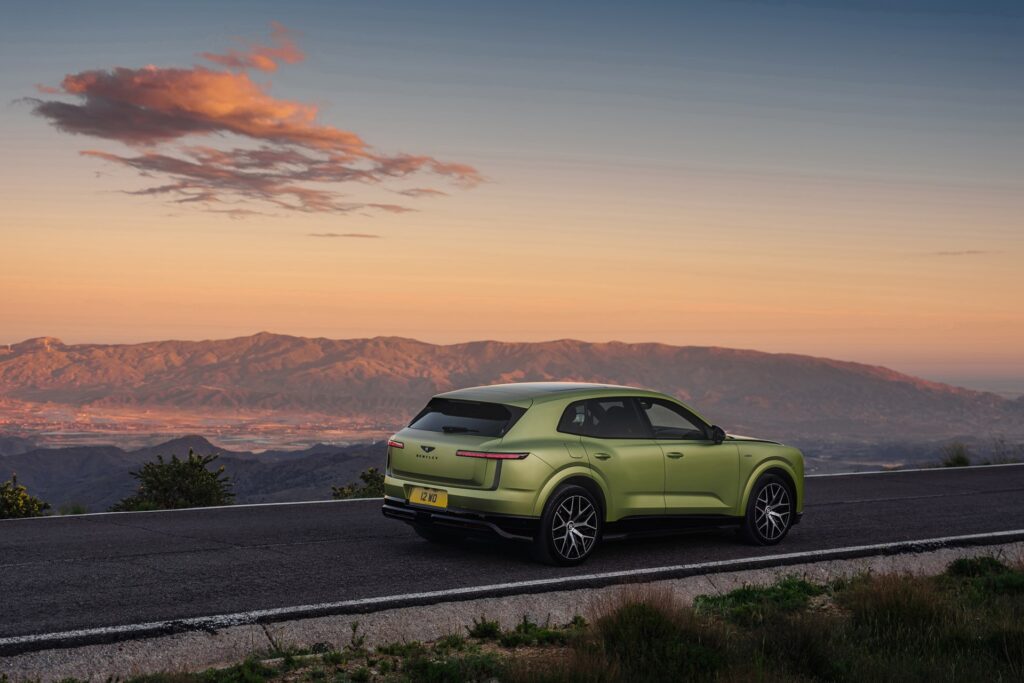
Design Director Robin Page’s team describes the Torcal through four “reads”: proportion (long wheelbase, short overhangs, upright elegance), graphics (illuminated diamond grille, Continental T echoes, a clean rear “prestigious shield”), surface language (fewer lines, strong rear haunches), and close-up detail (diamond motifs throughout). It is also the first Bentley to wear the brand’s redesigned emblem.
Inside, materials stretch further into sustainability-focused options. With Fox Brothers of Somerset, Bentley developed what it calls the world’s first 100% Merino wool automotive fabric, and the first automotive wool fabric certified to the Responsible Wool Standard. Mulliner’s Ombré Walnut is built from up to 1,000 layers of walnut off-cuts and recycled craft paper. Sunburst Aluminium reworks the old engine-turned dash idea with a three-way brush pattern. Leather, Dinamica, wool, wood veneers and piano finishes fill out the palette.
Pricing and timing
Bentley hasn’t published pricing or on-sale dates for any market in its debut release. For another luxury EV launch with published prices and order timing, see Lucid’s France Air and Gravity figures. To compare range and efficiency across other electric models, start with Electron Motion’s EV Database.
For a first look, the outline is clear: a Crewe-built electric SUV with core and S versions, up to 375 miles (600 km) of WLTP range, 16-minute 10 to 80 percent charging at 400 kW, and the first fully active chassis Bentley has fitted. Pricing should be the next piece to land.