
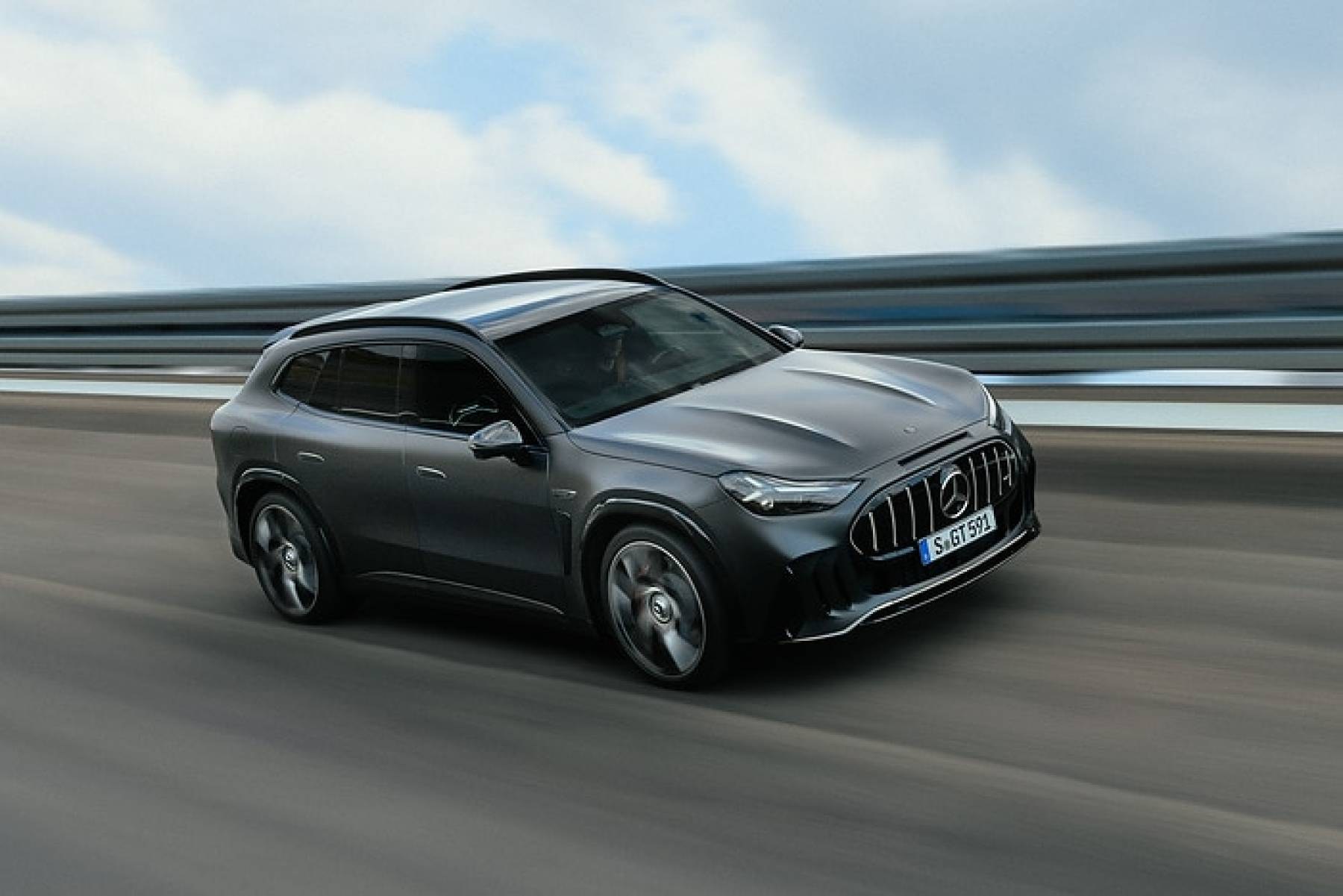
Orders for the electric Mercedes-AMG GT SUV open on Tuesday, October 20. The first version on sale is the AMG GT 53 SUV, priced from 113,050 euros in Germany. It is the first full-size SUV AMG has developed fully in-house in its 59-year history. The headline charging figure belongs to the GT 55 and GT 63 that follow in spring 2027: with the 128 kWh battery, they charge at up to 710 kW, which Mercedes says adds up to 450 km (about 280 miles) of WLTP range in 10 minutes. The GT 53 is rated to add up to 440 km (about 273 miles) in the same time.
The SUV was revealed on October 17 at the Mercedes-Benz Museum in Stuttgart. It is the second model on AMG.EA, the electric platform that debuted in the AMG GT 4-Door Coupé, and it is built in Hall 32 at the Sindelfingen plant.
Three versions, one on sale now
The GT 53 is the version you can order tomorrow. It uses two motors, one per axle, for 400 kW (544 hp). The front motor disconnects at light loads to save energy, and the rear motor has a two-speed gearbox: a short first gear for pulling away and a taller second gear for the highway.
The GT 55 and GT 63 follow in spring 2027. Both use three axial flux motors, a flat, disc-shaped motor design that packs a lot of power into a small space. Two of them drive the rear wheels and one drives the front, and that front motor only joins in when extra power or grip is needed. The GT 63 makes up to 860 kW (1,169 hp) and 2,000 Nm, and Mercedes rates it at 2.5 seconds from 0 to 100 km/h with a one-foot rollout (2.7 seconds without).
The number AMG keeps coming back to is continuous output, the power the car can hold instead of only delivering in a short burst. On the GT 63 and GT 55, that is up to 530 kW (721 hp). Mercedes says that sets a new mark for the segment.
| Version | Motors | Peak output | Continuous output | 0-100 km/h | Top speed | Battery (net) | WLTP range | DC charging | When |
|---|---|---|---|---|---|---|---|---|---|
| AMG GT 53 SUV | 2 synchronous motors | 400 kW (544 hp) | 270 kW (367 hp) | 4.2 s | 250 km/h | Not stated yet | 597 to 668 km | Peak not stated yet; up to 440 km added in 10 min | Orders from Oct 20, from 113,050 euros (Germany) |
| AMG GT 55 SUV | 3 axial flux motors | 600 kW (816 hp) | 530 kW (721 hp) | 3.1 s | 270 km/h | 106 or 128 kWh | 525 to 700 km | Up to 600 or 710 kW; up to 386 or 454 km added in 10 min | Spring 2027 |
| AMG GT 63 SUV | 3 axial flux motors | 860 kW (1,169 hp) | 530 kW (721 hp) | 2.7 s | 270 km/h | 106 or 128 kWh | 525 to 700 km | Up to 600 or 710 kW; up to 386 or 454 km added in 10 min | Spring 2027 |
Acceleration times above are without rollout. Top speeds need the Driver’s Package. Charging figures are preliminary. Source: Mercedes-Benz AG.
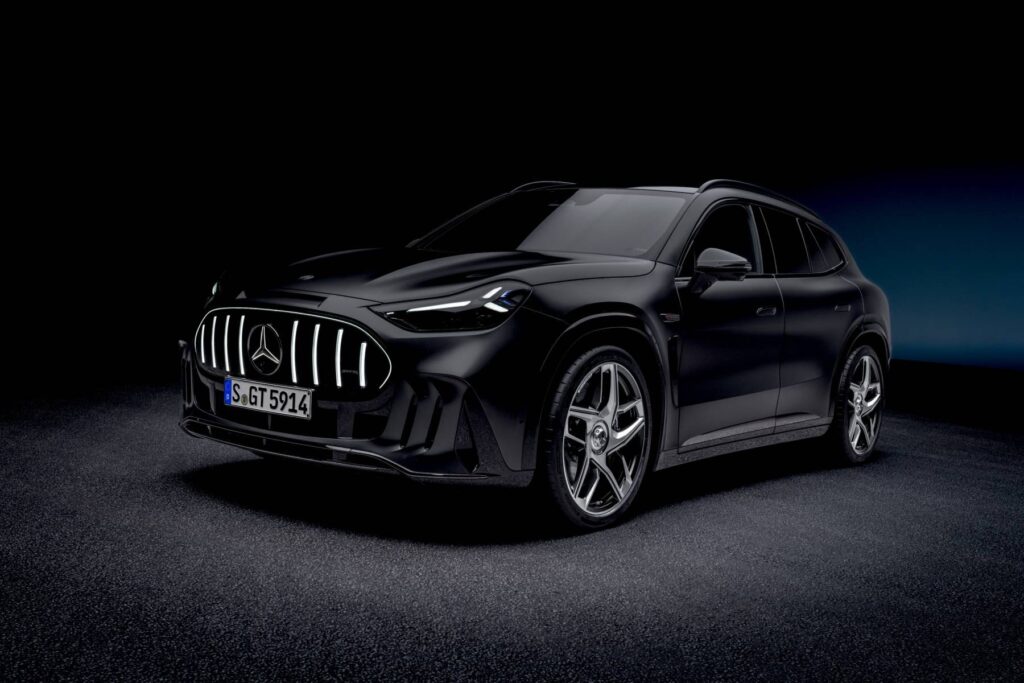
What 710 kW charging means at a real stop
Peak charging numbers can sound abstract, so here is how Mercedes breaks it down for the 128 kWh battery in the GT 55 and GT 63:
- 5 minutes: about 48 kWh added
- 10 minutes: about 83 kWh added, or up to 454 km (about 282 miles) of WLTP range
- 10 to 80 percent: about 12 minutes
By our math, putting 83 kWh into the pack in 10 minutes works out to an average of roughly 500 kW for the whole stop, not just a short peak. With a WLTP range of up to 700 km on that battery, a 10-minute stop adds back about two-thirds of a full charge’s worth of rated range. That is about as long as a coffee and a restroom break.
The smaller 106 kWh battery charges at up to 600 kW and adds up to 380 km in 10 minutes, though Mercedes’ own spec table lists 386 km. The GT 53 you can order now is rated to add up to 440 km in 10 minutes, with 10 to 80 percent in about 11 minutes. Mercedes hasn’t listed its battery size or peak charging power yet.
You need a very powerful charger to see those times. Mercedes says the car can take more than 700 kW at 800-volt stations. On a 400 kW charger, which is already fast by today’s standards, it rates 10 to 80 percent at about 14 minutes for the 106 kWh pack and 16 minutes for the 128 kWh pack. Older 400-volt chargers work too, since the car switches between 800-volt and 400-volt modes on its own. At home or on AC public chargers, it takes up to 11 kW.
The SUV is also built for five fast-charging plug standards around the world: CCS2 in Europe, GB/T in China, CHAdeMO in Japan, CCS1 in South Korea and NACS in the United States. Mercedes notes that the charging figures are still preliminary.
We’re demonstrating that electric performance today no longer requires any compromises in sustained power, range or charging speed.
Jörg Burzer, Chief Technology Officer, Mercedes-Benz Group AG
Why the battery can charge this fast
AMG says the battery is inspired by Formula 1. It uses tall, narrow cylindrical cells, 105 mm high and 26 mm across, so heat has only a short way to travel from the middle of each cell to its surface. A non-conductive oil flows directly around every single cell to keep them all at the same temperature.
Mercedes credits that direct cooling for both the high charging power and the sustained output. Mercedes rates the cells at over 298 Wh/kg, using a nickel-rich NCMA cathode and an anode that contains silicon. The 106 kWh pack has 18 modules and the 128 kWh pack has 22.
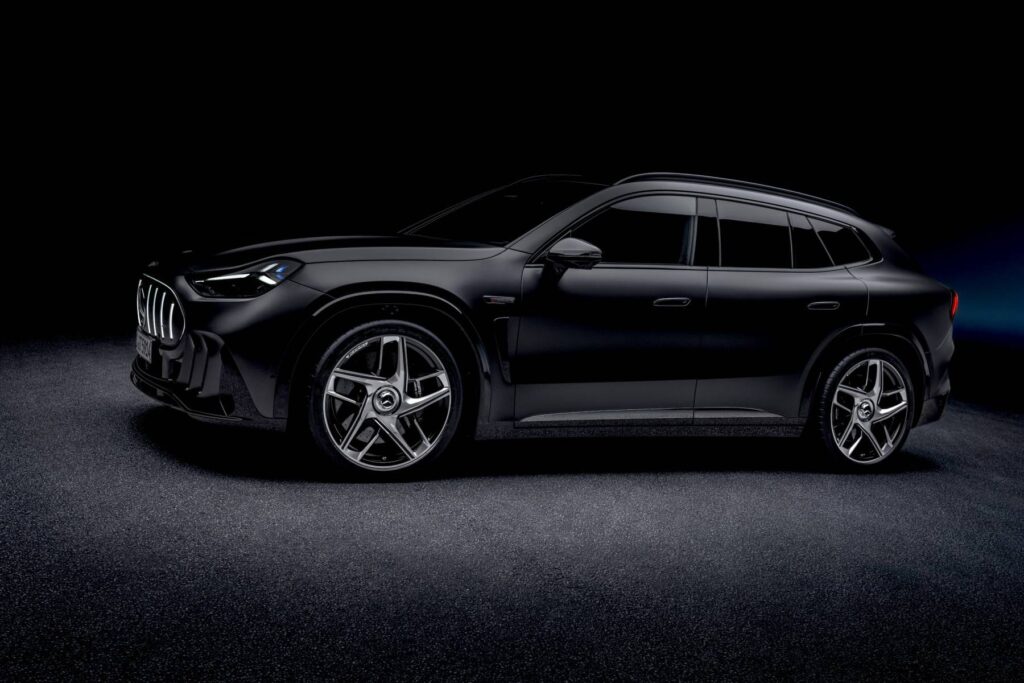
More than a fast charger
The rest of the car is classic AMG. A new suspension called AMG ACTIVE RIDE CONTROL+, standard on the GT 63 and optional on the GT 55, replaces regular anti-roll bars with active hydraulics that hold the body flat in corners and keep the nose from diving under braking. The rear wheels steer up to 6 degrees, turning opposite the fronts below 80 km/h for tight parking and with them at higher speeds for stability. The GT 63 gets carbon-ceramic brakes as standard.
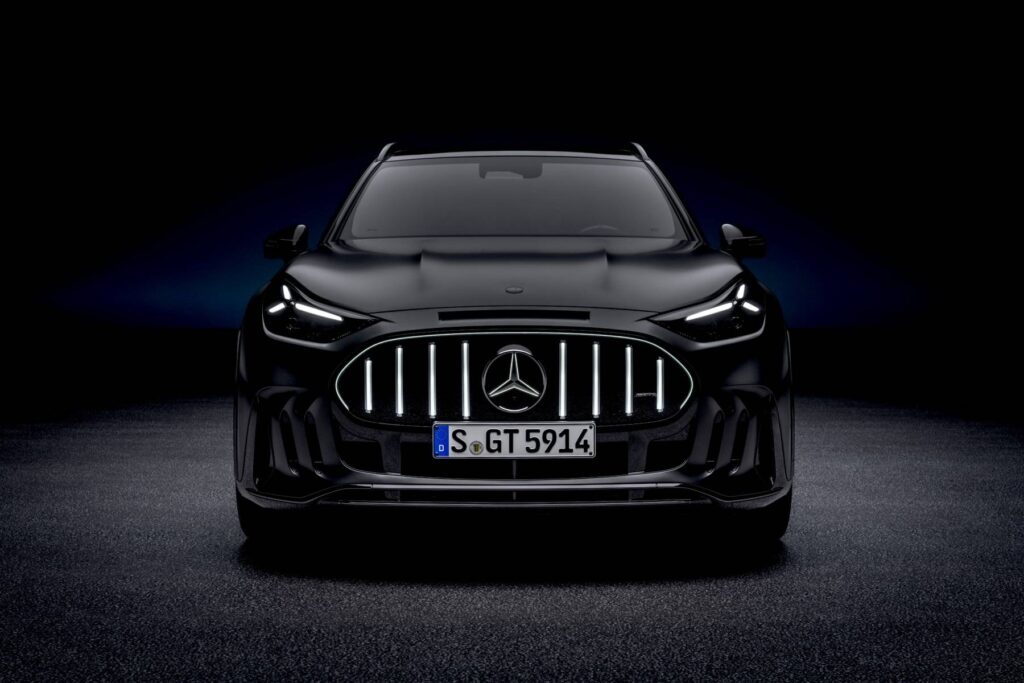
A RACE ENGINEER controller on the GT 55 and GT 63 gives the driver three dials for throttle response, cornering balance and wheel slip. An AMGFORCE Sport+ mode plays recorded V8 sound on the GT 55 and GT 63 (six-cylinder on the GT 53), with simulated gear shifts and seat shakers. On the GT 55 and GT 63, an active roof spoiler starts adjusting from 150 km/h, and slats in the front bumper stay closed to cut drag until the car needs more cooling air.
Inside, a 14-inch center screen and a 10.2-inch driver display sit in one unit, with an optional 14-inch screen for the passenger. The cargo area holds 607 liters, or 1,740 liters with the rear seats folded, and there is a 78-liter front trunk. Curb weight runs from 2,525 kg for the GT 53 to 2,715 kg for the heaviest GT 55.
Pricing and other markets
The 113,050 euro price is a German recommended retail price that includes 19 percent VAT. Mercedes hasn’t announced pricing or launch timing for other markets yet, and the reveal post on Mercedes-Benz USA’s newsroom carries no pricing either.
The AMG GT 53 SUV can be configured and ordered in Germany starting October 20, and the GT 55 and GT 63 arrive in spring 2027. If you want to see how its range and efficiency stack up against other electric SUVs, our EV Database is a good place to start.
Sources: Mercedes-Benz Media, Mercedes-Benz USA Media.