
You pull into a fast charger off the highway, the battery is low, and the screen asks you to download an app. For a lot of EV drivers, that moment is the most frustrating part of public charging. A gas pump has taken credit cards for decades. A growing number of EV chargers now do too, and in some places the law requires it, but EV charger credit card coverage is still uneven across networks and states.
Here is where tap-to-pay is required, which major networks offer it, and how to plan a trip so a missing card reader never strands you.
Contactless card
Required at federally funded chargers
July 10, 2023
California’s cutoff for tap-to-pay on new paid chargers
No membership
Federal rule bans requiring one
Federal rules require tap-to-pay at federally funded chargers
Chargers built with federal highway money, including the National Electric Vehicle Infrastructure (NEVI) program, must follow a federal payment rule. Under 23 CFR 680.106(f), any of those stations that charge a fee have to offer a contactless payment method that accepts major debit and credit cards. They also need either an automated toll-free phone number or a text-message option that lets a driver start a session and pay.
The same section goes further than most drivers realize. A station cannot require a membership. It also cannot slow down, limit, or cut power because of how you pay, so a driver tapping a card should get the same charging speed as someone using the network’s app. Payment options must also be accessible to people with disabilities and to drivers with limited English.
That rule sets a floor for new federally funded sites. It does not reach back and retrofit every older charger, and it does not cover private networks that built their stations without those funds.
California requires it on new paid public chargers
California has its own requirement. According to the California Energy Commission, state law (Health and Safety Code 44268.2) requires publicly available chargers that charge a fee and were installed on or after July 10, 2023, to provide a contactless payment method plus either a toll-free phone number or a text-based payment option.
California also requires publicly available DC fast chargers installed on or after that date to support Plug and Charge using the ISO 15118 standard. That pairing is the right idea. A card reader is the universal fallback any driver can use, and Plug and Charge removes the payment step entirely for cars that support it. Many new California fast-charging sites are paid for partly through state grants such as Fast Charge California, which covers up to $100,000 per DC fast port.
Where EV charger credit card readers work today
IONNA
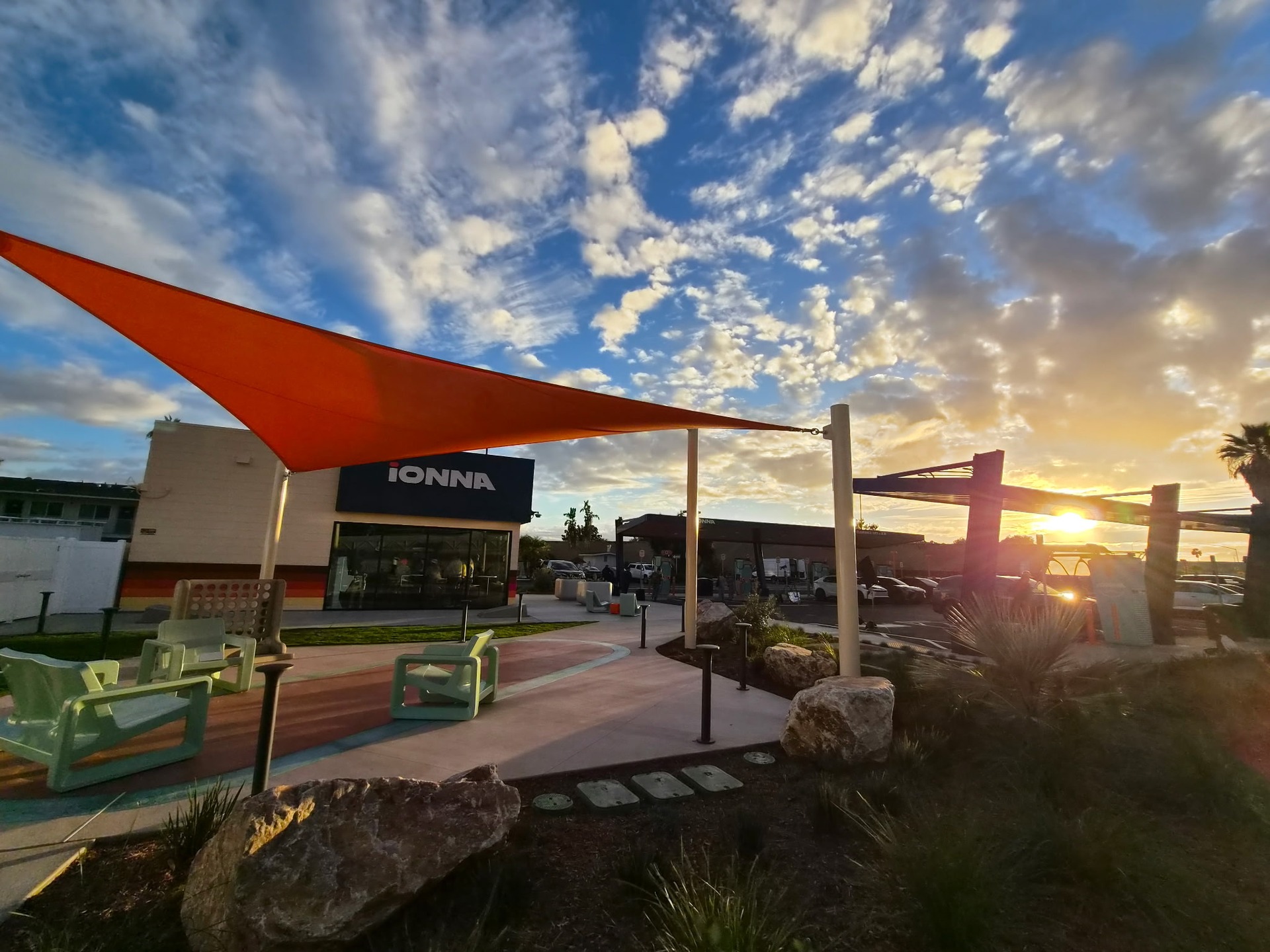
IONNA, the network backed by eight automakers, is built around paying at the dispenser. Its own FAQ says drivers can pay with a credit card (tap, swipe, or insert), Apple Pay, or Google Pay, or use Plug and Charge, and that no app, subscription, or membership is needed. Apps are supported, but they are optional.
Electrify America
Electrify America’s pricing page tells guests to swipe or tap a credit or debit card on the credit card reader at the charger. The separate contactless pad marked “Members: Tap here to pay with plan” is for Pass and Pass+ members paying through their account, according to its glossary. It also supports Plug and Charge for vehicles that are set up for it. GM owners can now use that feature through GM’s Energy Pass, which we covered in our GM Plug and Charge guide.
EVgo
EVgo’s help center says drivers without an account can pay by credit card either at a reader on the charging unit or at a shared card kiosk for the site. It also warns that the “Tap Card Here” area on its chargers is for EVgo’s RFID program cards, not bank cards, so use the separate credit card reader. Bring a physical card, because EVgo says it is limited in its ability to accept Apple Pay or Google Pay, and expect a pre-authorization hold of up to $100 each time you swipe. EVgo notes that some stations do not accept payment outside its app or RFID card, and its pricing page lists a $2.99 transaction fee on sessions started with a credit card. If you charge with EVgo often, the app or a plan is usually the cheaper route.
Tesla Superchargers
Tesla’s network was designed around the car and the Tesla account, so the app is still the main way non-Tesla drivers pay. Tesla’s support page for other EVs says a limited number of Supercharger locations accept a credit card, mobile payment, or text-to-pay at the post. Everywhere else, set up the Tesla app with a payment method before you need it.
Why many chargers still skip card readers
The networks that skipped card readers did not do it by accident. A card terminal adds hardware cost to every stall, it is one more part exposed to weather and vandalism, and it must meet payment-security standards. A network that bills through its own app also keeps the customer relationship, can sell memberships, and gets cleaner data on who charges where.
From the driver’s side, that trade looks different. An app that will not load in a weak-signal rest area, or an account that needs email verification before the first charge, turns a ten-minute stop into a problem. A card reader solves that for anyone, including rental-car drivers and visitors who will never use that network again.
The better model is the one California wrote into law: a card reader as the baseline every driver can count on, and Plug and Charge as the fast lane for owners who set it up once. IONNA already runs its Rechargeries that way.
How to plan so you are never stuck
A few habits make a missing card reader a non-issue:
- Set up the main apps before a road trip. Add a payment method to the networks on your route at home, not at the charger.
- Turn on Plug and Charge if your car supports it. Once it is set up with a network, you plug in and the session starts and bills automatically.
- Check the station details in the network’s app or map. Look for card or contactless payment listed for the specific site, since it can vary within one network.
- Use the physical card reader, not the RFID or members pad. On networks with both, the bank card goes in the card reader, and a physical card is the safest bet.
- Watch for fees. Some networks add a transaction fee for card sessions, so a plan or app can cost less if you stop often.
FAQ
Do all public EV chargers take credit cards?
No. Chargers built with federal highway funds and new paid public chargers in California (installed on or after July 10, 2023) must offer contactless card payment, but many older or privately funded sites still require an app, an account, or an RFID card.
Can a charger slow down my charge if I pay with a card?
Not at federally funded stations. The federal rule says those stations cannot delay, limit, or curtail power based on payment method or membership.
Is Plug and Charge the same as tap-to-pay?
No. Tap-to-pay uses your bank card at the charger. Plug and Charge uses a digital certificate stored in the car, linked once to your account, so the charger identifies the car and bills you when you plug in.