

Polestar USA is winding down in a way that still hurts if you loved the cars. On June 25, 2026, Polestar said the U.S. Commerce Department’s Bureau of Industry and Security would not grant it an authorization under the Connected Vehicle Rule, so the company will stop marketing and selling new vehicles in the United States from model year 2027 onward. Existing Polestar 3 and Polestar 4 inventory can still be sold. Service access stays. Warranties, Polestar North America has said, remain in force. New metal after MY2026 does not.
That is a forced exit from future sales, not a brand that simply gave up overnight. It is still a hard end to one of the more interesting EV stories of the last decade.
What actually happened
The Connected Vehicle Rule is a national-security measure the Commerce Department finalized in January 2025. It restricts certain vehicle connectivity hardware and software with a sufficient nexus to China or Russia, and it also bars manufacturers with that nexus from selling covered connected vehicles in the United States from model year 2027, even when the car is built here. Software limits start with MY2027. Hardware limits follow for MY2030.
Polestar is headquartered in Gothenburg and majority-owned through Geely Holding. It applied for a specific authorization. Commerce said no. In its June 25 release, Polestar framed the response as a sharper focus on Europe, which already accounted for close to 80% of its retail sales volumes. In the first quarter of 2026, 94% of Polestar’s retail sales came from markets outside the United States.
CEO Michael Lohscheller put it in regional terms: Europe is the growth engine, Polestar 7 manufacturing is planned in Europe, and the company will keep investing where it still sees room to grow, naming Southeast Asia, Eastern Europe, Latin America, and Canada. The United States was not on that list.
Volvo Cars, also in the Geely orbit, received a specific authorization under the same rule on May 26, 2026, and said it can keep importing and selling connected cars in the U.S. Same regulatory wall. Different outcome. That contrast matters later, when we talk about a return.
What owners keep
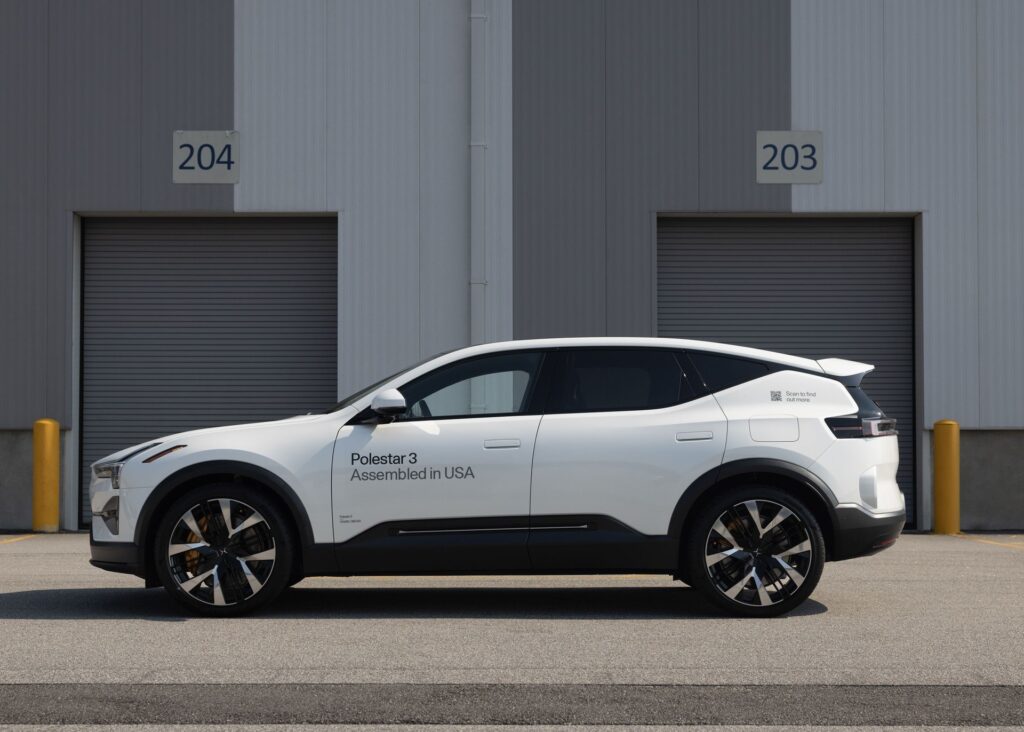
If you already drive a Polestar in the U.S., the official message is continuity on the parts that matter day to day. Polestar said it will keep supporting customers and providing access to its service network while it sells remaining Polestar 3 and Polestar 4 stock. Polestar North America told MotorTrend that owner and lease support continues, and that warranties stay in effect under their original terms.
What stops is the forward pipeline. No model year 2027 Polestar for U.S. buyers, and no Polestar 5, next-generation Polestar 2, or Polestar 7 here under the current decision. Those cars remain on Polestar’s global plan. Inventory still moves. Service still exists. The new-car chapter is what closes.
The rise America actually got
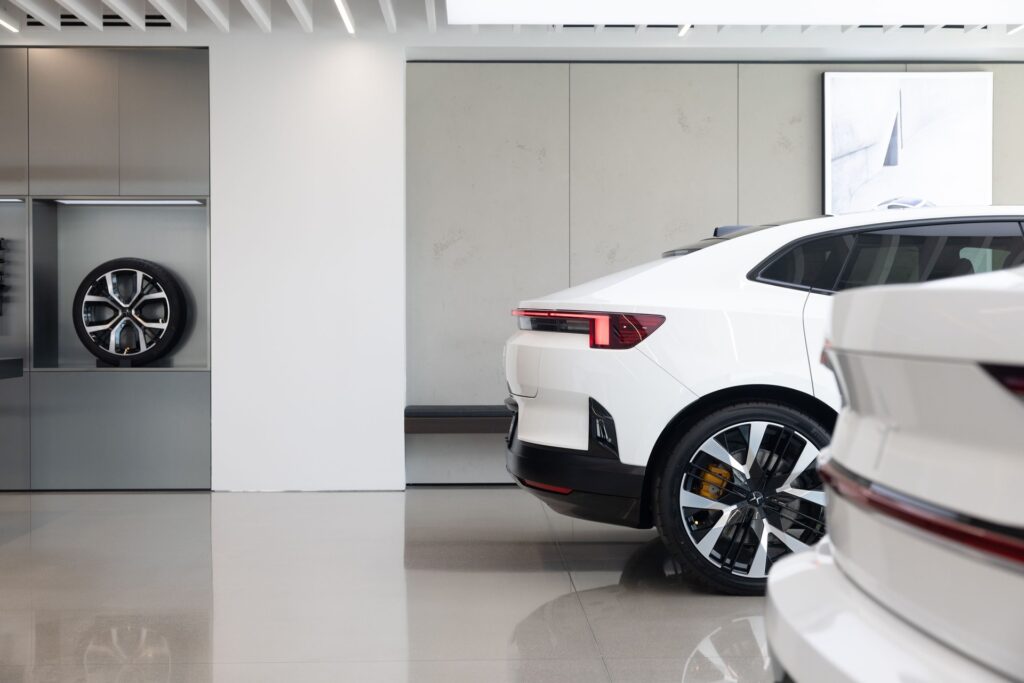
Polestar did not stumble into the U.S. as a badge exercise. On October 17, 2017, Volvo Car Group unveiled Polestar as a standalone electric performance brand and showed the Polestar 1, a limited plug-in hybrid GT with Öhlins chassis tech meant to prove the brand before the pure EVs arrived. Volvo and Geely backed the spin-out. The retail idea was modern for its time: order online, then meet the cars in Polestar Spaces rather than a conventional dealer maze.
The car that made Polestar feel real in America was the Polestar 2. Polestar’s own 2020 write-up called it the first car in the world with a native Android Automotive system, with Google Maps, Google Assistant, and the Play Store built in rather than bolted on. That was a genuine product lead when most premium EVs still treated the screen as an afterthought. The Performance pack added Öhlins Dual Flow Valve dampers, Brembo brakes, and forged wheels for people who cared about the chassis as much as the range number.
Those cars had a point of view: clean Scandinavian design, serious dampers when you paid for them, and software that felt current. For enthusiasts who wanted another premium EV personality besides Tesla, the Polestar 2 often was the one that made sense.
Polestar listed on Nasdaq in June 2022 through a business combination with Gores Guggenheim, trading as PSNY. Polestar 3 started production in South Carolina on August 14, 2024, at Volvo’s Ridgeville plant, the first Polestar built in the United States, for both U.S. and European customers. Polestar 4 became a global seller, with later North American supply tied to Busan, South Korea. Globally, 2025 was Polestar’s best retail year on record at about 60,119 cars, up 34% from 2024. By early 2026 the company said more than 190,000 Polestar 2s had been sold worldwide. The brand was not collapsing when the U.S. door closed. America had simply become the small slice of Polestar’s own map.
Why the U.S. got harder before the ban
The Connected Vehicle Rule is the stated reason for the MY2027 cutoff, and it is enough on its own. The market around it did not help. Building Polestar 3 in South Carolina was meant to answer tariff pressure and “built in America” preference. Under the final rule, a U.S. plant does not automatically clear a manufacturer with a sufficient China nexus. The industrial bet was real. The regulatory test was different.
Buyers also lost the federal new clean vehicle credit for cars acquired after September 30, 2025, per the IRS. Polestar’s filings have long listed tariffs, incentives, and connected-vehicle regulation among the risks, and after the Commerce decision it recorded U.S. restructuring costs tied to inventory, residual values, employees, and partners. None of that erases what the cars did well. It does explain why a brand with record global volumes could still lose America.
Polestar USA timeline
| When | What happened |
|---|---|
| Oct 17, 2017 | Volvo unveils Polestar as a standalone electric performance brand and shows Polestar 1; Spaces retail concept announced |
| 2019–2020 | Polestar 1 production and early deliveries; Polestar 2 becomes the volume EV |
| Jul 2020 | Polestar highlights Polestar 2 as the first car with native Android Automotive |
| Jun 23–24, 2022 | Business combination closes; Polestar lists on Nasdaq as PSNY |
| Aug 14, 2024 | Polestar 3 production starts in South Carolina, first U.S.-built Polestar |
| Jan 14, 2025 | Commerce finalizes the Connected Vehicle Rule (software MY2027, hardware MY2030) |
| Jul 3, 2025 | Polestar and Volvo confirm plans for Polestar 7 production in Košice, Slovakia, for a 2028 launch |
| Sep 30, 2025 | Federal new and used clean vehicle credits end for vehicles acquired after this date |
| 2025 full year | Polestar retail sales hit a record ~60,119 cars globally |
| Feb 18, 2026 | Strategy update: Polestar 5, new Polestar 4 variant, next-gen Polestar 2, Polestar 7 |
| May 26, 2026 | Volvo Cars receives a U.S. Connected Vehicle Rule specific authorization |
| Jun 25, 2026 | Polestar says BIS denied its authorization; U.S. new sales stop from MY2027; inventory and service continue |
Could Polestar come back?
Polestar has not announced a U.S. return plan. Lohscheller’s June list of growth markets stopped at Canada on this continent. Treat any comeback talk as analysis, not a promise.
A return would almost certainly require Commerce to change the authorization outcome, or to change the rule. Volvo showed that a specific authorization is possible under the same framework when officials are satisfied on governance, technology, and data security. Polestar would need that path, or a structural change in how its ownership, software supply chain, and connected-vehicle stack are viewed under ICTS rules. U.S. assembly alone did not clear the bar once before. Europe-built Polestar 7 production in Slovakia helps Polestar’s home market. It does not, by itself, rewrite a manufacturer-nexus test aimed at China-linked connected tech.
Polestar is not walking away from cars. It is walking into Europe harder, with Polestar Charge and a denser retail push, plus Polestar 5, a broader Polestar 4, a new Polestar 2, and Polestar 7. Volvo’s U.S. EV business continues under its own authorization. The Geely group can still sell cars in America. Polestar cannot add new U.S. model years until the regulatory answer changes.
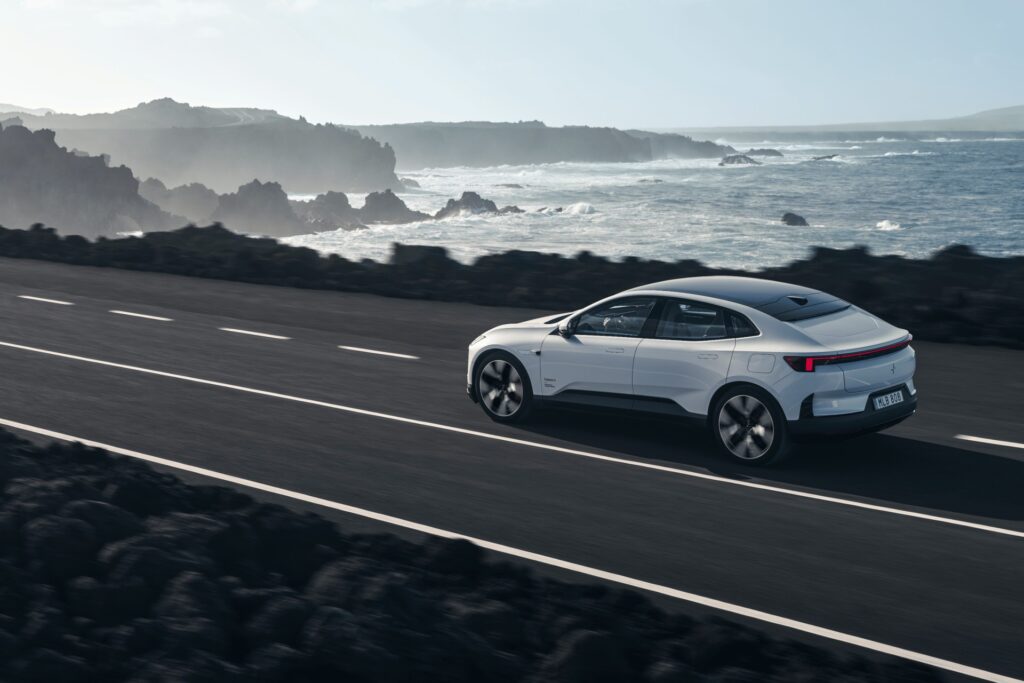
From an enthusiast seat, that is the sad part. Polestar brought design discipline, early Google-built-in software, and a driver’s chassis option into a market that needed more than one premium EV personality. The cars earned the affection. The exit is about ownership structure and a national-security rule, not because the Polestar 2 forgot how to drive.
A realistic hope is simpler: owners get the service they were promised, the last 3s and 4s find homes, and someday an authorization or redesigned compliance path reopens the door. Until then, Polestar’s American story is inventory, service, and memory. The next chapters are being written in Europe.
FAQ
Is Polestar leaving the U.S. completely right now?
No. Polestar will stop marketing and selling new vehicles from model year 2027 onward. It is still selling existing Polestar 3 and Polestar 4 inventory and says customer support and service-network access continue.
Why did Polestar stop future U.S. sales?
The U.S. Commerce Department’s Bureau of Industry and Security did not grant Polestar an authorization under the Connected Vehicle Rule, which restricts certain China- and Russia-linked connected-vehicle technology and related manufacturer sales from model year 2027.
Will Polestar honor warranties for U.S. owners?
Polestar says customer support and service access continue. Polestar North America has said existing warranties remain in effect under their terms. Check your warranty booklet and Polestar support for the details that apply to your car.
Did building Polestar 3 in South Carolina protect U.S. sales?
No. Polestar 3 production in Ridgeville, South Carolina, began in August 2024, but the Connected Vehicle Rule can still bar manufacturers with a sufficient China nexus from selling covered connected vehicles in the U.S. from MY2027, even if the vehicle is made in America.
Could Polestar return to the U.S.?
Polestar has not announced a return. A comeback would likely need a specific Commerce authorization like the one Volvo Cars received in May 2026, or a change in the rule or in how Polestar’s ownership and connected systems are assessed. That is analysis, not a company commitment.
What about Polestar 5, the next Polestar 2, and Polestar 7 in America?
Under the June 2026 decision, those future models are not headed to U.S. customers. Polestar 5 deliveries, a new Polestar 4 variant, the next Polestar 2, and Polestar 7 remain on Polestar’s global and European roadmap.