
Updated October 16, 2026: Top Gear, Hagerty and carwow.
The first Tesla Roadster reviews are in. Top Gear and Hagerty got private walkarounds with Tesla’s design chief Franz von Holzhausen and vehicle engineering vice president Lars Moravy, while carwow’s Matt Watson put Tesla’s numbers next to the fastest car he has ever launched. We’ll keep adding new reviews here as they land. For everything Tesla showed on stage, start with our Tesla Roadster reveal recap.
Top Gear: rear-drive, thrusters and a car that transforms
Tesla made Top Gear work for it. The presenter was blindfolded on the way in, then sat down with Franz von Holzhausen and Lars Moravy for a long walkaround.
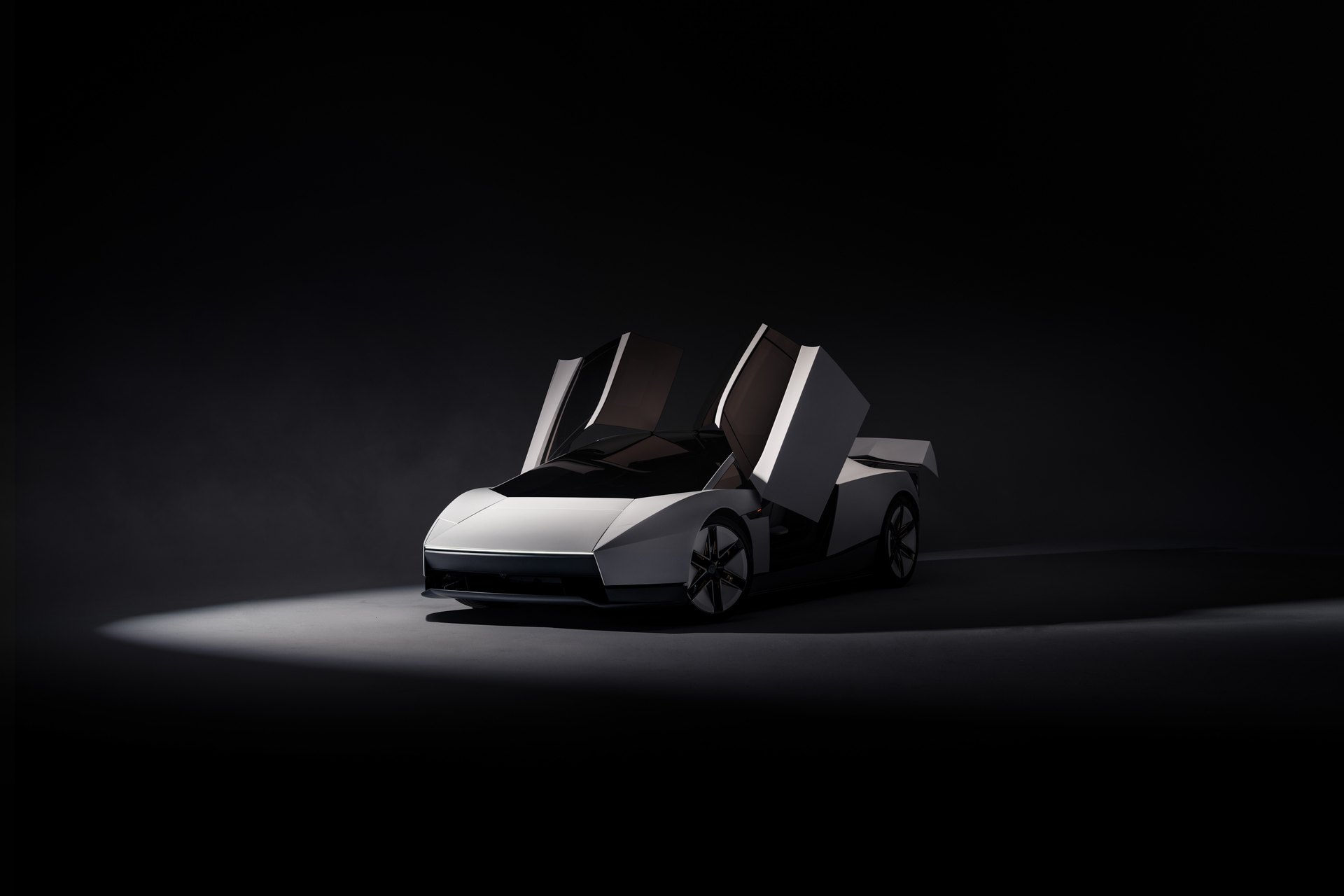
Design. After nine years, Franz said the 2017 design already felt like yesterday’s Tesla, so the new car follows the cleaner language of Cybertruck and Cybercab, and the idea of flight shaped the body too. He confirmed the Lotus “submarine” car in the Tesla studio was real inspiration for the profile. The roof panels lift out as a T-top, and the butterfly doors have a small padded saddle on the sill so you can slide in. The show car is an alpha prototype built mostly from carbon fiber. Lars described the production car as a hybrid structure: aluminum at the front and in the suspension, carbon in parts of the tub, carbon ceramic brakes, glass and plastics. The pop-down headlights are even slimmer than the roughly 20 mm units on Cybertruck.
Drivetrain and battery. “All of the internet has said it’s tri motor, it’s quad motor,” the presenter said. Instead it is rear-wheel drive only, with two motors on the rear axle, each with its own inverter and planetary reduction. Lars said the performance versions run in the 800 to 1,000 volt range with cobalt steel laminations, for more than 1,000 kW, and brake-by-wire first used on Cybercab handles the stopping. “Team will kill me for saying this, but under 1,700 kilos,” he said of the weight. Tires are 295/30 front and 335/30 rear on 20 and 21 inch wheels, and the wheelbase is 2,825 mm. A cell designed just for this car gives about 310 to 320 miles of range, with a target of 15 to 80 percent in 10 minutes at more than 500 kW on Gen 4 Superchargers.
Versions, aero and thrust. Lars said the best tires in the world manage maybe 2 g, with many closer to 1.6 or 1.8, so Tesla went beyond the tire. There are four versions that build on each other: Roadster, Performance, Thrust and a limited-production Rocket. Fans and deployable skirts seal the underbody, and above 50 or 60 mph the wings take over, with the rear wing riding on Optimus actuators. “It’s the ankle muscles,” Lars said. The Thrust version carries a 200 liter, roughly 10,000 psi tank related to SpaceX’s Falcon hardware, good for about five seconds of thrust and a 0 to 60 mph time of about 0.85 to 0.88 seconds. Lars said the Rocket’s flight system is for off-road use only, while Tesla intends to fully certify the Thrust version for the road with the thrusters themselves not used on public streets. Production is planned in Texas.
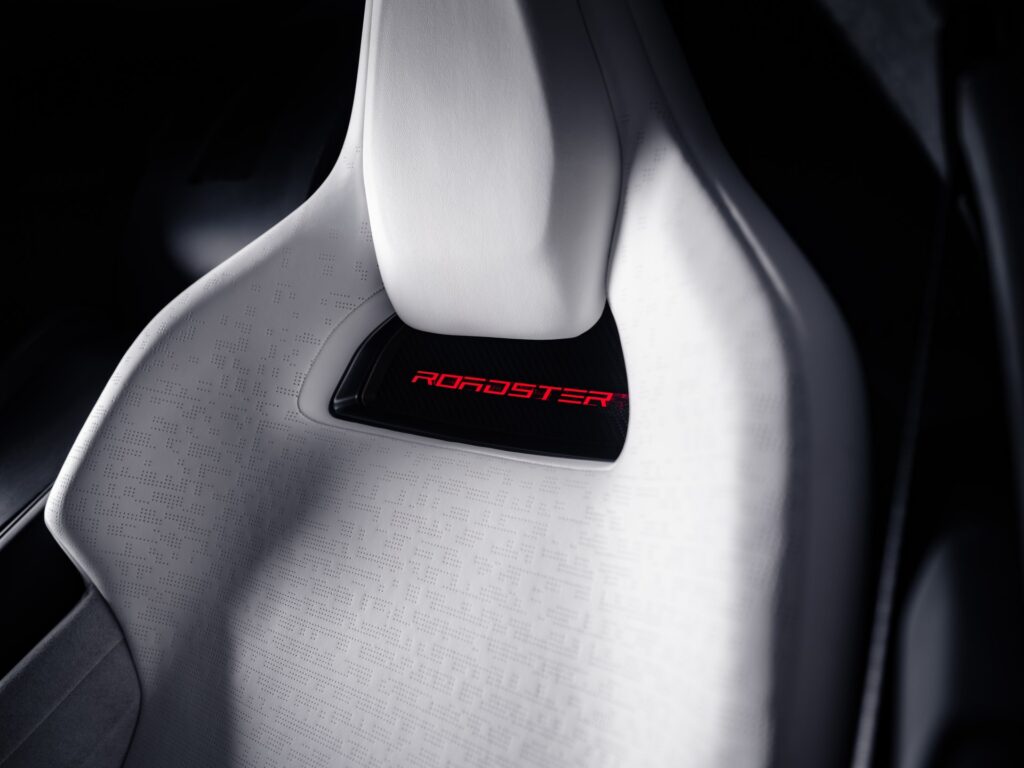
Cockpit. The seat is part of the structure, so the back reclines on a pneumatic release and the pedals move instead. The steer-by-wire yoke needs only plus or minus 170 degrees of travel, and there is a DRS paddle, a head-up display, wireless phone charging and heated seats. Top Gear’s take is that the base car matters most, and Lars agreed it has to feel good or nothing stacked on top of it matters. The film closes with a drive in a 2008 Roadster and calls the new car a Bugatti Veyron moment.
Hagerty: Lars Moravy explains the engineering
Hagerty’s Henry calls Moravy a “genuine car guy,” and this is the deepest technical walkaround so far, filmed the day before the reveal.
One megawatt, rear wheels only. “It’s only rear wheel drive,” Moravy said. Two motors make more than a megawatt and over 1,400 Nm, more than all three of the Plaid’s. There is no differential: each wheel has its own motor, inverter and 8.4:1 planetary gear set.
A battery built for the track. The bespoke 4680 cell uses a high-power chemistry and aluminum cans, with cooling jackets on both sides and coolant flushed through in a single pass. The upper plate is tailor-welded titanium and the lower plate aluminum, all at 800 volts. The goal is 25 to 30 minutes of unlimited track driving, then 15 to 80 percent in about 10 minutes. “Driver’s cars aren’t 2,000 kilos, not even 1,800 kilos,” Moravy said, with a ballpark just under 1,700 kg and final numbers still to come.
Aero and fans. The front is “just a massive wing,” with wings behind the chin spoiler that move up to 80 degrees, fenders that open as barge boards and an active hood vent, good for up to 2 g of downforce above 200 mph. Below 50 mph, four fans built from the heat pump’s compressor motor, about 20 kW each, work with four independent skirts to hold more than 2 g in corners. Hagerty adds that Track Mode drops the car 40 mm and makes it three times stiffer.
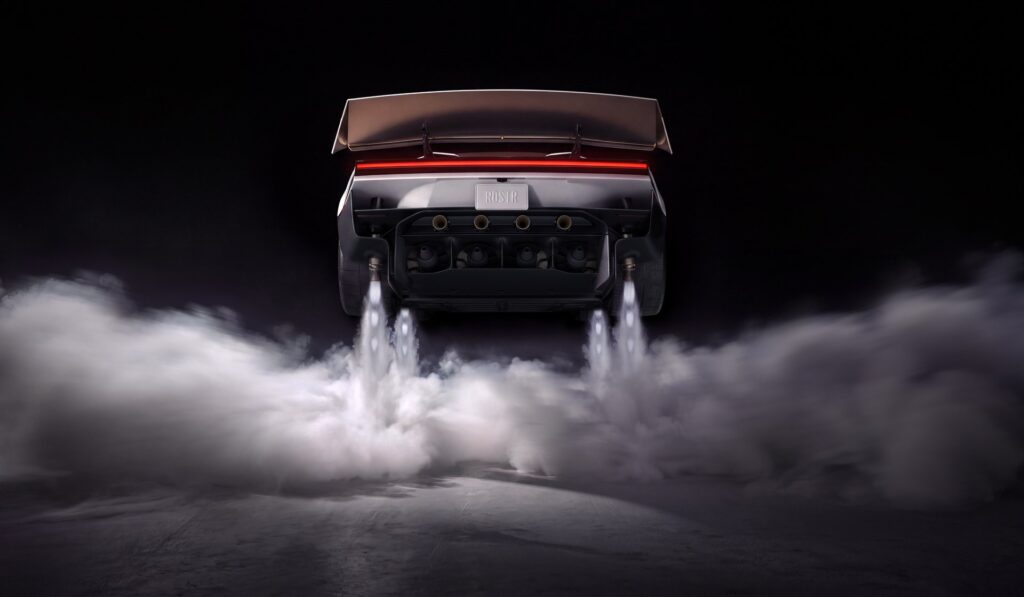
Nitrogen thrust and 0.55 seconds. At the reveal, Tesla said it had borrowed some technology from SpaceX, and Moravy calls the valve design “very much a SpaceX thing.” Behind orange titanium oxide glass sits a 200 liter carbon overwrapped pressure vessel holding nitrogen at up to 10,000 psi. Moravy said suction, thrusters and powertrain together deliver 0 to 60 mph in 0.55 seconds, a rollout figure, and the four rear thrusters make over 80 kilonewtons, about one fighter jet engine. Hagerty lays out the ladder: the Performance model uses fans but no thrusters for 1.6 seconds, while the Thrust model does 0.85 seconds with rollout subtracted. The Rocket adds a 400 liter tank in place of the passenger seat and six more thrusters, and Hagerty reports that filling all 600 liters takes six to seven hours today, with Tesla aiming for about half an hour. As for why it flies, Moravy said Elon “wants to prove his buddy wrong. Flying cars do exist.” Henry added a postscript after the launch event saying he was now “more amazed.”
carwow: quicker than the McMurtry, aiming for Mach 0.5
Nine years ago, carwow’s Matt Watson says, the Roadster’s promised sub-2-second sprint “sounded totally unbelievable.” His video is a solo breakdown rather than a Tesla interview, and it puts Tesla’s figures next to the McMurtry Speirling, the fan car he has driven.
The launch. Watson’s quickest run ever was 0 to 60 mph in 1.4 seconds in a prototype Speirling. The Roadster ran 0.81 seconds live at the reveal, about six tenths quicker. “If that time can be verified, it’d be one of the biggest leaps forward in the 0 to 60 mph record in decades,” he says. On stage, Musk said the production car will be quicker still.
Suction and thrust in carwow’s terms. carwow estimates the upside-down park took around 4.7 tons of force, more than double the roughly two tons it credits the McMurtry with. That is carwow’s math, not a Tesla figure. It also says the car jumped about 8 meters from flat tarmac and compares the thrust to an F-18 Hornet engine. Watson thinks the lighter McMurtry, which he puts at 1.3 tons and around 3 g, should still have the edge in corners. He’d like to see the two meet on a track, though he doubts it will happen.
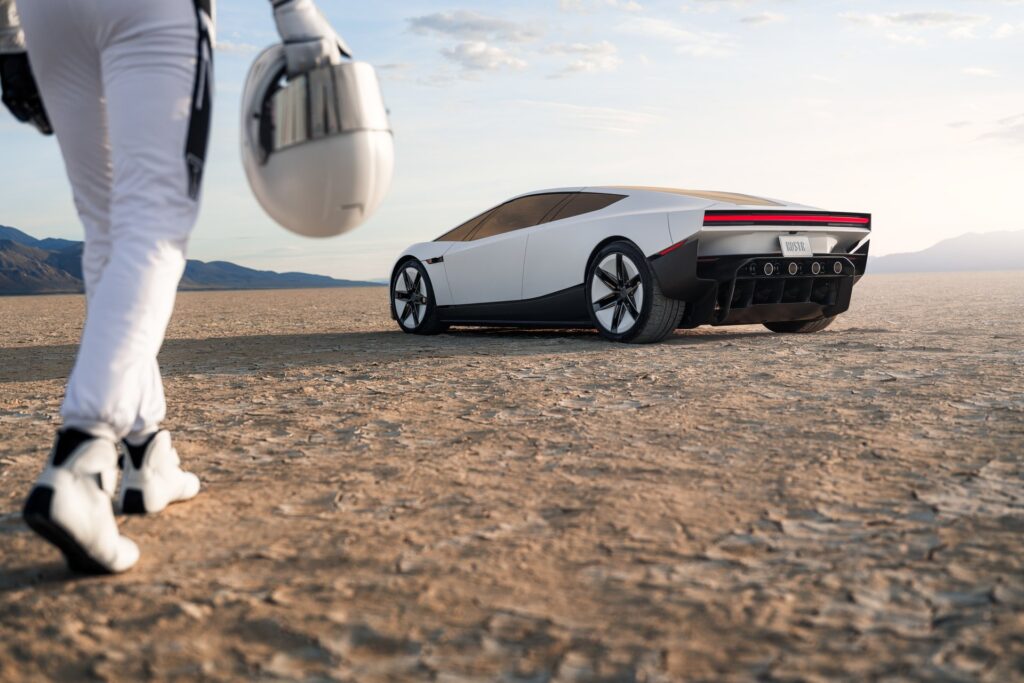
Design and show cars. Watson sees Countach in the straight lines, Murcielago in the slim headlights and Cybercab in the butterfly doors, and compares the molded seats and giant rear wing to the McLaren W1. He also spotted more than one car: the close-up show car wears two-tone six-spoke wheels, while the flying car runs black aero covers, and his guess is that the stunt cars were lightened for flight, perhaps even with smaller brakes. He closes on Musk’s Mach 0.5 goal, which he works out to about 380 mph, and the teased Snake River Canyon jump.
A note on the numbers
The Roadster is still a prototype, and the production model will differ. The figures shared at the reveal and in these reviews have not always matched. Horsepower ranges from about 1,340 hp in Top Gear’s and Hagerty’s narration to about 1,500 hp from Lars Moravy, thrust from more than 5 g in Hagerty’s telling to about 6 g from Moravy, and top speed from the 214 mph Moravy gave Top Gear for today’s car to more than 230 mph per Tesla. Moravy also told Top Gear a 330 mph version is “just gearing,” and at the reveal Musk set a top-speed goal of about Mach 0.5, “maybe a little higher.”
The thruster refill is described two ways. At the reveal, Elon Musk said the car can recharge its ultra-high-pressure air tank on its own, with no special propellant (livestream, 16:58), and carwow calls it compressed air. Lars Moravy told Top Gear (22:30 to 23:00) that the 200 liter tank is filled from an outside high-pressure nitrogen system, taking two to six hours today with a target of under 30 minutes. The two descriptions differ, and Tesla hasn’t explained yet how they fit together. Tesla plans to start production in 2028, and these numbers could change before then.
What the reviews agree on
- It’s a driver’s car first. Top Gear and Hagerty both come back to the base car. Rear-wheel drive, a weight target under 1,700 kg and a fixed seat with moving pedals all point the same way.
- The fans are the real trick. Suction plus skirts gives more than 2 g of grip at speeds where wings do nothing, and Top Gear and carwow both reach for the McMurtry Speirling as the comparison.
- The thrusters are real hardware. A 10,000 psi tank, SpaceX-derived valves and over 80 kilonewtons of thrust put 0 to 60 mph under a second.
- Range and charging are practical. Over 300 miles and a 10-minute 15 to 80 percent charge are Tesla’s targets for a car meant for both the road and the track.
- It’s coming from Texas in 2028. The team confirmed the timeline to Top Gear, matching what Musk said on stage.
Watch and read more
All three videos are worth watching in full on Top Gear’s, Hagerty’s and carwow’s YouTube channels. For the stage show, specs and gallery, read our full Tesla Roadster reveal recap. The first proper drives will show how much of it carries over to the production car.