
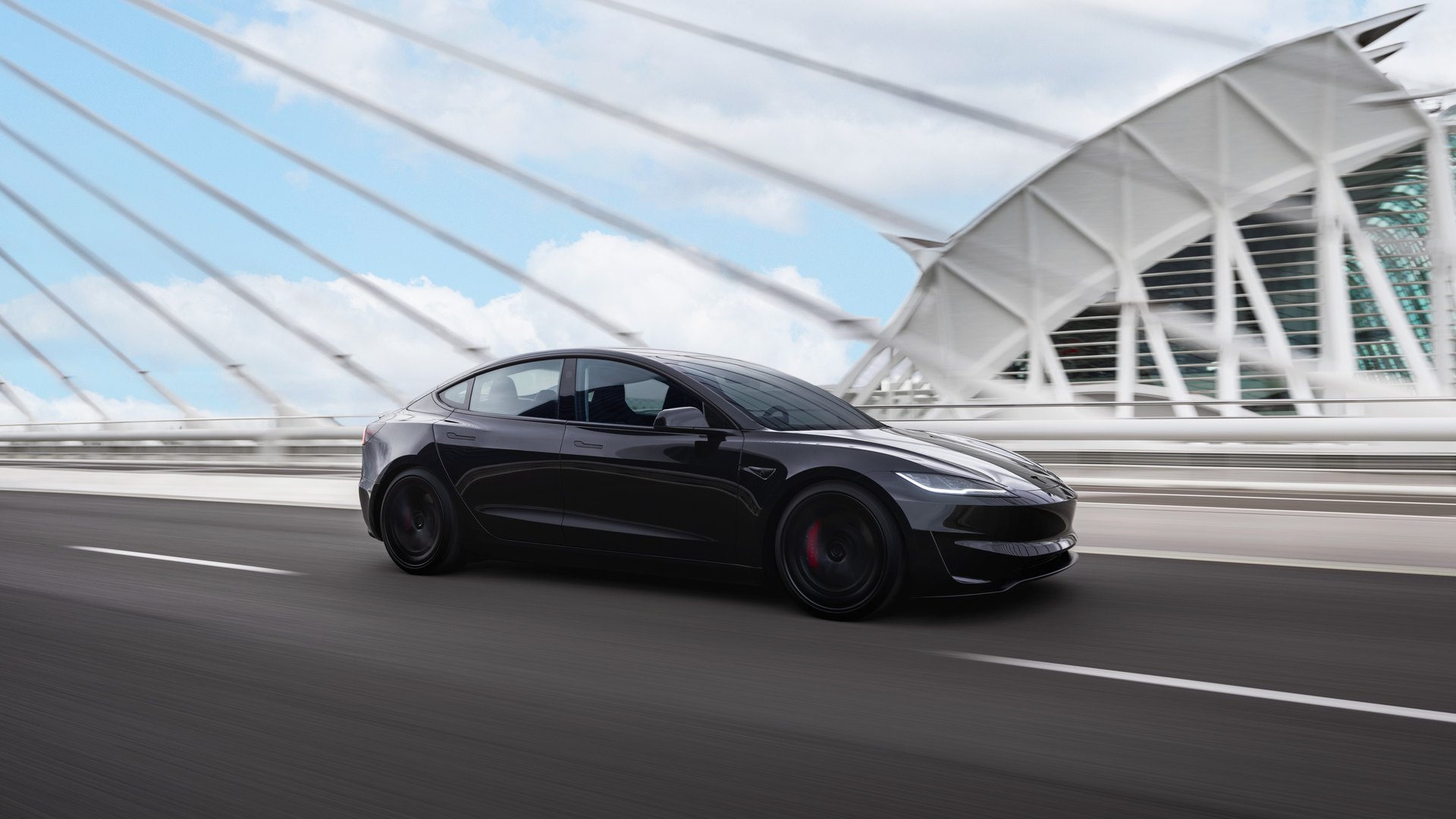
Last night Tesla showed the world a Roadster that climbs a vertical ramp, IT FLEW, fires SpaceX-style thrusters and hits 60 mph in 0.81 seconds. We loved every second of it. It also got us thinking about something smaller: an affordable driver’s car from Tesla. Our full Roadster reveal recap has the details. But one line from Elon Musk on stage has stayed with us since the stream ended.
This will actually be, long-term, the only manually driven car that Tesla makes.
Elon Musk, at the Roadster reveal
Explaining that the car was technically driving itself for the demo, he added: “You’re going to have some fun sometimes. And if you’re going to have only one manually driven car, let’s take it to the limits and way past the limits.” That line from the reveal stuck with us.
It is a great line for a hypercar. It also gave us pause. The Roadster Performance takes a $50,000 deposit and production is planned for 2028. If it becomes the only Tesla you can drive yourself, the simple joy of driving moves to the very top of the price list. So this is a friendly, hopeful letter to the people in Austin and Fremont who make these cars: please don’t leave the rest of us in the passenger seat.
We understand where Tesla is going
Tesla has been clear and consistent about autonomy, and we respect it. The Cybercab is described in Tesla’s own emergency response guide as an SAE Level 4, two-seat autonomous vehicle that is “not typically equipped with a steering wheel or acceleration and brake pedals.” Robotaxi rides are already running in several U.S. cities, and the company’s vision of cars that drive themselves while you read, sleep or work is the reason a lot of people bought Tesla stock and Tesla cars in the first place.
For most trips, that future sounds wonderful. Nobody misses a gridlocked commute. If a car can handle the boring miles safely, let it.
But a commute is not the same thing as a drive. A mountain road on a Sunday morning, a quiet lap of an autocross course, the first time a teenager feels a car respond to their hands: those moments are not problems to be solved. They are the reason many of us fell in love with cars, and then with electric cars.
Tesla already builds driver’s cars
This is the hopeful part. Tesla knows how to make cars that are fun to drive, because it does it today.
The Model 3 Performance makes more than 500 horsepower and runs 0 to 60 mph in as little as 2.9 seconds. More importantly for drivers, it has Track Mode. Tesla’s owner’s manual describes adjustable regenerative braking, and Tesla’s Track Mode V2 support page explains that Handling Balance can shift motor bias from 100 percent front to 100 percent rear, so you can dial in understeer or oversteer and “initiate rotation and sustain slip angle.” That is not the language of a company that has stopped caring about drivers. That is engineers having fun.
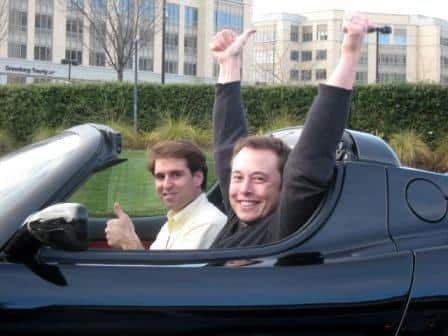
Tesla’s history says the same thing. The company’s very first car, the 2008 Roadster, existed to prove electric cars could be thrilling. Musk’s 2006 “Secret Tesla Motors Master Plan” laid out the strategy: build a sports car, use that money to build an affordable car, then a more affordable one. The fun came first, and it opened the door for everything after it. Instant torque, a low center of gravity and a car that feels alive under your right foot are what turned a generation of skeptics into EV owners.
Why a fun, affordable Tesla still matters
A manually driven Tesla at an accessible price is not nostalgia. It is good business and good for the brand.
Enthusiasts are evangelists. The people who track their cars, film their canyon runs and argue about tire compounds online are the same people who tell their friends which car to buy. Tesla grew on word of mouth, and enthusiasts are its loudest voices.
Driving skill is a pathway. Track days and autocross are where young drivers learn car control safely. A car built for that, at a price a 25-year-old can reach, creates the next generation of Tesla owners and engineers.
Choice builds trust. Many buyers will happily let FSD handle the highway. Some still want to know they can take the wheel and enjoy it. A Tesla that offers both, at an everyday price, says “we built this for you” rather than “we built this for the network.”
The world is a big market. Twisty roads exist in Japan, Wales, the Alps, Australia and the Pacific Northwest. Drivers everywhere want an EV that feels special, and not all of them live where robotaxis will run soon.
Other brands are already answering the call
Tesla would not be alone here. Several makers sell battery electric cars aimed squarely at people who like to drive, without hypercar pricing.
Alpine’s A290 is an electric hot hatch with up to 220 hp, a 52 kWh battery, four-piston Brembo brakes and multilink rear suspension, and it runs 0 to 100 km/h in 6.4 seconds in its 220 hp form. Alpine’s UK configurator lists it from £30,245 including the government grant, and in France from €34,670 after the CEE bonus.
MINI’s John Cooper Works Electric delivers up to 258 hp with a 20 kW boost from a paddle on the wheel, 0 to 100 km/h in 5.9 seconds, and what BMW Group calls the typical MINI “go-kart” feeling from JCW-specific suspension.
Higher up, Hyundai’s IONIQ 5 N shows how much driver engagement software can add, with N e-shift simulating gear changes, an N Grin Boost button and an N Drift Optimizer. It is not cheap, but it proves an EV can be built around the driver.
None of these are Teslas, and that is the point. Tesla’s efficiency, charging network, software and manufacturing scale could make a driver’s car that beats all of them on value.
The Same AI Can Keep Drivers Driving
Here is the twist we would love Tesla to consider: a self-driven car, in the most literal sense. The software that lets a Tesla drive itself is the same software that can watch over a human at the wheel. A car that can see every lane, every pedestrian and every vehicle around it can step in before a driver’s mistake becomes a crash, and it can steer clear of most dangers coming from outside the car too. No system can prevent every collision another driver causes, but it can avoid a great many of them.
That makes a car you drive yourself something that can be as safe as one that drives for you, without giving up the joy. The person holds the wheel, and the AI acts as a guardian angel, letting the car be playful on a back road and firm when it really counts.
Think back to road trips as a kid. Hours in the back seat with nothing to do but stare out the window, and the boredom set in fast. We suspect a lot of adults will feel the same way once the car does all the work. Games on the big screen help pass the time, but there is something special about holding the wheel and taking part in the trip yourself, at least some of the time. And when you would rather sit back, self-driving is always there.
No company is in a better position to build that than Tesla. It already has the cameras, the computers and the self-driving software, and it plainly still loves driving, as anyone who watched the Roadster hang upside down can tell you. The same AI that is reinventing transportation could keep the fun of driving alive for generations to come.
What we would love to see
We are not asking Tesla to slow down on autonomy. We are asking for one more car in the lineup. Picture something small and light, rear-biased, with Track Mode as standard, a real steering wheel with real feedback, and FSD available for the days you would rather relax. Call it a baby Roadster. Price it like a Model 3, or below. Let it be the car that makes a first-time EV buyer grin the way the original Roadster did in 2008.
Make it a hatchback, too. A Model 3 trunk is fine for groceries, but a hatch turns a fun car into the only car you need, with room for a bike, a weekend bag or a track day’s worth of tires.
And while we are dreaming, how about a second new model with around 9.8 inches of ground clearance, built for drivers who love dirt roads and trailheads but don’t need a full-size Cybertruck? The same guardian-angel software could make it as confident on a fire road as on a back road.
And here is the reason for hope. Musk said “long-term.” Long-term is a long time. Tesla has surprised everyone before, and some of its best ideas were kept quiet until they were ready. Maybe there is already a sketch on Franz von Holzhausen’s wall, or a mule lapping a test track somewhere. We would love nothing more than to be proven wrong about the Roadster being the last one.
A thank you, and an ask
Tesla, thank you for the Roadster. It is wild, beautiful and exactly the kind of halo car the industry needed. Thank you, too, for Track Mode, for over-the-air updates that made cars faster and for proving that electric could mean exciting.
Now please keep a seat at the wheel for the rest of us. Not only at the limits and way past the limits, but on an ordinary Tuesday, on a back road, in a car people can actually afford.