
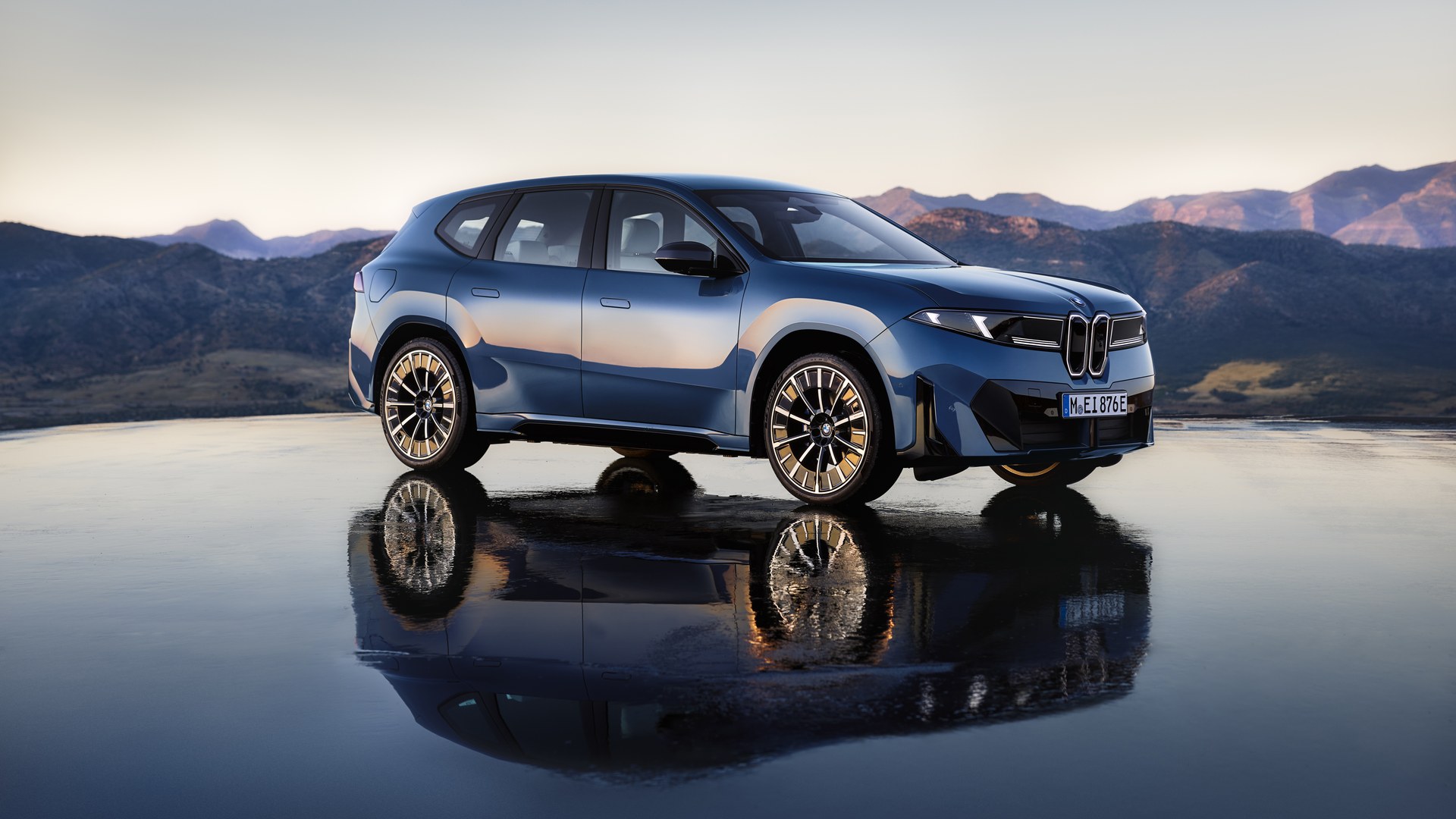
The 2027 BMW iX3 50 xDrive’s EPA range is 383 miles on its standard 20-inch all-season tires, not the 434-mile headline figure. That higher number needs the no-cost 20-inch summer tires. BMW published both numbers in May, and fueleconomy.gov now lists every wheel and tire setup the US car offers, so the full table can be checked against the EPA directly.
EPA range for all five iX3 wheel and tire setups
All figures below are EPA ratings from fueleconomy.gov, checked Tuesday, November 3. Range and combined MPGe match BMW’s May 7 US press release.
| Wheel and tire | Combined MPGe | City / Hwy MPGe | kWh/100 mi | EPA range |
|---|---|---|---|---|
| 20″ summer (no-cost option) | 118 | 125 / 110 | 29 | 434 mi |
| 20″ all-season (standard) | 102 | 107 / 97 | 33 | 383 mi |
| 21″ summer | 105 | 112 / 98 | 32 | 398 mi |
| 21″ all-season | 105 | 111 / 98 | 32 | 399 mi |
| 22″ summer | 104 | 111 / 97 | 32 | 392 mi |
BMW’s US option list says the 21-inch and 22-inch summer packages use staggered sizes, with wider tires at the rear.
Why the 20-inch tires are 51 miles apart
The 20-inch wheel spans both the best and worst rows in the table. On summer tires it rates 434 miles; on the standard all-seasons it rates 383. That is a 51-mile drop, about 12 percent, on the same wheel size.
The 21-inch setups show the opposite pattern. Summer and all-season tires land one mile apart (398 and 399). The gap at 20 inches comes from the specific 20-inch summer tire, not from summer tires in general or from wheel diameter. BMW has not said which tire models it fits to each package.
In energy terms, the EPA puts the 20-inch summer setup at 29 kWh per 100 miles and the standard all-seasons at 33. Over 15,000 miles a year that is roughly 4,350 kWh versus 4,950 kWh, or about 600 kWh more electricity for the standard tires. EPA kWh/100 mi is measured from the wall outlet, so it includes charging losses.
If you live where winter tires or all-seasons are a must, plan around 383 miles. The 434 figure applies only to the summer tire on the 20-inch wheel.
Price, power and charging from BMW
These figures come from BMW, not the EPA:
- Price: $61,500 plus $1,350 destination, or $62,850, per BMW’s May 7 release. The M Sport Package adds $2,500 and the M Sport Professional Package adds $4,000.
- Power: 463 hp with Sport mode engaged and 476 lb-ft, from front and rear motors, per bmwusa.com. The rear motor is an electrically excited synchronous motor; the front is an asynchronous (induction) unit.
- DC charging: 800-volt system, up to 400 kW, 10 to 80 percent in about 21 minutes, and about 185 miles added in 10 minutes, all BMW estimates. A NACS port is standard.
- AC charging: 15.4 kW onboard. The EPA lists about 8 hours for a full charge at 240 volts.
How the iX3 lines up with BMW’s other Neue Klasse models
The iX3 is the only Neue Klasse model with EPA ratings on fueleconomy.gov so far. The BMW iX4, its coupe-roofed sibling, starts at $66,200 with up to 428 miles, but that figure is BMW’s own estimate. Fueleconomy.gov had no 2027 iX4 listing when we checked on Tuesday.
The 2027 BMW i3 sedan carries the same $61,500 base price and the same 463 hp, 476 lb-ft dual-motor setup. Fueleconomy.gov has no 2027 i3 listing yet either. Range for each BMW EV we track is in the Electron Motion BMW EV database.
What BMW has not published for the US
BMW says a single-motor, rear-wheel-drive iX3 will follow the 50 xDrive. It has not given US pricing, an on-sale date, or range for that model. The EPA ratings above cover only the iX3 50 xDrive.
The EPA ratings also do not describe winter driving or sustained highway speeds. The highway MPGe column, 97 to 110 depending on tires, is the better guide for long trips.