
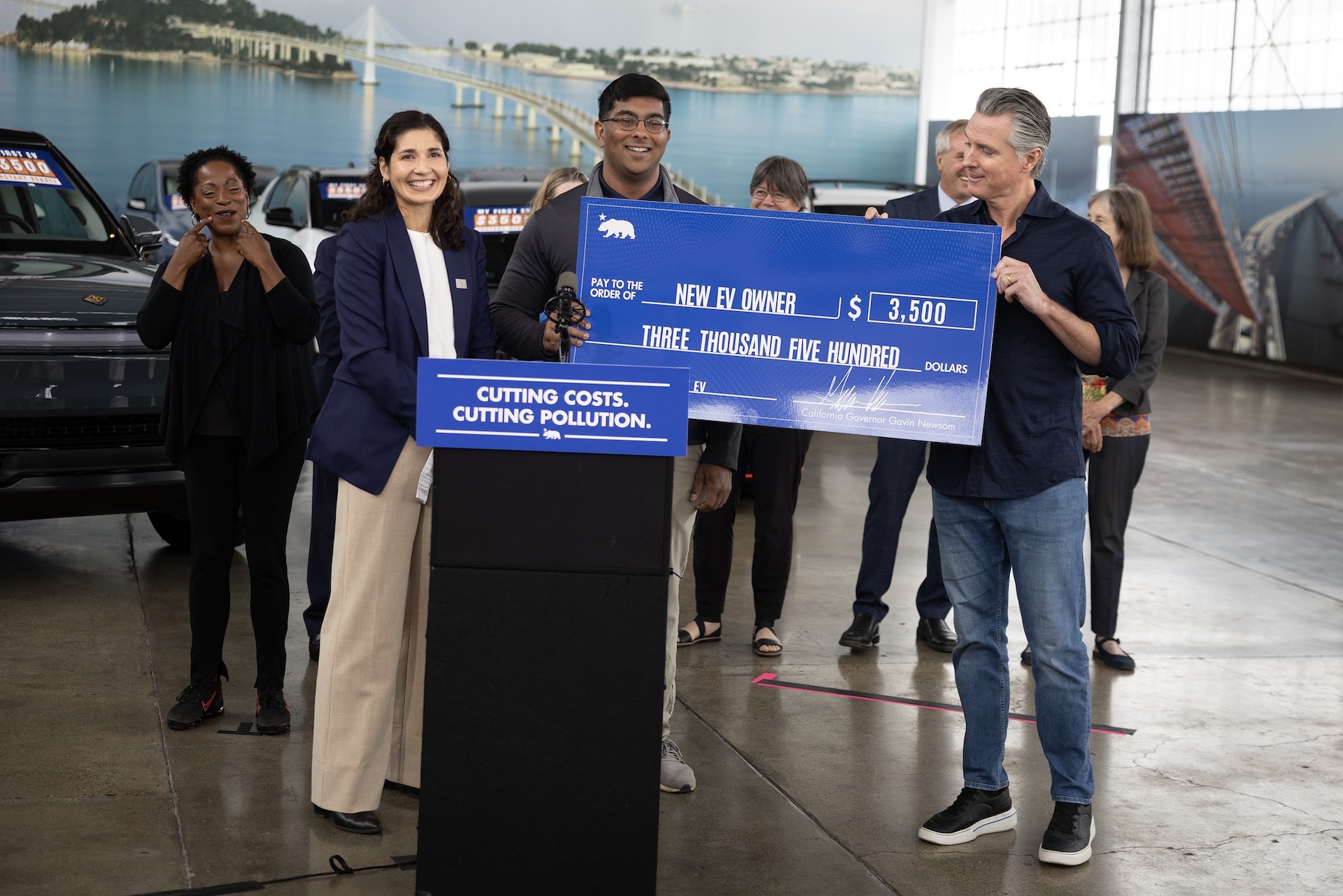
California still pays first-time zero-emission buyers at the dealership, not weeks later in the mail. Under MyFirstEV, a California Air Resources Board program funded through California Climate Investments, eligible residents can take $3,500 off a qualifying new battery-electric or fuel-cell vehicle, or $1,750 off an eligible used one, when they buy or lease their first ZEV. The catch that matters on October 7: Tesla’s allocation is already closed, while most other participating brands are still open for new stock, and a shorter list still covers used CPO inventory.
That closed Tesla line is the reason to read the manufacturer list before you order, not after.
What MyFirstEV pays
MyFirstEV is a point-of-sale incentive. The dealer applies it on the worksheet. You do not file a separate rebate form with Sacramento after you drive away.
The combined amounts are:
- New ZEV: $3,500 ($1,750 from the state, $1,750 matched by the manufacturer)
- Used ZEV: $1,750 ($875 state, $875 OEM match)
Only battery-electric and hydrogen fuel-cell vehicles qualify. Plug-in hybrids are out. The buyer has to be a California resident purchasing or leasing their first zero-emission vehicle, with a signed attestation, and the program pays once per person for the life of the program. It is not retroactive. Vehicles ordered before a given OEM turned the incentive on do not get a late credit.
State funding is a one-time $135.5 million pot, matched dollar for dollar by OEMs, first-come until each share runs out, and must be spent by September 1, 2031. The law is SB 168 (chaptered July 13, 2026). Retail availability began August 3, 2026, with timing by brand. On August 7, Newsom’s office said Hyundai, Lucid, and Tesla were among the first live.
MyFirstEV can stack with other CARB programs (Driving Clean Assistance, Clean Cars 4 All) and non-CARB incentives. Ask the store to print each line so state money, OEM match, and other credits stay separate.
Price caps, model year, and used rules
For new vehicles, model year must be 2026 or newer. Non-California-headquartered manufacturers face an MSRP cap of $50,000. California-headquartered, ZEV-only makers (statute framing that covers Lucid, Rivian, and Tesla) are exempt from those MSRP and sales-price caps, so a higher-MSRP California ZEV brand can still qualify when a loaded mainstream trim would not.
Used incentives are narrower:
- Purchase from the manufacturer’s certified pre-owned channel only
- Sales price $25,000 or less
- Vehicle at least two model years older than the current year
- Private dealership used inventory is not eligible
OEMs publish which models and trims they enrolled. Confirm the exact VIN and trim on the brand’s MyFirstEV page and on the dealer’s incentive print before you sign.
Who is open, and who is closed (checked Oct 7, 2026)
CARB’s participating-manufacturers page is the live scoreboard. As checked October 7, 2026:
Available now (new vehicles): Cadillac, Chevrolet, Genesis, Honda, Hyundai, Kia, Lexus, Nissan, Subaru, Toyota
Available now (new and used): Ford, Lucid, Rivian, Volvo
Launching November 2026: Mitsubishi
Closed (funds no longer available): Tesla
Launch timing and dealership participation still vary, and orders placed before an OEM turned the incentive on do not qualify. Re-check CARB’s participating manufacturers list the day you order. Lucid’s MyFirstEV California page is one still-live OEM example. If you were shopping a Tesla only for this rebate, that path is closed; use the open lists instead.
Related: California’s September charger and HOA package
MyFirstEV is the purchase subsidy. Separately, on September 20, 2026, Governor Newsom signed a package aimed at making chargers easier to build and use, including SB 969 (a faster inspection path for public chargers), SB 1283 (streamlined permitting for related work), and AB 1820 (multifamily charging rules). That bill set is about infrastructure and access, not the $3,500 desk credit. Shoppers chasing the rebate should stay on the CARB manufacturer list; the Sept 20 package is the broader state push sitting next to it.
How this sits next to other incentive coverage
Factory cash and other government rebates move on different calendars. See our Canada October EV deals post for EVAP math, and VW Group October 2026 EV incentives for verified U.S. factory bonuses. MyFirstEV is California-only, first-ZEV-only, and OEM-matched. Keep it as its own worksheet line.
FAQ
Who qualifies for the California MyFirstEV rebate?
California residents buying or leasing their first battery-electric or fuel-cell vehicle. Prior ZEV ownership, including in another state, disqualifies you. Plug-in hybrids do not count as ZEVs for this program. One incentive per person for the life of the program, with a signed attestation at the sale.
How much is the California MyFirstEV rebate?
$3,500 combined on an eligible new first ZEV ($1,750 state + $1,750 OEM), and $1,750 combined on an eligible used CPO ZEV ($875 each). Amounts are applied at participating dealers.
How does the point-of-sale credit work?
The dealer or OEM sales channel applies MyFirstEV on the purchase or lease worksheet. It is not a mail-in rebate and not retroactive. Orders placed before a manufacturer turned the incentive on do not get a late credit.
Does Tesla still offer MyFirstEV?
No. CARB’s participating manufacturers list, as checked October 7, 2026, marks Tesla closed because funds are no longer available. Other brands on that page remain open for new, and some for used.
Can I stack MyFirstEV with other California EV programs?
Yes, with other CARB programs such as Driving Clean Assistance and Clean Cars 4 All, and with non-CARB incentives that still apply. Have the dealer separate each credit on the printout.
Confirm eligibility on California Climate Investments’ MyFirstEV hub, the CARB FAQ, and the participating manufacturers page before you put money down.
