
No — the Mustang Mach-E (2021) was Ford’s first purpose-built EV platform. The new UEV (announced Feb 17, 2026) is their first true clean-sheet architecture since then, led by ex-Tesla engineer Alan Clarke.
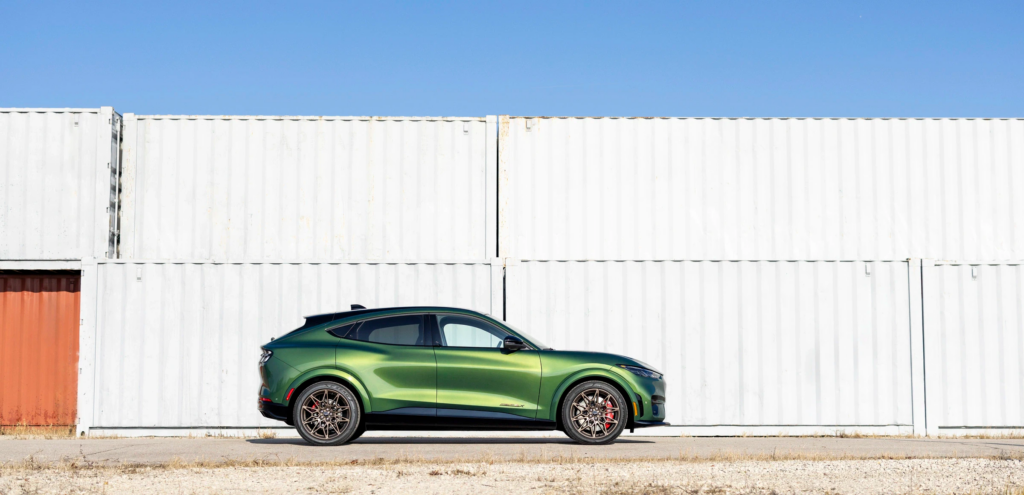
The Mustang Mach-E (launched 2021) was indeed Ford’s first purpose-built electric vehicle on its own dedicated EV architecture (called GE1 / Global Electrified 1). While it shares some structural DNA with the C2 platform from the Focus/Escape family (heavily reworked with no transmission tunnel, EV-specific battery integration, etc.), it was engineered from the start as an EV—not a converted gas vehicle. That’s why it’s still going strong in 2026 with fresh 2026 models, strong sales, and no cancellation in sight.
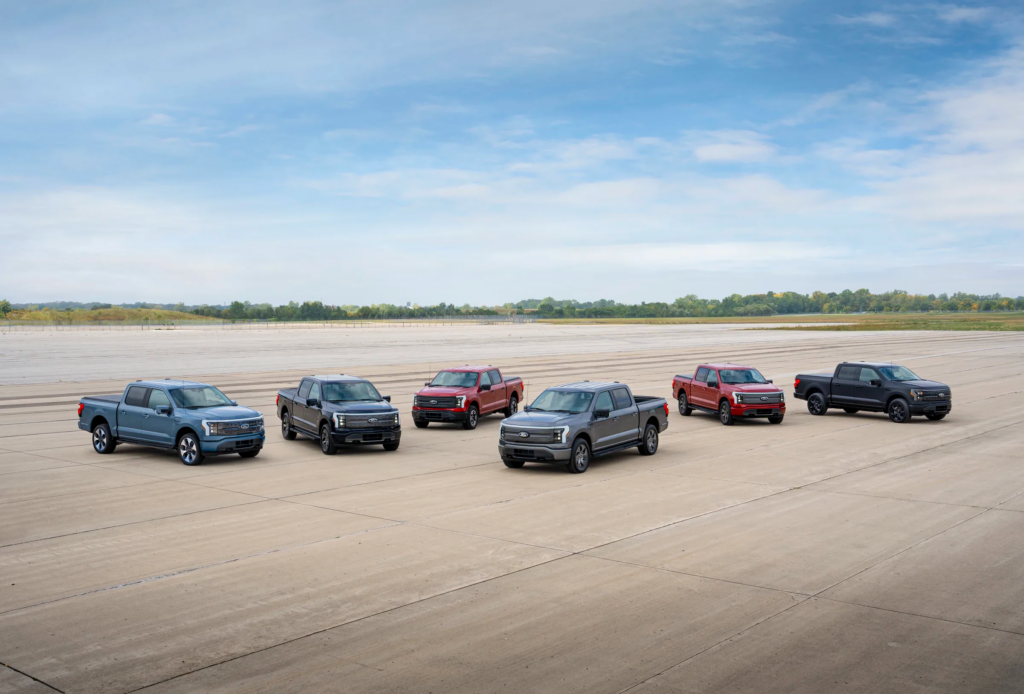
By contrast, the F-150 Lightning was a quick adaptation of the existing body-on-frame F-150 truck platform (batteries dropped into the ladder frame, motors added, etc.). It was a smart stop-gap to get an EV truck to market fast, but it carried over compromises from the gas truck design. Production of the pure all-electric Lightning ended in late 2025, with Ford shifting the name to a new plug-in hybrid/EREV version going forward. That platform difference is a big reason the Mach-E survived while the Lightning BEV didn’t.
Where the New UEV Truck Fits In
Ford’s upcoming Universal Electric Vehicle (UEV) platform (details dropped Feb 17, 2026) is being positioned as the company’s first true clean-sheet, modern ground-up dedicated EV architecture, no carryover from any existing gas or prior EV platform. It was developed by a skunkworks team in California (led by a longtime ex-Tesla engineer Alan Clarke) with extreme simplification:
- 20% fewer parts overall
- Zonal controllers (only 5 master modules instead of dozens)
- 48V architecture
- Gigacastings
- Radical aero for a pickup (15% better drag than anything out there)
Alan spent 12 years at Tesla (roughly 2010–2022), rising to Director of New Programs Engineering. He worked hands-on across every major volume vehicle: Model S, Model X, Model 3, Model Y, and early Cybertruck development. Ford poached him in early 2022 specifically to build and run the secret California-based “skunkworks” team (now ~450 people in Long Beach + Palo Alto) that created the Universal Electric Vehicle (UEV) platform from scratch.
He’s been quoted extensively in the Feb 17–19, 2026 coverage as the guy who:
- Started the project with basically one person (himself) and hand-picked the initial team
- Drives the “bounty system,” extreme part-count reduction, unicastings, 48V architecture, and radical aero
- Will oversee the first vehicle — the ~$30k mid-size EV pickup launching in 2027
(Doug Field, another big ex-Tesla/Apple name, is Ford’s overall Chief of EVs/Digital/Design and green-lit the skunkworks, but Clarke is the day-to-day leader and public face of the UEV program.)
Clarke brought real Tesla-first-principles thinking to Ford’s first clean-sheet EV architecture since the Mach-E.
The first vehicle on it will be a brand new mid-size EV pickup, targeted at ~$30k starting price with deliveries in 2027 (as a 2028 model). It will be smaller/more efficient than the R1T, with more passenger room than a RAV4, native NACS charging, and a focus on real-world usability.
Ford learned from Mach-E (keep the dedicated-EV DNA) and Lightning (don’t just adapt an old truck platform), then went all-in on something brand-new and radically cheaper for the UEV truck.
UEV vs Rivian R1T vs Tesla Cybertruck
As of now (early 2026) A used ~2023 R1T Dual-Motor Performance + Large Pack at ~$54k/23k miles is still the undisputed champ while you wait. Nothing on the horizon (including UEV) will match its hydraulic cross-linked suspension magic, 665 hp punch, or 340+ mi real-world range in the next 12–18 months.
| Aspect | 2023 Rivian R1T Dual-Motor Performance (Large Pack) | Ford UEV Mid-Size Pickup (2027) | Tesla Cybertruck AWD (Current) |
|---|---|---|---|
| Price | Used $54k with 23k miles (steal as of Feb 2026!) | ~$30,000 starting target (new) | $72k–$78k used (low miles in SoCal) |
| Platform | Dedicated EV architecture | First true clean-sheet modern EV architecture (UEV) | Dedicated EV |
| Suspension | Electro-hydraulically cross-linked adaptive (no sway bars) | Conventional independent coil springs (expected) | Air springs + mechanical stabilizer bars |
| Vehicle Class | Compact full-size | True mid-size (more passenger room than Toyota RAV4) | Full-size |
| EPA-Est. Range | 341–352 miles | 280–340+ miles (efficiency-first via 15% better aero) | 310–325 miles |
| 0-60 mph Acceleration | 3.5 seconds (665 hp / 829 lb-ft) | ~4.5–5.6 seconds (Ford performance targets) | 4.1 seconds |
| Max Towing Capacity | 11,000 lbs | 5,000–7,500 lbs (estimated for mid-size class) | 11,000 lbs |
| Native Charging | Rivian network + Tesla adapter | Native NACS (direct Supercharger access) | Native NACS |
The Ford UEV will almost certainly have conventional coil-spring independent suspension (no full air, no hydraulic linking) to hit that $30k target—perfect for daily driving and light off-road, but not the supercar-on-trails feel of the R1T.
May be a great time to enjoy a used R1T, skip the $72k+ used Cybertrucks, and pounce on the UEV in 2027 if Tesla still hasn’t delivered anything sub-$55k. San Diego Ford dealers are already taking expressions of interest for the UEV lineup. The future of EV’s is looking super bright, unlike the mainstream media’s doom and gloom for EV take.
Frequently Asked Questions
Is the Ford UEV platform truly Ford’s first ground-up EV platform?
No. The Mustang Mach-E (2021) was Ford’s first purpose-built EV on its own dedicated architecture. The new UEV platform, detailed February 17, 2026, is their first completely clean-sheet, next-generation dedicated EV architecture with radical simplification and zero carryover from gas or prior EV platforms.
Who is leading the Ford UEV development and what’s his Tesla background?
Alan Clarke, Ford’s Executive Director of Advanced EV Development. He spent 12 years at Tesla (2010–2022), rising to Director of New Programs Engineering on Model S/X/3/Y and early Cybertruck work. Ford hired him in 2022 to run the California skunkworks team that created the UEV.
When will the Ford UEV mid-size electric truck actually launch?
Design reveal expected later in 2026. First customer deliveries are targeted for 2027 (as a 2028 model-year vehicle), built at the Louisville Assembly Plant in Kentucky.
Will the UEV truck have air suspension or anything like my Rivian R1T’s hydraulic system?
Almost certainly not. To hit the aggressive ~$30k starting price, Ford is using conventional coil-spring independent suspension. No four-corner air or electro-hydraulic cross-linking is expected.
How does the UEV compare in size and daily usability to my Rivian R1T?
The UEV is a smaller true mid-size pickup with significantly more passenger volume than a Toyota RAV4 and easier parking/charging. Rivian R1T is a larger compact full-size truck with superior towing, range, and off-road articulation thanks to the hydraulic-linked suspension.
Will the Ford UEV qualify for the $7,500 federal EV tax credit?
No — the federal $7,500 New Clean Vehicle Tax Credit officially ended for vehicles acquired after September 30, 2025. The UEV truck (targeted for 2027 deliveries) will not be eligible. California is currently working on new state-level EV rebates for 2026–2027, so check the latest from the California Air Resources Board or your local utility programs when the time comes.
